Nullam dignissim, ante scelerisque the is euismod fermentum odio sem semper the is erat, a feugiat leo urna eget eros. Duis Aenean a imperdiet risus.
Nullam dignissim, ante scelerisque the is euismod fermentum odio sem semper the is erat, a feugiat leo urna eget eros. Duis Aenean a imperdiet risus.
 author
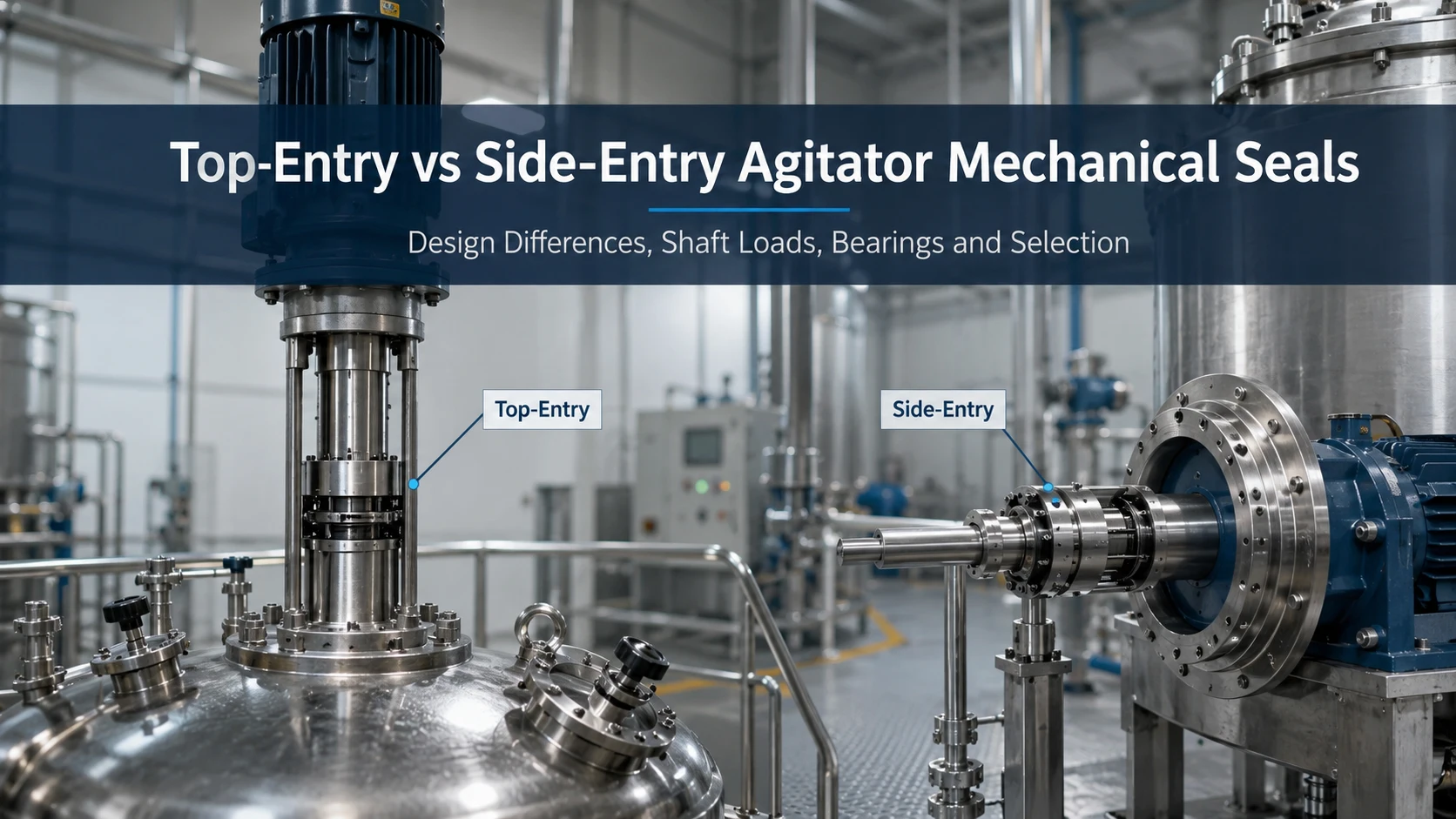
Top-entry and side-entry agitator mechanical seals may perform the same basic task, but they should not be treated as interchangeable simply because the shaft diameter is the same. Shaft orientation changes how gravity, overhung length, radial deflection, axial movement, process exposure, bearing support, and maintenance access affect the seal. For engineers and purchasing teams, the practical question is therefore not only which agitator mechanical seal fits the shaft, but which design can tolerate the actual movement and operating conditions at the seal location.
Xinyoumi supplies reactor, agitator, pump, and auxiliary sealing products within its broader Xinyoumi mechanical seal solutions range. Its published reactor-seal portfolio includes products for vertical steel reactors as well as bottom-entry and side-entry steel reaction vessels.
The main differences are mechanical rather than simply dimensional. Orientation changes the direction of shaft loading, the way the shaft is supported, the environment around the seal, and the way technicians can reach the assembly for replacement.
| Design Factor | Top-Entry Agitator Seal | Side-Entry Agitator Seal |
|---|---|---|
| Shaft orientation | Vertical | Horizontal |
| Typical movement concern | Long-shaft runout and dynamic deflection | Gravity-induced bending and radial load |
| Axial movement | Depends on drive, process, and thermal conditions | Thermal growth and equipment support may be important |
| Seal environment | May be near vapor space depending on liquid level | May be closer to direct product contact and static head |
| Bearing question | Long overhung shafts may require additional review | Horizontal shaft weight can increase local support requirements |
| Lubrication | Dry, product-lubricated, or externally supported depending on design | Product-lubricated, dry, or externally supported depending on service |
| Maintenance access | Usually from the vessel top or drive area | Usually from the vessel side; isolation and access matter |
| Replacement risk | Installation height and shaft movement are critical | Shaft support, seal pressure, and access arrangement are critical |
These are selection tendencies, not universal rules. The actual configuration depends on the agitator design, process medium, pressure or vacuum, speed, liquid level, shaft support, and available installation space.
A mechanical seal works best when the rotating and stationary faces maintain a stable relationship. On an agitator, the shaft may move differently from a shorter, more rigid rotating-equipment shaft. That movement must be considered before the seal architecture, bearing arrangement, and installation dimensions are finalized.
A top-entry agitator often uses a relatively long vertical shaft extending from the drive into the vessel. Depending on shaft length, impeller load, gearbox condition, operating speed, and process forces, radial movement at the seal location can be greater than expected from the shaft diameter alone.
The seal supplier therefore needs to know more than nominal dimensions. Existing bearing arrangement, overhung shaft length, measured movement, operating speed, and previous wear patterns can influence whether a conventional seal configuration is appropriate or whether additional shaft support should be evaluated.
For detailed measurement procedures and TIR-based diagnosis, the separate guide to top-entry agitator shaft runout should be used rather than assuming that repeated leakage is caused by the sealing faces alone.
A side-entry agitator places the shaft horizontally, so gravity acts across the shaft rather than along its axis. Shaft weight, impeller load, distance from the equipment bearing, and operating forces can therefore create bending and radial movement near the seal.
Axial movement may also need attention. Thermal growth, equipment construction, and bearing arrangement can change the position of the shaft relative to the seal during operation. A replacement side-entry mixer seal that matches the original shaft diameter but cannot accommodate the actual movement may still leak or wear prematurely.
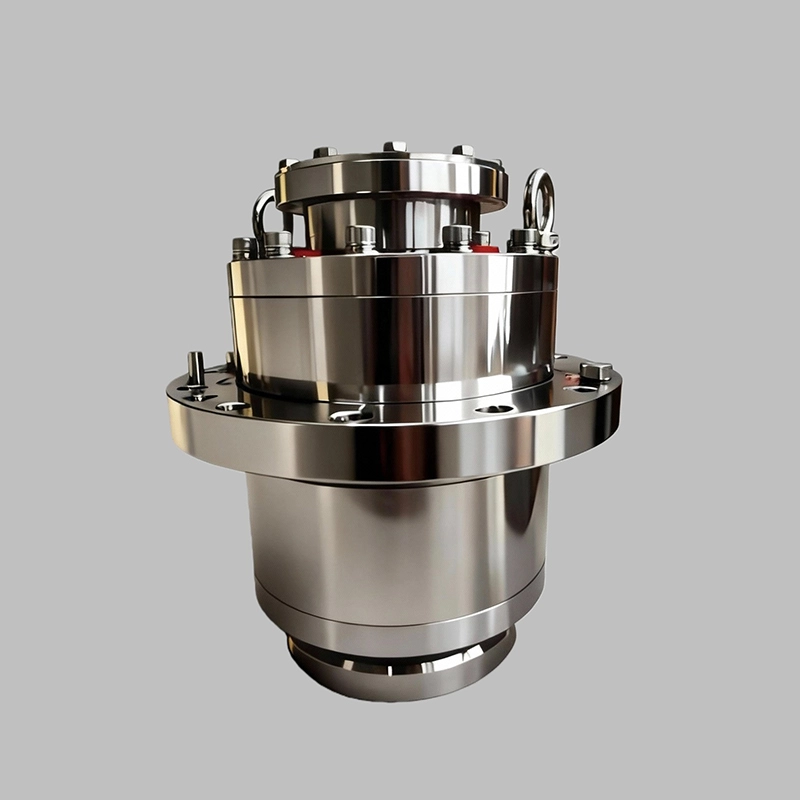
Before purchase, the supplier should receive drawings showing the shaft and bearing arrangement, not only the seal chamber or flange dimensions.
Bearing-supported agitator seals are useful in some applications, but an integral bearing should not be treated as an automatic upgrade.
If the gearbox and equipment bearings provide adequate radial and axial control at the seal location, adding another bearing into the seal assembly may not be necessary. The decision should be based on shaft movement, overhang, bearing spacing, equipment condition, and the geometry between the nearest support point and the seal.
This is why a top-entry agitator seal does not automatically require an integral bearing, and a side-entry mechanical seal does not automatically require one either. Xinyoumi’s published reactor-seal range includes vertical reactor applications, while its broader product information also distinguishes equipment with large runout as a separate operating condition.
Additional local support becomes more relevant when the shaft has a long unsupported section, measured movement is high, seal faces repeatedly show uneven wear, or the nearest equipment bearing does not control movement sufficiently at the sealing point.
For side-entry equipment, horizontal shaft bending can also justify reviewing local bearing support. For top-entry equipment, excessive dynamic deflection may lead to the same discussion.
The key purchasing question is whether the underlying equipment should be repaired first or whether the seal is expected to accommodate the existing shaft behavior. That distinction should be documented in the technical quotation.
Entry position changes where the mechanical seal sits relative to the liquid level and process environment. This can influence whether dry-running, product-lubricated, or externally supported operation is appropriate.
Some top-entry agitator mechanical seals are positioned above the normal product level. In those applications, the seal may operate in a vapor-space environment rather than being continuously wetted by process liquid.
A dry-running agitator seal may therefore be considered when introducing liquid into the batch is undesirable. However, top-entry orientation alone does not make a seal suitable for dry operation. Face design, speed, temperature, process vapor, pressure or vacuum, and contamination requirements still need to be verified.
Xinyoumi’s published reactor portfolio includes both dry- and wet-running design concepts for certain reactor-seal platforms, illustrating why lubrication mode should be selected from the application rather than from shaft orientation alone.
A side-entry agitator seal may be installed below the normal liquid level, depending on vessel geometry. In that case, the seal can be exposed directly to process liquid and the static head created by the product level.
That affects pressure at the seal location and may also expose the faces and secondary seals to solids, crystallizing material, corrosion, or viscosity changes. Buyers should therefore provide normal and minimum liquid levels, process properties, and actual pressure conditions rather than quoting only vessel design pressure.
Product contact can support some lubrication arrangements, but heavily abrasive, crystallizing, or poorly lubricating media may require a different configuration or an auxiliary sealing system.
Top-entry or side-entry orientation does not, by itself, determine whether an agitator requires a single or double mechanical seal.
The decision still depends mainly on process hazard, pressure or vacuum, allowable leakage, product contamination limits, lubrication conditions, and available support systems. Toxic, volatile, flammable, corrosive, or contamination-sensitive media may justify evaluating a double-seal arrangement, while a simpler single seal may be appropriate for lower-risk service under stable conditions.
Orientation then changes how that arrangement must handle shaft movement, process exposure, installation space, and maintenance.
For available product directions across different reactor configurations, buyers can review reactor and agitator mechanical seals rather than selecting only from a generic single-versus-double rule. Xinyoumi’s reactor category includes products for vertical, horizontal, special-material, and side/bottom-entry equipment.
A suitable seal must not only operate correctly; it must also be serviceable within the actual equipment layout.
On top-entry equipment, removing the seal may require access around the gearbox, drive frame, vessel nozzle, or upper support structure. On side-entry equipment, surrounding piping, guards, vessel supports, and available lateral clearance can limit the space needed to withdraw the assembly.
Before ordering, maintenance teams should confirm the required removal direction and clearance envelope. Cartridge construction, modular components, or other service-friendly arrangements may reduce disassembly work, but suitability depends on the equipment.
Drawings should show not only the installed dimensions but also the space available to remove the seal.
Sometimes, but only when the equipment includes an appropriate isolation or shut-off arrangement designed for that maintenance procedure.
A side-entry location can make vessel contents an important part of the maintenance plan because the seal may be below liquid level. Without a suitable isolation design, opening the seal area may require the vessel to be emptied or otherwise made safe.
This feature should never be assumed when purchasing a side-entry reactor mechanical seal. Xinyoumi identifies its 2033U product for bottom-entry and side-entry steel reaction vessels, but maintenance method and isolation capability should be confirmed for the specific equipment configuration before purchase.
Repeated leakage after replacement is often a sign that the original selection data were incomplete.
Common causes include:
Xinyoumi’s existing reactor-selection guidance similarly notes that two reactors with the same shaft diameter may require different seals because pressure, temperature, shaft movement, contamination limits, and process conditions differ.
The practical prevention measure is simple: do not reorder a replacement agitator mechanical seal from shaft diameter and old model number alone.
A useful RFQ should identify both the process and the mechanical behavior of the equipment. Provide:
This information helps distinguish a genuine replacement from an application that needs a revised mechanical seal design.
The strongest supplier evaluation is technical rather than promotional. A quotation should demonstrate that the seal is being selected around the actual equipment and process.
A supplier evaluating an agitator shaft seal should ask about orientation, shaft support, overhung length, speed, radial movement, axial movement, process pressure, temperature, medium, liquid level, and previous failures.
If a replacement quotation is prepared from only shaft diameter and a photograph, important mechanical risks may remain unresolved.
Kunshan Xinyoumi Mechanical Seal Technology Co., Ltd. publishes reactor mechanical seals, pump seals, and sealing auxiliary systems as part of its industrial product range. Its reactor portfolio includes configurations for vertical steel reactors and separate products identified for bottom- and side-entry steel reaction vessels.
Before approval, confirm the entry orientation, seal arrangement, bearing configuration, assumed shaft movement, pressure and vacuum basis, temperature, lubrication mode, product-contact materials, auxiliary-system requirements, installation dimensions, and maintenance clearance.
For replacement work, drawings should identify which dimensions were verified from the existing machine and which assumptions still require site confirmation. The quotation should also clarify which components are replaceable and what information is required before manufacturing.
That approach is particularly important for custom agitator mechanical seals, where dimensional compatibility alone does not prove operating suitability.
Top-entry and side-entry agitator mechanical seals should be selected around shaft behavior and installation conditions, not only nominal diameter. Top-entry equipment often requires closer attention to long-shaft movement and support, while side-entry equipment adds horizontal bending, product-level pressure, maintenance access, and possible isolation requirements.
Before requesting a quotation, prepare the existing seal and shaft drawings, entry orientation, bearing arrangement, pressure or vacuum, temperature, medium, liquid level, speed, known shaft movement, installation space, failure photographs, and required quantity. Xinyoumi can use this information to review whether an existing, modular, or application-specific reactor or agitator sealing configuration should be considered. Buyers with a replacement or new equipment project can contact Xinyoumi with these operating and dimensional details for technical review.
Possibly, but compatibility should not be assumed. Shaft orientation, support, radial and axial movement, pressure at the seal location, lubrication method, flange geometry, and maintenance access should all be checked before using the same seal design.
Not necessarily. The need for a bearing-supported agitator seal depends on the existing equipment bearings, shaft overhang, measured movement, drive condition, and seal location. A bearing should be selected to solve a defined support problem rather than added automatically.
Common reasons include horizontal shaft bending, insufficient bearing support, incorrect pressure assumptions, unsuitable lubrication, installation errors, or unresolved equipment wear. The failed seal and shaft-support arrangement should be reviewed before ordering the same replacement again.
Only on equipment designed with a suitable shut-off or isolation arrangement. The capability depends on the agitator, seal, vessel conditions, and maintenance procedure and should be confirmed before purchase.
Provide the entry orientation, equipment and existing seal model, shaft and flange dimensions, bearing arrangement, speed, radial and axial movement, pressure or vacuum, temperature, medium, liquid level, lubrication arrangement, drawings, failure photographs, and quantity.