Nullam dignissim, ante scelerisque the is euismod fermentum odio sem semper the is erat, a feugiat leo urna eget eros. Duis Aenean a imperdiet risus.
Nullam dignissim, ante scelerisque the is euismod fermentum odio sem semper the is erat, a feugiat leo urna eget eros. Duis Aenean a imperdiet risus.
 author
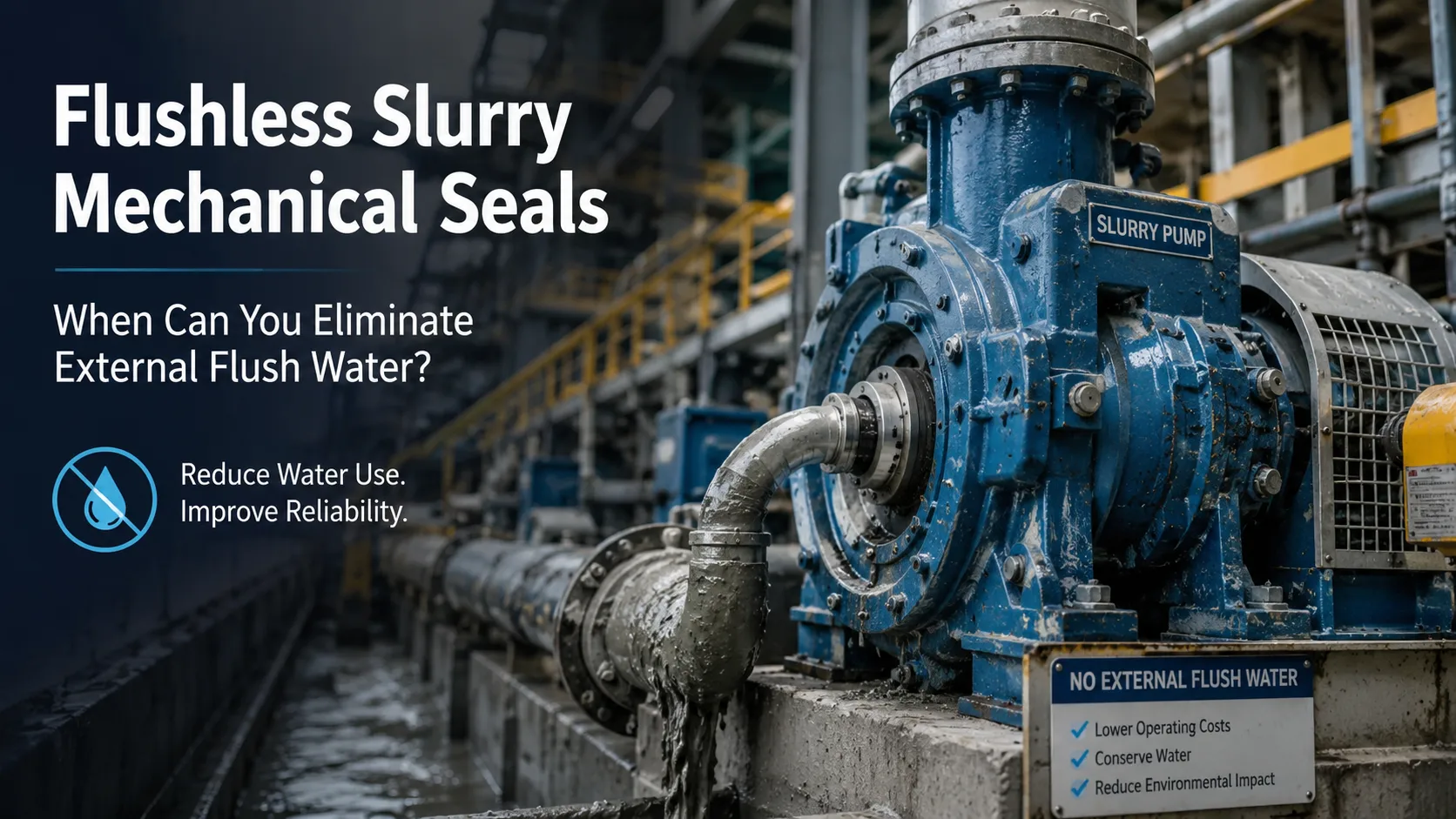
A flushless slurry mechanical seal can reduce the need for continuous clean seal water, but removing an existing flush is not simply a matter of closing a valve. In abrasive slurry service, external flush water may be performing several important functions at once: keeping solids away from the seal faces, carrying away heat, and supporting a stable lubricating film. Industry sealing guidance notes that abrasive particles, poor lubrication, solids accumulation, and an unfavorable seal-chamber environment can quickly shorten mechanical seal life.
For engineers and purchasing teams, the real question is therefore: Can this pump operate reliably without external flush water, and what must be verified before converting it?
In slurry pump service, “flushless” generally means that the mechanical seal does not depend on a continuous external clean-liquid flush into the process-side seal chamber. It does not necessarily mean that every auxiliary fluid or environmental control has been removed.
Flushless does not mean “fluid-free.” It usually means eliminating the continuous external process-side flush that would otherwise enter the seal chamber. A quench, grease supply, barrier system, or other environmental control may still be required depending on the seal design and operating conditions.
That distinction matters when comparing a no-flush slurry seal with an existing flushed arrangement.
| Support Method | Is It Eliminated by “Flushless”? | Typical Purpose |
|---|---|---|
| Continuous external process-side flush | Usually yes | Keeps solids away from the seal and supports cooling/lubrication |
| Atmospheric-side water quench | Not necessarily | Helps control deposits or conditions on the atmospheric side |
| Grease quench | Not necessarily | May support occasional dry-running conditions |
| Barrier fluid for a dual seal | No | Supports and pressurizes a dual-seal arrangement |
| Pumped process liquid | No | May provide face cooling and lubrication in suitable designs |
An external flush introduces a compatible liquid into or around the seal chamber to improve the seal environment. A quench normally serves a different purpose on the atmospheric side, while barrier fluid belongs to a pressurized dual-seal arrangement.
A flushless seal may therefore still require another environmental control under particular operating conditions. Startup, shutdown, intermittent dry-running risk, crystallization, or temperature may change what support is required.
When reviewing a supplier’s statement that a seal requires “no external flush,” confirm exactly what has been eliminated and whether any quench, cooling, barrier system, or other auxiliary connection is still required.
External flush water is commonly used because slurry creates a much harsher sealing environment than clean process liquid. Abrasive particles can enter the seal area, interfere with the lubricating film, score the faces, and accumulate around dynamic components. A clean flush can displace solids, remove heat, and create a cooler environment around the seal.
The disadvantage is that the flush liquid may enter the process. This can dilute slurry concentration, add to downstream water handling, and create additional piping, valves, controls, and maintenance requirements. Technical guidance on slurry sealing specifically recognizes that users may want to avoid process dilution or may not have a suitable clean flush source available.
A no-flush conversion therefore makes sense only when the new sealing arrangement can manage lubrication, cooling, and solids exposure without relying on that continuous clean-water stream.
No single solids percentage or pump type proves that flushless operation will work. The mechanical seal, seal chamber, slurry properties, and abnormal operating conditions must be considered together.
A standard pump seal does not become a flushless slurry seal simply because the flush line is disconnected.
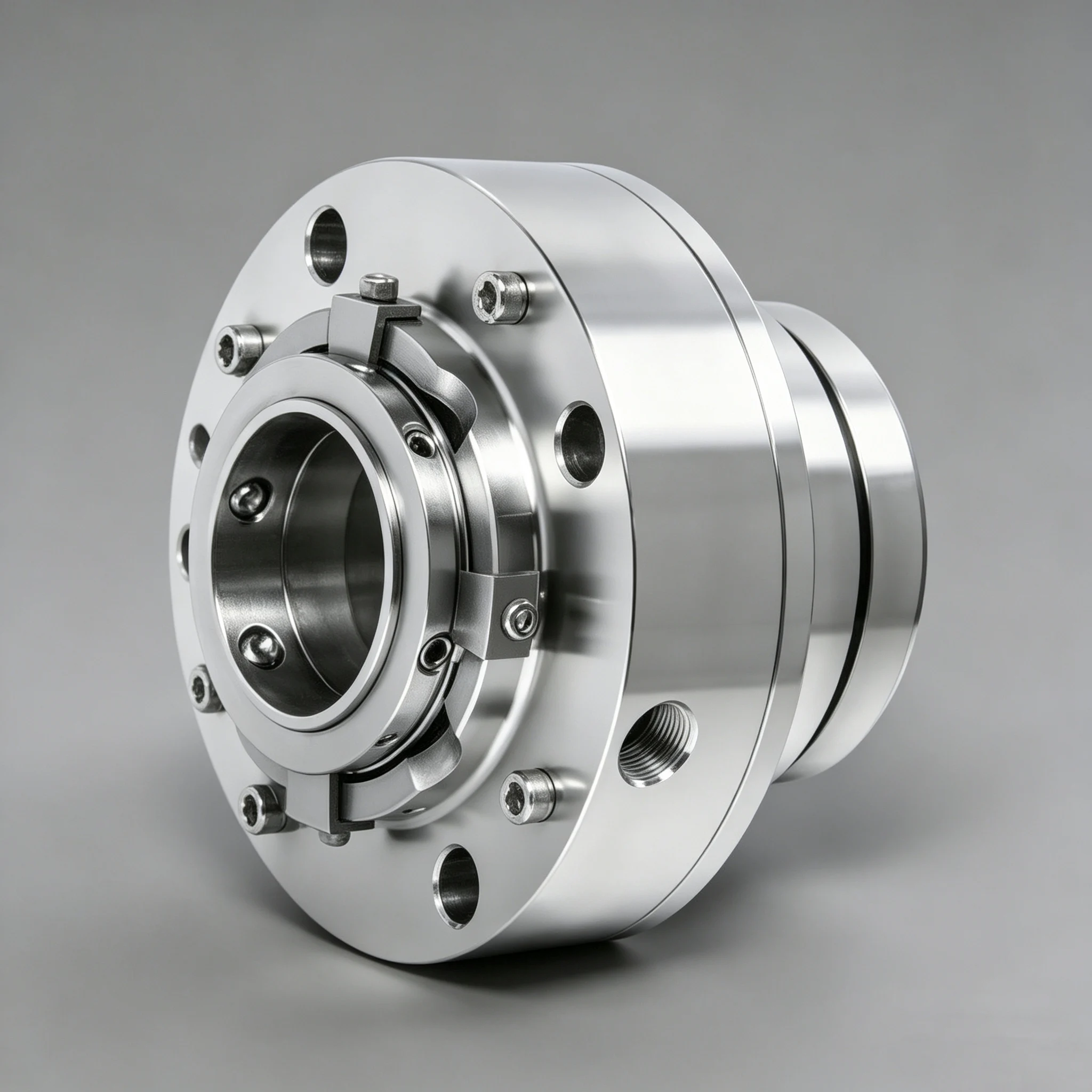
Slurry-specific designs may use larger clearances around moving parts, reduced areas where solids can become trapped, robust dynamic components, and geometries intended to prevent abrasive material from circulating repeatedly around critical seal surfaces. Industry technical guidance emphasizes seal geometry, dynamic O-ring and spring design, face materials, and abrasion-resistant hardware as important considerations for abrasive slurry applications.
For severe abrasive or high-solids duty, buyers can evaluate an application-specific heavy-duty slurry mechanical seal rather than assuming that an existing general-purpose seal will tolerate no-flush operation. Xinyoumi’s G50(F)S is published for highly abrasive, high-solids slurry applications in mining and metallurgy, chemical processing, and water treatment. Its published overall application range includes tailings, coal washing, metallurgical slurry, crystalline media, sludge, fibers, and sand-containing service.
However, those published slurry capabilities should not be interpreted as confirmed flushless operating limits unless the no-flush configuration is separately verified.
Mechanical seal faces require an appropriate operating film and acceptable temperature conditions. Without a clean external flush, the seal must rely on the selected design and the available process environment to control friction and heat.
This becomes risky if the pump frequently loses prime, operates with inadequate liquid at the faces, experiences flashing, or sees repeated dry contact. Industry guidance notes that loss of a cool lubricating film can cause excessive heat and rapid face deterioration, while slurry particles can destabilize that film.
Before selecting a slurry pump seal without flush water, confirm normal and minimum flow conditions, temperature, pressure, startup procedure, stop/start frequency, and any history of dry running or cavitation.
The seal cartridge cannot be considered separately from the stuffing box or seal chamber.
Dead areas where solids settle can lead to dewatering, crystallization, or packed slurry around dynamic components. That material can restrict movement and insulate the seal from the liquid needed for cooling. Industry slurry-sealing guidance therefore emphasizes chamber volume and flow behavior as important parts of the application.
For an existing-pump retrofit, obtain the seal-chamber drawing before assuming a flushless cartridge will work. A seal may physically fit while the surrounding chamber still creates an unsuitable operating environment.
Reducing water consumption is useful only if seal reliability is maintained. Some operating conditions should stop an automatic no-flush decision and trigger further engineering review.
A pump that regularly operates before becoming fully flooded, loses prime, runs intermittently with inadequate liquid, or handles a fluid prone to vaporization can expose the seal faces to poor lubrication.
In those cases, retaining a flush or using another suitable environmental-control arrangement may be more appropriate than eliminating water completely. The decision should include abnormal operation—not just the ideal design point.
Maintenance teams should specifically report whether previous seals show heat checking, discoloration, burnt elastomers, glazing, or damage following startup events. XYM’s existing slurry mechanical seal failure guide also identifies insufficient liquid film, blocked cooling, dry running, vibration, and unstable flow as potential contributors to overheating in slurry service.
Sticky, crystallizing, fast-settling, fibrous, or unusually abrasive slurry may need additional control around the seal. Particle hardness and size can matter as much as solids percentage because they affect abrasion and the likelihood of particles becoming trapped at critical surfaces.
A supplier should therefore avoid giving a no-flush recommendation when particle information, seal-chamber geometry, operating pressure, speed, or shutdown behavior is unknown.
The correct conclusion in those cases is not necessarily that flushless operation is impossible. It is that more application data are required before external flush water is removed.
“High solids” is not a complete seal specification. Two slurries with the same percentage of solids can behave very differently.
| Slurry Factor | Why It Matters |
|---|---|
| Solids concentration | Changes total particulate loading around the seal |
| Particle size | Affects trapping, impact, and movement through the seal chamber |
| Particle hardness | Influences abrasive wear on faces and metal components |
| Particle shape | Sharp or irregular solids may increase mechanical damage |
| Settling tendency | Determines how much material accumulates after shutdown |
| Crystallization tendency | Can restrict springs, secondary seals, and clearances |
| Slurry viscosity | Can influence circulation, lubrication, and heat removal |
Industry technical resources specifically recommend evaluating solids content, hardness, slurry velocity, chemistry, and seal-chamber behavior together rather than relying on one value.
Xinyoumi publishes overall G50(F)S capabilities for abrasive and high-solids slurry service, including application-specific solids and particle information. Those values should be verified against the intended configuration and should not automatically be treated as no-flush limits.
When the application is suitable, eliminating a continuous process-side flush can address several operating problems at once.
It can reduce product dilution, lower clean-water demand, remove some flush-water piping and controls, reduce the amount of additional water that must later be handled, and eliminate failures caused by blocked or incorrectly adjusted flush lines.
These benefits are particularly relevant in mineral processing, chemical slurry service, and other applications where concentration matters or clean water is limited. Industry sealing guidance has long identified flush-water consumption and dilution as significant considerations in abrasive slurry applications.
The business case should still be calculated from the plant’s real water, treatment, maintenance, and downtime costs rather than assumed savings percentages.
Many retrofit inquiries begin with a pump that currently uses packing or a mechanically sealed stuffing box supplied with external water. A conversion may be possible, but dimensional fit alone is not enough.
Document the pump manufacturer and model, shaft diameter, stuffing-box or seal-chamber dimensions, operating pressure, speed, slurry composition, solids percentage, particle-size distribution, specific gravity, temperature, and existing flush pressure and flow.
Also record vibration or runout concerns, startup frequency, loss-of-prime history, current seal service life, and why the flush needs to be removed.
Older pumps may have seal cavities that limit the type of cartridge or chamber geometry that can be installed, so the complete spatial envelope should be reviewed before a retrofit is specified.
For buyers evaluating other industrial pump mechanical seals, Xinyoumi’s pump-seal category provides the broader product context for matching seal construction to medium, operating condition, and equipment design.
If a new no-flush slurry seal overheats or begins leaking shortly after installation, the problem may be the application rather than the basic cartridge dimensions.
Typical retrofit-specific causes include an existing chamber that traps solids, insufficient lubrication after the flush is removed, unrecognized dry running, slurry settling around the seal during shutdown, or operating pressure and speed outside the intended configuration.
Do not respond by automatically installing the same replacement. Inspect the failed seal and compare the actual operating conditions with the assumptions used during the retrofit. For broader abrasive wear, material, vibration, and installation diagnosis, the dedicated slurry mechanical seal failure guide should carry that troubleshooting intent rather than duplicating it here.
A technically useful RFQ should include:
Xinyoumi’s existing slurry guidance likewise recommends providing solids content, particle size, density, pressure, temperature, speed, chamber information, and failure evidence when selecting a replacement.
A no-flush recommendation should describe the operating assumptions behind it, not merely state “no external water required.”
Ask the supplier to identify the assumed slurry properties, acceptable particle conditions, seal-chamber requirements, lubrication mechanism, pressure and speed basis, and expected startup and shutdown conditions.
Also confirm whether a quench, cooling connection, or other environmental control is required. A technically useful quotation should state what conditions would make the proposed no-flush arrangement unsuitable.
Xinyoumi publishes pump, reactor, and auxiliary sealing products within its Xinyoumi mechanical seal solutions portfolio, while the G50(F)S provides a slurry-specific product reference for abrasive and high-solids applications.
A conversion may involve more than replacing the cartridge. The technical review should determine whether an adapter, sleeve, chamber change, auxiliary connection, monitoring point, or revised installation procedure is required.
The proposal should also clarify what happens to the existing flush piping. Removing it completely, retaining part of it for another function, or keeping it available for specific operating conditions are different engineering decisions.
A supplier who reviews the seal, chamber, slurry, and operating history together is better positioned to identify these requirements before installation.
A flushless slurry mechanical seal can be a practical way to reduce continuous seal-water use and process dilution, but external flush should only be removed when the seal design, slurry properties, lubrication conditions, seal chamber, and abnormal operating scenarios support the change.
For a retrofit or replacement review, prepare the pump model, chamber drawing, shaft size, solids and particle data, pressure, temperature, speed, current flush conditions, failure history, photographs, and required quantity. Buyers can contact Xinyoumi with these details for application review rather than selecting a no-flush configuration from shaft diameter alone.
No. Some slurry applications can use a seal arrangement that does not rely on continuous external process-side flush water. Whether this is suitable depends on seal design, solids behavior, lubrication, chamber geometry, pressure, speed, and operating conditions.
Possibly, but there is no universal solids-percentage limit that applies to every mechanical seal. Particle size, hardness, settling tendency, slurry chemistry, chamber geometry, and the specific seal design also need to be evaluated.
It may. “Flushless” normally refers to eliminating the continuous external process-side flush. A separate quench or another environmental control may still be appropriate depending on the seal configuration and operating conditions.
No-flush operation should not be created by simply closing the existing flush line. First confirm that the seal, chamber, lubrication conditions, and operating range are suitable without that clean external fluid.
Provide the pump and existing seal data, seal-chamber drawing, shaft size, slurry composition, solids concentration, particle size, density, pressure, temperature, speed, startup behavior, current flush conditions, failure history, photographs, and quantity.