Nullam dignissim, ante scelerisque the is euismod fermentum odio sem semper the is erat, a feugiat leo urna eget eros. Duis Aenean a imperdiet risus.
Nullam dignissim, ante scelerisque the is euismod fermentum odio sem semper the is erat, a feugiat leo urna eget eros. Duis Aenean a imperdiet risus.
 author
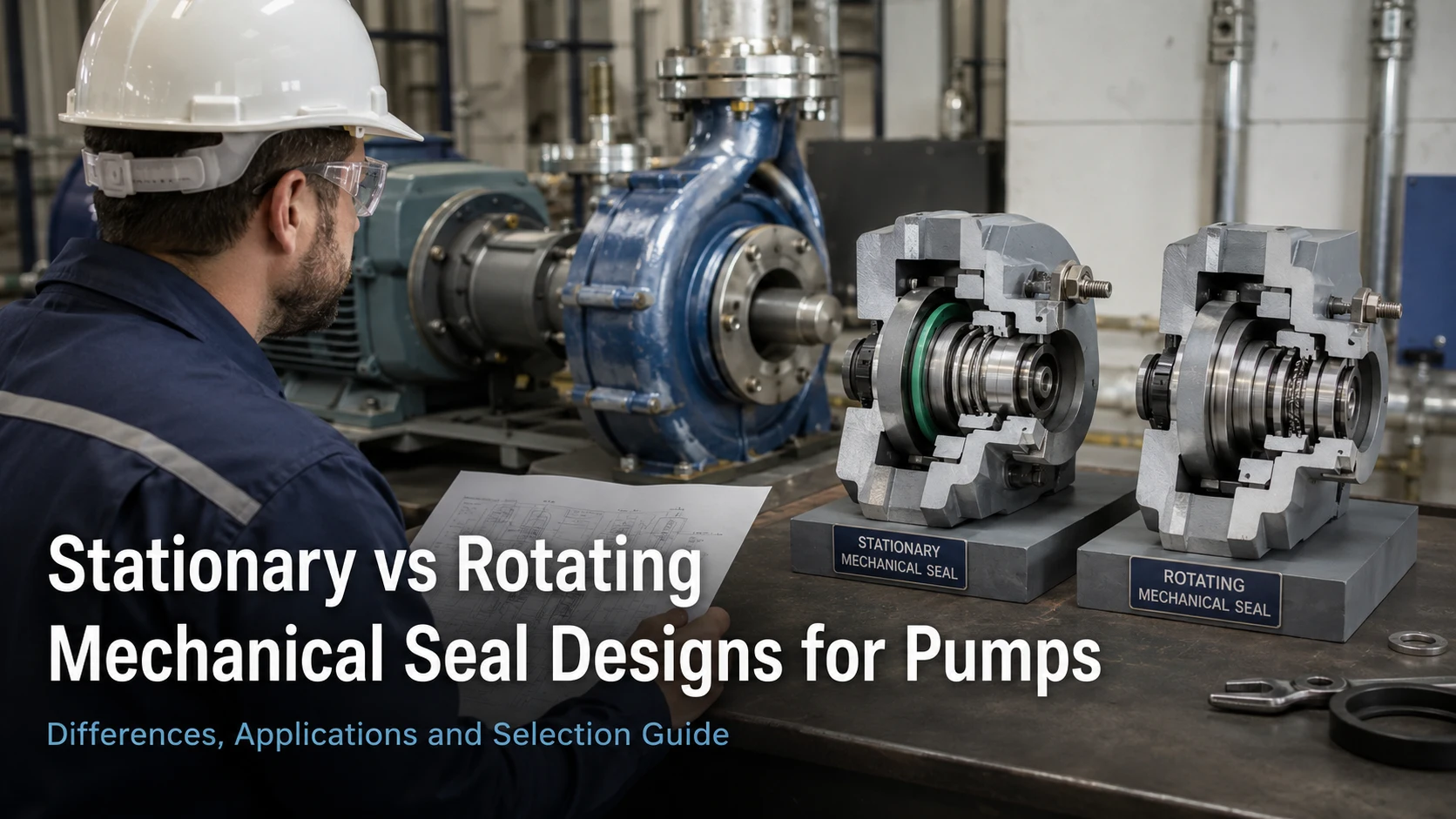
Choosing between a stationary and rotating mechanical seal design is not simply a matter of selecting the newer or more expensive option. The decision affects face stability, spring movement, sensitivity to shaft runout, installation space, and resistance to process deposits. For pump engineers, maintenance teams, and technical buyers, the central question is whether the flexible element should remain fixed in the gland or rotate with the shaft.
A reliable stationary vs rotating mechanical seal decision therefore requires the pump speed, shaft condition, process medium, seal chamber dimensions, and previous failure pattern—not only an old model number or shaft diameter.
Every conventional mechanical seal has one face that rotates with the shaft and another that remains stationary. However, this does not define whether the seal has a stationary or rotating design.
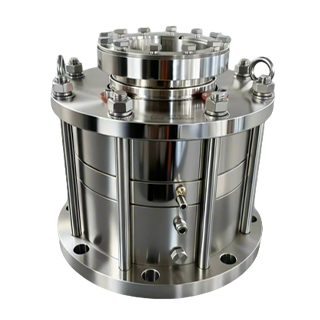
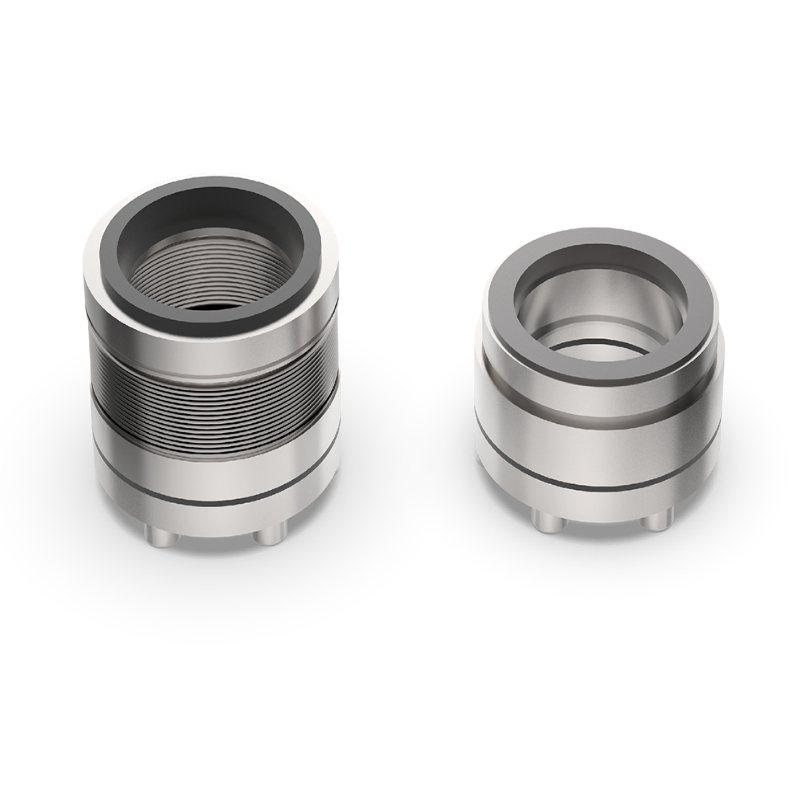
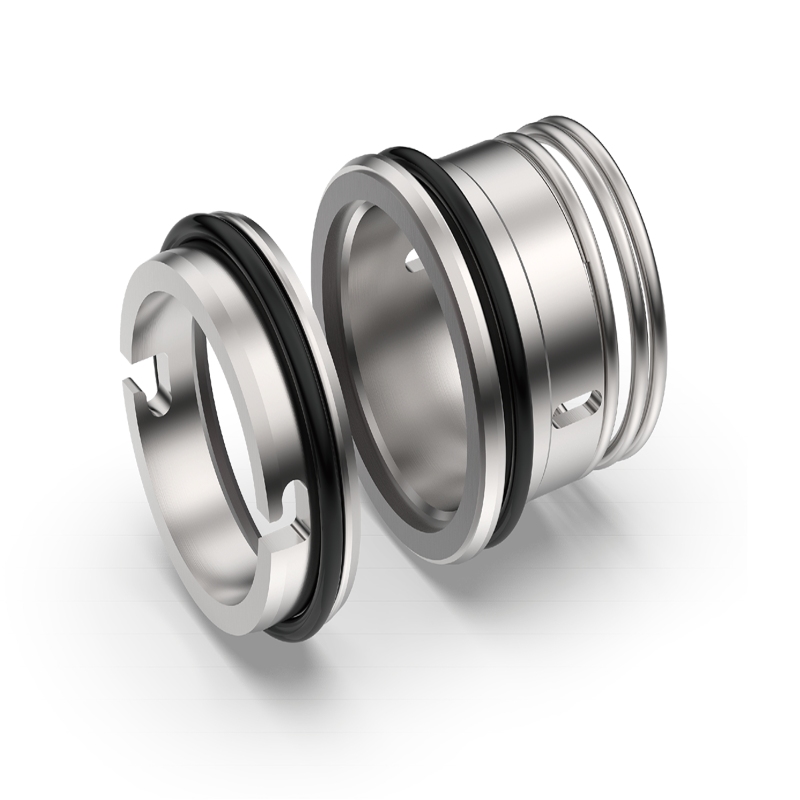
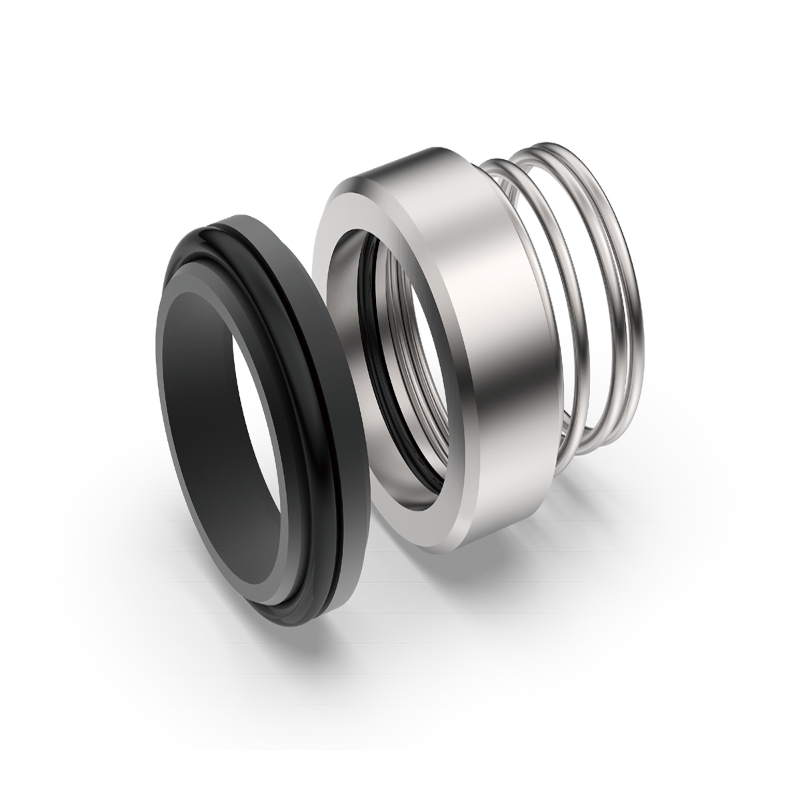
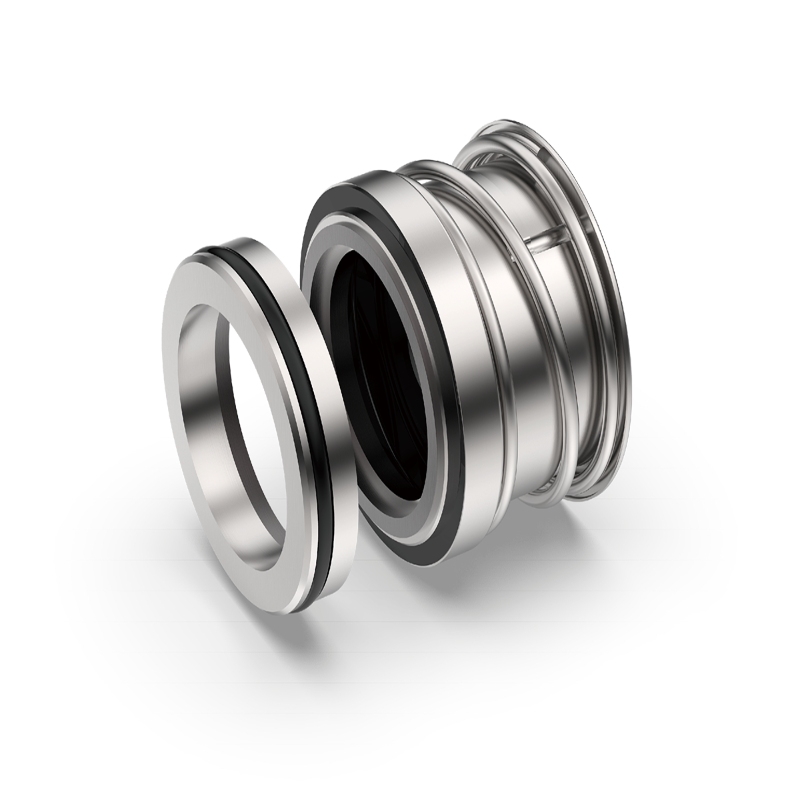
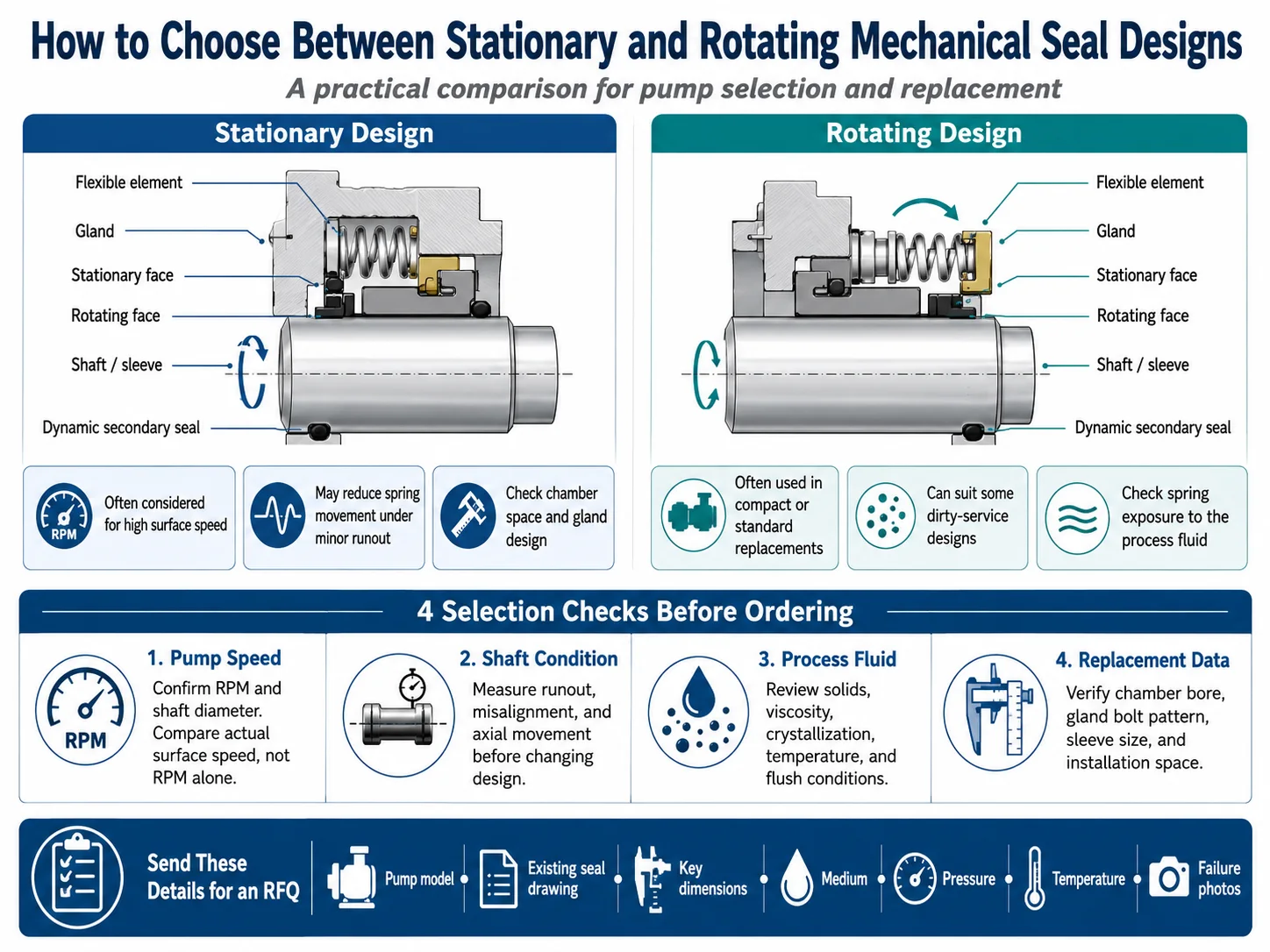
The actual classification refers to the flexible element—the springs, bellows, or other component that maintains closing force as the faces wear or move. In a rotating design, this element turns with the shaft or seal sleeve. In a stationary design, it remains attached to the gland or stationary housing. Industry seal literature treats flexible-element location as a separate classification from single versus double arrangements.
Start by locating the springs or bellows in the assembly drawing. If they are mounted to the shaft sleeve, rotary face, or drive collar, the flexible element normally rotates. If they are mounted in the gland or stationary body, the seal has a stationary flexible-element arrangement.
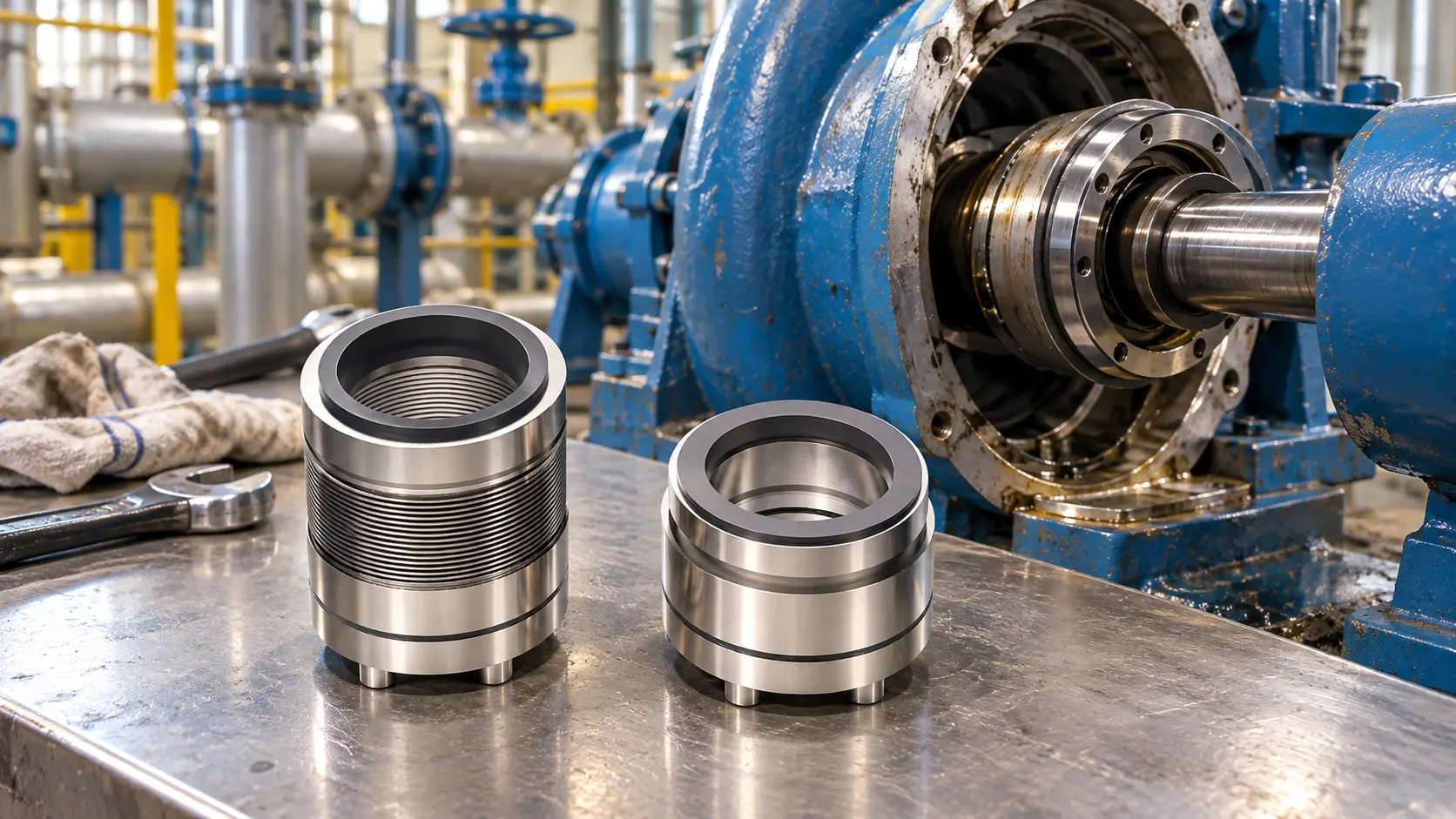
The dynamic secondary seal is another clue. In a pusher design, identify which O-ring must slide as the faces compensate for wear. Maintenance teams inspecting an unidentified seal should photograph the gland side, shaft side, drive mechanism, springs, and sleeve before disassembly. Marking the process side and direction of rotation also reduces identification errors.
Do not classify the product from the terms “rotating face” and “stationary face” alone. Those components exist in both designs.
Pump dynamics are often the strongest reason to compare stationary and rotating mechanical seals. Speed changes centrifugal loading and heat generation, while runout and misalignment force the flexible element to respond to shaft movement.
Stationary flexible elements are frequently evaluated for high-speed pumps because the springs do not rotate and are not subjected to the same centrifugal effects. Published stationary seal designs commonly identify high-speed operation as a key application benefit.
RPM alone is not enough, however. A larger shaft diameter produces a higher surface speed at the same RPM. Buyers should provide both values and ask the supplier to confirm the calculated surface speed against the selected seal specification.
Pressure, temperature, face materials, lubrication, and chamber conditions still limit performance. A product described as suitable for high speed on one pump cannot automatically be transferred to a different shaft size or process.
In a rotating flexible-element design, shaft-to-seal-chamber misalignment may require the flexible element to respond during every revolution. A stationary arrangement may reduce this repeated movement because its spring system remains fixed relative to the gland. Some stationary designs are specifically intended to reduce O-ring wear and spring disturbance associated with minor shaft misalignment.
That advantage does not make a mechanical seal a repair for bent shafts, damaged bearings, loose sleeves, coupling misalignment, pipe strain, or severe axial movement. If wear patterns are uneven or leakage returns after several replacements, measure runout and inspect the pump before changing seal designs. Allowable values should be checked against the pump and seal drawings rather than using a universal limit.
Dirty service creates a different selection problem. Particles, fibers, crystals, and viscous deposits can interfere with spring movement, secondary seals, face lubrication, and chamber circulation.
A stationary design can place the springs in the gland or on the atmospheric side, away from direct process exposure. This may be useful when the medium is corrosive, sticky, crystallizing, or likely to clog multiple small springs. Some stationary cartridge designs place their springs in a protected stationary body specifically to reduce clogging risk.
The label “stationary” is not enough to confirm suitability. Buyers still need to determine whether the springs are isolated, whether the dynamic O-ring moves across a contaminated surface, and whether the seal chamber has adequate circulation.
Provide the supplier with the solids concentration, particle size, viscosity, crystallization behavior, shutdown procedure, and existing flush arrangement. These details are often more useful than the general fluid name.
Rotating seals should not be excluded automatically from abrasive or viscous applications. Certain open rotating compression units generate fluid movement around the seal and help carry solids away from the faces. Published rotating designs use this principle for pulp, paper, abrasive, and viscous process duties.
A large single spring may also be less vulnerable to deposit buildup than several small exposed springs, depending on the construction. The correct judgment must be based on the actual internal arrangement rather than the word “rotating.”
Ask how the design controls solids near the faces, whether external flushing is required, and what happens during shutdown. A seal that performs during continuous operation may still clog when warm product cools and crystallizes.
Use the following table as an initial screening tool, not as a substitute for a product specification.
| Selection factor | Stationary design often considered when | Rotating design often considered when | Confirm before purchase |
|---|---|---|---|
| Pump speed | Surface speed or rotating mass is a concern | Selected design has an adequate speed rating | Shaft diameter and RPM |
| Minor misalignment | Reduced repeated spring movement is desirable | Pump and chamber alignment are stable | Measured runout and pump condition |
| Installation space | Gland and chamber can accept the arrangement | A compact radial section is needed | Chamber bore and axial clearance |
| Dirty process fluid | Springs can be isolated from deposits | Open rotary flow or a large spring assists solids handling | Solids, particle size, and flush |
| Existing replacement | A redesigned cartridge is justified | Original rotating configuration remains compatible | Drawing, sleeve, and bolt pattern |
| Maintenance | Standardized cartridge installation is preferred | Maintenance team knows the component design | Installation procedure and spares |
Industry catalogs note that rotating flexible elements often provide compact radial dimensions and self-cleaning behavior, while stationary elements may tolerate higher equipment misalignment and speed. They also state that many ordinary applications can be sealed successfully by either design.
Stationary versus rotating is only one part of mechanical seal classification:
A single mechanical seal may have either a stationary or rotating flexible element. A double seal may also use different flexible-element arrangements. Likewise, a cartridge seal is not automatically stationary, and a component seal is not automatically rotating.
For decisions involving containment, buffer fluid, barrier fluid, and leakage risk, refer to the detailed single vs double mechanical seal guide rather than repeating that separate selection process here. Xinyoumi’s existing guide treats face-set arrangement and support-fluid requirements as distinct decisions.
A design change can help when damage patterns are linked to flexible-element movement, spring exposure, or the interaction between the seal and shaft motion. It cannot correct every failure mechanism.
Repeated spring fatigue, clogged spring pockets, fretting on a dynamic O-ring, and uneven circumferential face wear may justify reviewing the stationary-versus-rotating arrangement. The case is stronger when failures appear at higher speed, after product deposits collect around the springs, or when minor shaft movement repeatedly disturbs a rotating compensation system.
Keep the failed faces, springs, elastomers, sleeve, and gland instead of discarding them. Record the leakage position and operating time. Photographs of deposits and wear direction can help a supplier determine whether the problem is structural, material-related, or caused by the pump.
Switching from rotating to stationary will not correct dry running, cavitation, inadequate suction, blocked cooling, incompatible elastomers, incorrect face materials, poor installation, bearing damage, or severe misalignment. Common mechanical seal failures are frequently associated with bearing condition, shaft deflection, coupling alignment, and pipe strain.
Before ordering a different design, confirm that the chamber is vented, flushing is available where required, gland bolts are tightened correctly, and the pump operates within its intended range. If the root cause is not established, a more sophisticated seal may fail in the same way as the previous one.
A rotating seal cannot necessarily be replaced by a stationary cartridge using the same nominal shaft diameter. The gland, sleeve, chamber, and working length may all change.
Record the shaft or sleeve diameter, stepped dimensions, seal chamber bore and depth, gland register, bolt size, bolt spacing, available axial space, and nearby obstructions. Also identify the rotation direction, existing flush ports, shaft runout, axial movement, and gland-face condition.
A stationary cartridge may require a different gland and more external space. A conversion may also require a new sleeve or adapter. Production should begin only after the purchaser, supplier, and equipment team approve the final installation drawing.
Xinyoumi’s pump mechanical seals category provides the appropriate commercial destination for pump applications, but the current public product organization does not establish which individual models use stationary or rotating flexible elements. Product selection should therefore follow technical confirmation rather than an assumed model match.
A useful replacement inquiry should include:
This information helps separate a standard replacement from a custom design review. It also allows the supplier to explain why a stationary or rotating arrangement is being proposed.
A technically useful quotation should identify the flexible-element location, single or double arrangement, cartridge or component construction, balance condition, materials, installation dimensions, and required support system. It should also state which process and equipment assumptions were used.
Suppliers should ask about speed, shaft motion, medium behavior, previous failures, and chamber geometry. A quotation based only on shaft diameter and price offers little protection against incorrect selection.
Xinyoumi presents Xinyoumi mechanical seal solutions for pumps, reactors, and auxiliary sealing equipment, with a published focus on modular design and application-based selection. Because individual stationary and rotating product classifications have not been confirmed publicly, Xinyoumi should be positioned as a source for design review rather than claiming a specific model is automatically suitable.
Neither stationary nor rotating mechanical seal designs are universally superior. Stationary flexible elements are often worth evaluating for high surface speed and minor equipment misalignment. Rotating designs may remain practical for compact installations, compatible replacements, and certain dirty-service configurations.
Before ordering, verify the pump condition, flexible-element location, chamber dimensions, medium behavior, speed, and failure history. To obtain an initial technical assessment, use request a pump seal design review and submit the existing drawing, dimensions, operating data, failed-part photographs, application details, quantity, and delivery requirement. Xinyoumi can then review the selection against the submitted conditions through its published contact channel.
No. Every conventional mechanical seal has a stationary face. A stationary mechanical seal design means that the flexible element—such as the springs or bellows—remains fixed to the gland or stationary housing.
It is often considered because the springs do not rotate and are less affected by centrifugal forces. The final choice still depends on shaft diameter, surface speed, pressure, temperature, materials, lubrication, and the selected product’s operating limits.
Yes. “Single” describes one set of sealing faces, while “stationary” describes the location of the flexible element. A single seal may use either stationary or rotating springs.
Some are. Open rotating components or large-spring designs may improve circulation and reduce deposit buildup. Suitability depends on solids, particle size, viscosity, spring exposure, chamber design, and flushing conditions.
Possibly, but not by matching shaft diameter alone. The chamber bore, gland pattern, axial space, sleeve dimensions, ports, pump condition, and final installation drawing must be reviewed before ordering.