Nullam dignissim, ante scelerisque the is euismod fermentum odio sem semper the is erat, a feugiat leo urna eget eros. Duis Aenean a imperdiet risus.
Nullam dignissim, ante scelerisque the is euismod fermentum odio sem semper the is erat, a feugiat leo urna eget eros. Duis Aenean a imperdiet risus.
 author
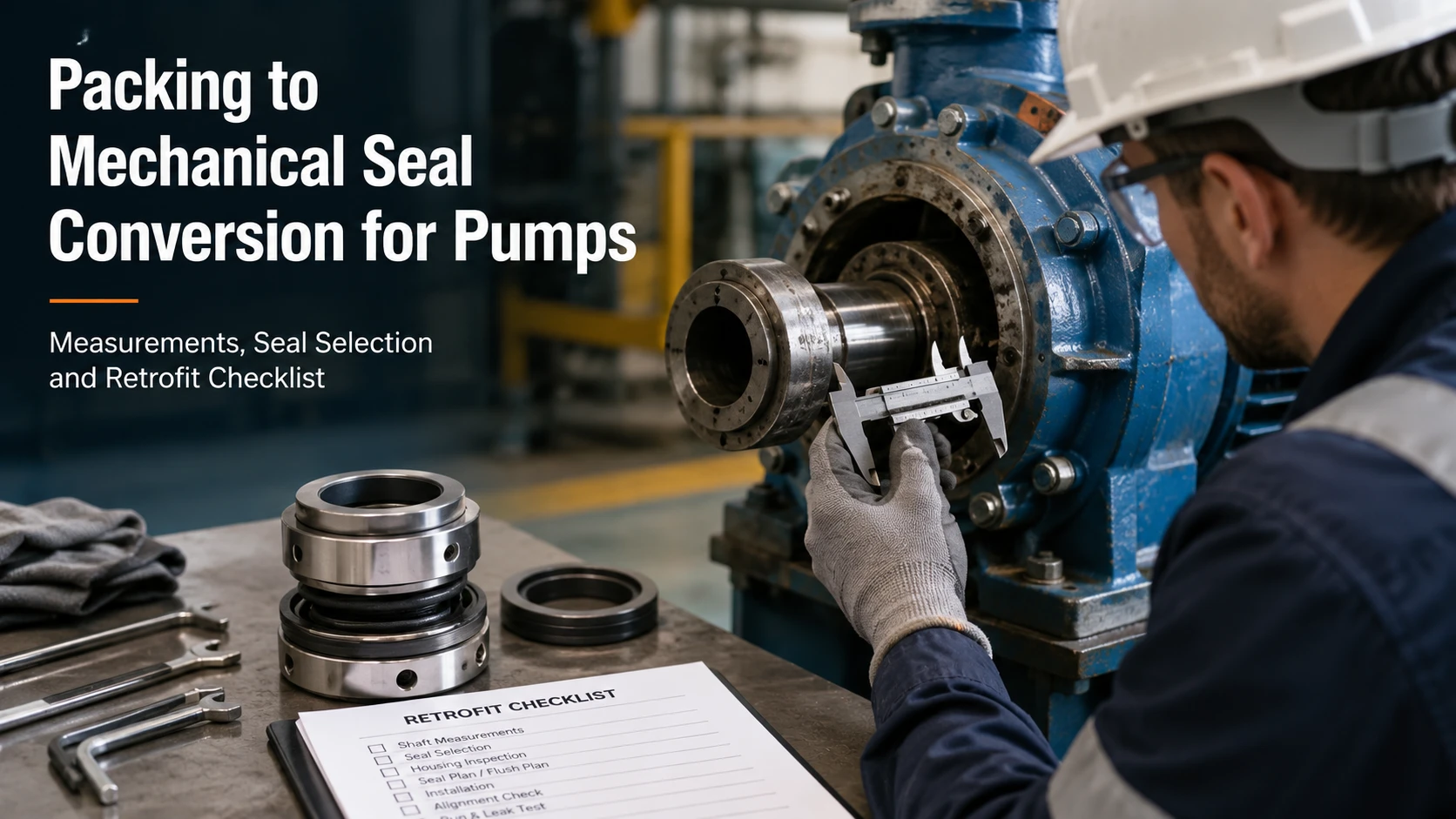
A packing to mechanical seal conversion can reduce repeated gland adjustment, sleeve wear, process leakage, cleanup, and unplanned maintenance, but it is not a simple material swap. Before replacing pump packing with a mechanical seal, the maintenance or purchasing team must confirm the pump condition, stuffing box dimensions, operating data, installation space, and support utilities. The project may be a direct fit, an engineered retrofit, or a repair-first job. For readers still comparing the two sealing methods, mechanical seal vs packing explains the broader operating and lifecycle differences.
Many centrifugal and process pumps can be converted, but physical fit does not guarantee reliable operation. A mechanical seal needs stable running surfaces, suitable heat removal, correct face loading, and enough room for the seal and its piping.
A direct-fit retrofit is possible when the shaft or sleeve is sound, the chamber dimensions match an available seal, and the pump operates without excessive vibration or runout. An engineered retrofit is appropriate when the pump needs a custom gland, adapter sleeve, compact seal, or flush connection. A repair-first project is necessary when packing has cut deep sleeve grooves, the gland face is damaged, or alignment is uncertain.
| Retrofit path | Typical condition | Next action |
|---|---|---|
| Direct fit | Verified dimensions and healthy pump | Confirm the seal drawing and operating data |
| Engineered retrofit | Usable pump, but dimensions or ports do not match | Request an adapter, custom gland, or compact design |
| Repair first | Worn sleeve, runout, vibration, or damaged face | Repair the pump before final seal selection |
A traditional packing bore may provide poor circulation, limited radial clearance, and insufficient room for a cartridge or dual arrangement. The Hydraulic Institute notes that installing a mechanical seal in a conventional packing stuffing box can compromise thermal performance, installation, and off-design reliability.
The stuffing box bore, depth, throat, gland register, bolt pattern, and external clearance must therefore be treated as design inputs rather than assumed to be acceptable.
A pump seal retrofit quote should not be based only on nominal shaft diameter. Old drawings may not reflect repairs or previous modifications, so actual measurements and photographs should be reviewed.
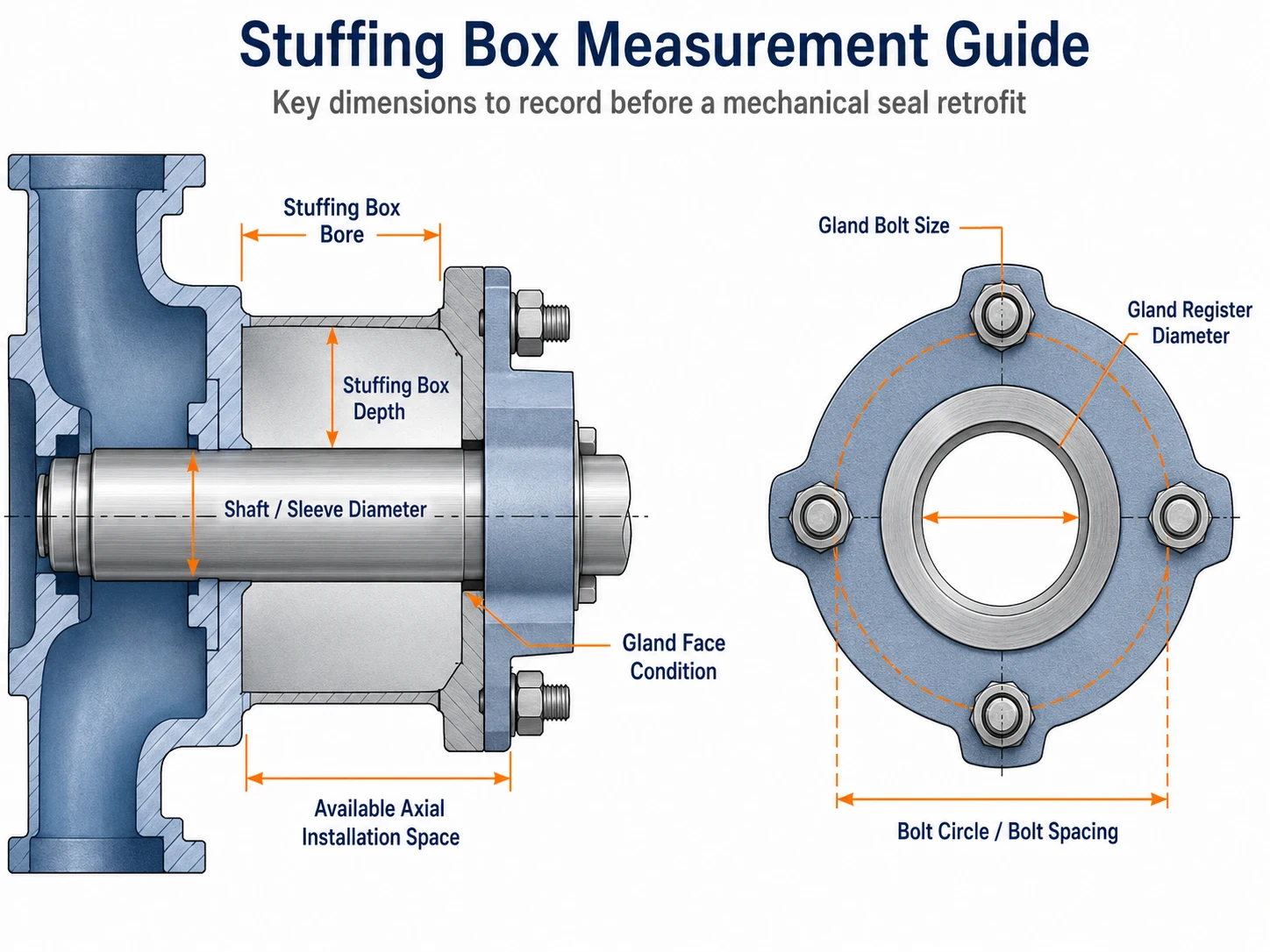
Measure the shaft or sleeve at the exact seal location. Record the usable axial length, shoulders, threads, keyways, and diameter changes. Inspect the sleeve for grooves, corrosion, scoring, and uneven wear.
Runout, axial movement, and alignment should be checked against the pump and seal manufacturer’s requirements. A mechanical seal cannot correct a bent shaft, loose sleeve, worn bearing, or misaligned drive. If the sleeve cannot provide a stable sealing surface, it may need replacement, re-machining, or an engineered sleeve arrangement.
Record the stuffing box bore and depth, gland register, gland face condition, bolt diameter and spacing, plus the distance to nearby obstructions. External clearance matters because a seal that fits inside the chamber may still interfere with the coupling, bearing frame, guard, or flush connections.
Photographs should include front, side, and internal views with a scale. Missing dimensions can cause incorrect face position, shaft interference, or uneven gland tightening.
The previous packing may have tolerated leakage, particles, or shaft movement that a standard mechanical seal cannot. Selection starts with the process and the real seal-chamber environment.
Provide the fluid name, concentration, solids content, particle size, viscosity, and any tendency to crystallize, vaporize, stick, or dry. Identify whether it is corrosive, flammable, toxic, valuable, or contamination-sensitive.
Clean water, solvents, corrosive chemicals, wastewater, and abrasive slurry require different faces, secondary seals, metals, and support arrangements. A general-purpose seal should not be selected for high-solids or crystallizing duty without evaluating flushing, clogging, and dry-running risk.
Xinyoumi supplies pump seals and sealing auxiliary systems and uses modular structures and application-based material selection in its published product approach. Suitable configurations can be reviewed under pump mechanical seals, but the final model should be chosen from complete operating and dimensional data.
Provide normal and maximum seal-chamber pressure, operating and cleaning temperatures, shaft speed, startup frequency, duty cycle, and known dry-running events.
Pressure affects face loading; temperature affects secondary seals and cooling needs; speed and shaft diameter influence heat generation. Frequent starts, unstable suction, cavitation, or flashing can damage a correctly manufactured seal if the operating environment is not corrected.
The buyer should select the sealing concept first, then confirm materials and dimensions. Choosing a familiar model by appearance is not enough.
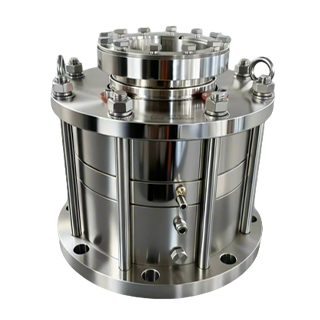
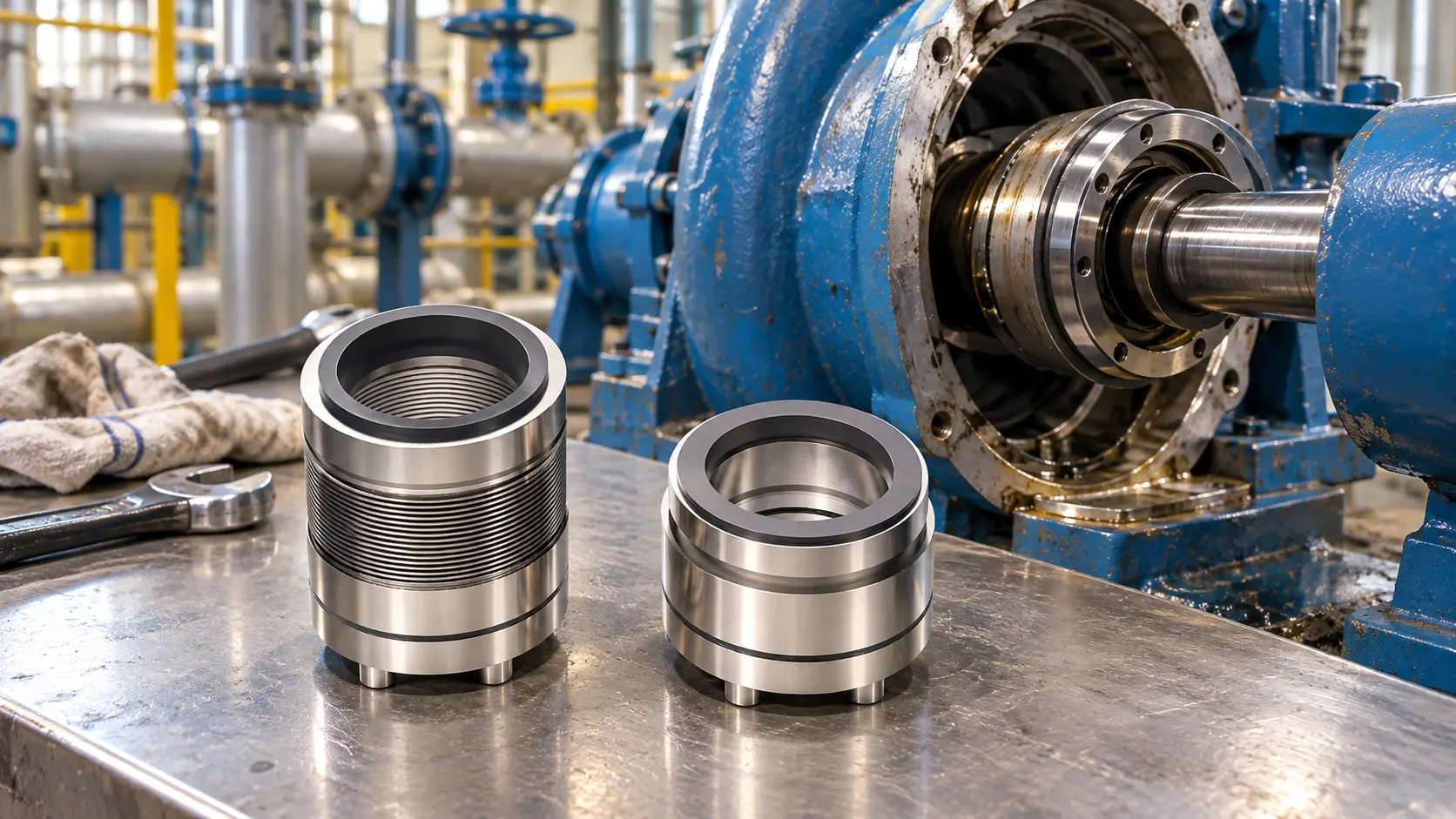
A component seal may suit a simple pump with restricted external space and a maintenance team experienced in setting working length and spring compression. A cartridge seal is preassembled and can reduce field-setting errors, but it still requires verified shaft size, chamber dimensions, bolt pattern, axial clearance, and piping access.
Before ordering, confirm installed length, setting method, gland connections, and removal space. A cartridge design may be unsuitable when external clearance is limited or adaptation is uneconomic.
A single seal may be considered for stable, lubricating, lower-risk fluids. Hazardous, volatile, high-value, poorly lubricating, or contamination-sensitive media may require a double arrangement with a suitable buffer or barrier system.
Hot, crystallizing, abrasive, or easily vaporized fluids may need flushing, cooling, filtration, or pressure control. The support plan should be selected with the seal because pressure relationship, heat load, compatibility, and operating procedure are connected. Xinyoumi’s technical materials identify flushing, cooling, and pressure balancing as measures for difficult conditions such as vibration, temperature fluctuation, vaporization, and pressure shock.
An adapter may be needed when the sleeve diameter does not match the chosen seal, the bolt pattern is nonstandard, the box is too deep, or the installation length is short. A custom gland may add flush, drain, quench, or monitoring connections.
These parts affect concentricity, face position, and removal access. The final drawing should state whether pump machining is required. Compact axial designs, floating compensation, and wear-resistant sleeve arrangements may help with older equipment, but suitability must be verified for the actual pump.
Early leakage is often blamed on the new seal even when the root cause is the pump, selection, installation, or commissioning.
Packing may continue running despite sleeve grooves, runout, or misalignment because it conforms around the shaft. Mechanical seal faces are less tolerant of unstable movement. Worn bearings, coupling misalignment, cavitation, pipe strain, shaft deflection, and a damaged gland face can separate or distort the faces.
Document the repair condition before installation. After failure, preserve the faces, elastomers, sleeve, and photographs for root-cause review.
Common errors include incompatible materials, wrong working length, damaged faces, uneven gland tightening, trapped air, blocked flush lines, and starting before the chamber or support system is ready. A cartridge seal reduces some setting errors but does not protect against dry running, poor venting, or incorrect barrier pressure.
Installation instructions should define cleanliness, fastener sequence, setting-device removal, venting, and startup checks. Xinyoumi’s service materials emphasize dimensional control, installation guidance, wear-part support, and auxiliary measures for harsh conditions.
The business case is strongest when packing needs frequent adjustment, damages sleeves, wastes valuable or hazardous fluid, consumes sealing water, or contributes to shutdowns. Compare annual cost: packing, labor, sleeve wear, cleanup, product loss, utilities, and downtime.
Packing may remain reasonable for a low-risk water pump with acceptable controlled leakage, simple maintenance, and limited remaining equipment life. Conversion should also be postponed when the pump needs major repair, the process is unstable, or required support utilities are unavailable.
A qualified supplier should review equipment geometry and operating conditions, explain the seal concept, identify modifications, and issue a dimensional drawing before production. Buyers should confirm materials, replacement parts, installation documents, and responsibility for adapters or machining.
Xinyoumi manufactures pump mechanical seals and auxiliary sealing equipment, with published capabilities centered on modular design, application selection, production traceability, and technical support. More company information is available through about Xinyoumi, while its broader product and application scope can be reviewed at Xinyoumi mechanical seal solutions.
A useful mechanical seal conversion RFQ should include:
A reliable packing to mechanical seal conversion begins with feasibility, not product selection. Inspect the pump, measure the shaft and stuffing box, document the process conditions, decide whether the project is direct-fit, engineered, or repair-first, and approve the final drawing before ordering.
For an initial review, use request a pump seal retrofit review and submit the pump model, dimensions, medium, pressure, temperature, speed, solids information, quantity, drawings, and clear photographs of the stuffing box and sleeve.
No. Many pumps can be converted, but shaft condition, stuffing box dimensions, space, runout, alignment, process conditions, and support utilities must be checked. Some pumps require an adapter or custom gland; others should be repaired first.
Sometimes. Physical fit does not prove reliable operation. The bore, depth, throat, gland register, heat removal, particle behavior, and external piping space must support the selected arrangement.
It depends on the medium and design. Clean, stable fluids may not need an external flush, while abrasive, hot, crystallizing, poorly lubricating, or vaporizing fluids may require flushing, cooling, filtration, or a barrier system.
Provide the pump model, shaft or sleeve diameter, stuffing box dimensions, medium, pressure, temperature, speed, solids content, duty cycle, support piping, quantity, drawings, and photographs.
Common causes include a grooved sleeve, runout, misalignment, vibration, incorrect materials, wrong installation length, damaged faces, blocked flush lines, trapped air, or dry startup. Inspect the failed parts and pump condition before ordering another seal.