Nullam dignissim, ante scelerisque the is euismod fermentum odio sem semper the is erat, a feugiat leo urna eget eros. Duis Aenean a imperdiet risus.
Nullam dignissim, ante scelerisque the is euismod fermentum odio sem semper the is erat, a feugiat leo urna eget eros. Duis Aenean a imperdiet risus.
 author
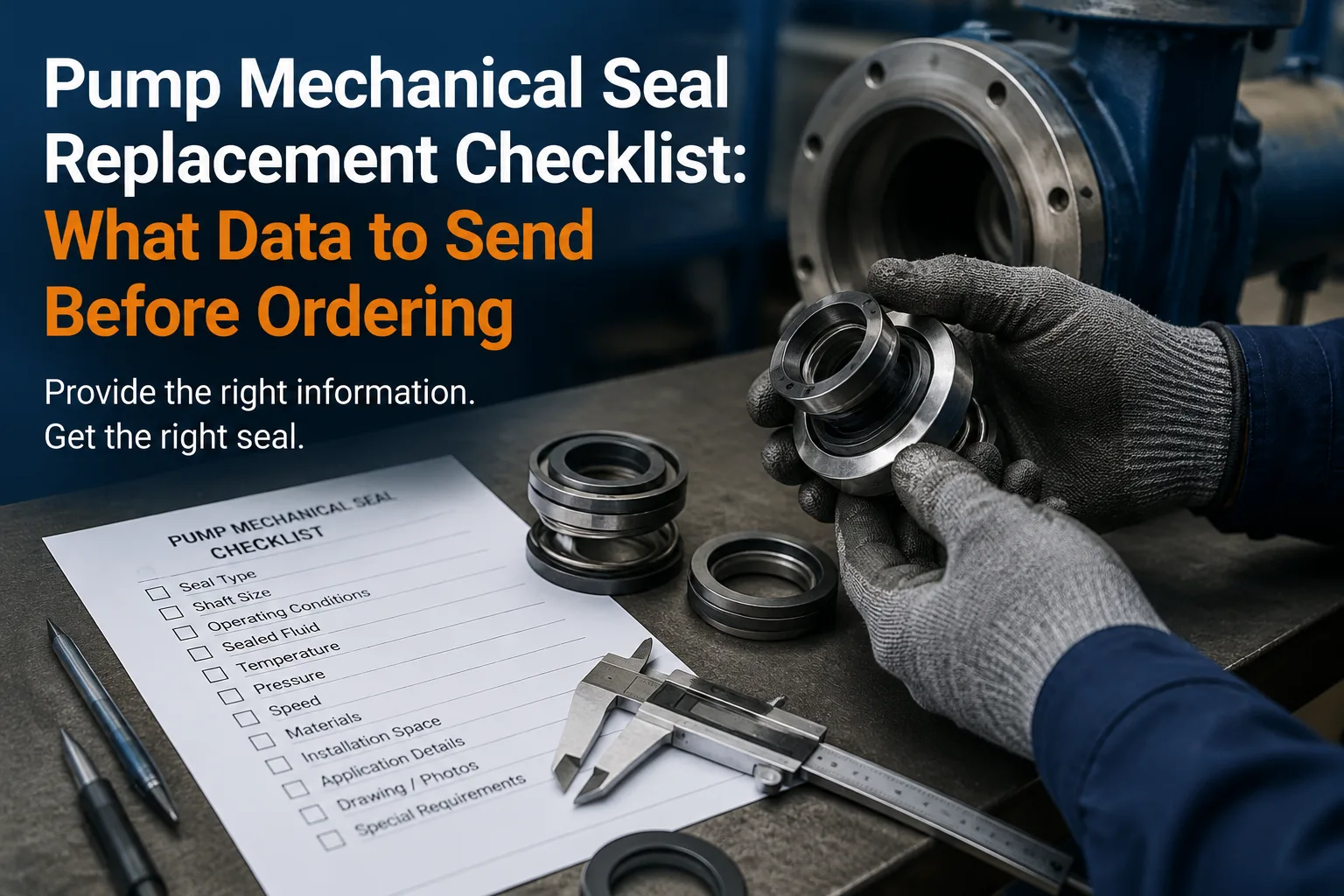
A pump mechanical seal replacement RFQ should contain more than an old part number and nominal shaft diameter. Pumps may have been repaired, fitted with a new sleeve, modified for another seal, or operated under conditions that differ from the original specification. Reordering the same part without checking those changes can result in poor fit, incompatible materials, or another early failure.
A useful pump mechanical seal replacement checklist combines equipment identification, verified measurements, process conditions, failure evidence, and purchasing requirements. This information allows a supplier to determine whether the project is a direct replacement, an application reselection, or a custom design review.
The following information gives a mechanical seal supplier a practical starting point. A standard replacement may require fewer details, while an unknown, obsolete, damaged, or previously modified seal normally requires more.
| Information category | Data to provide |
|---|---|
| Pump identification | Manufacturer, complete model, serial number, and pump type |
| Existing seal | Brand, model, part number, construction, and old sample availability |
| Critical dimensions | Shaft or sleeve, seal parts, chamber, gland, bolt pattern, and installation space |
| Process conditions | Medium, concentration, solids, viscosity, and crystallization behavior |
| Operating conditions | Pressure, temperature, speed, rotation, and duty cycle |
| Failure evidence | Leakage location, service life, operating state, and failed-part photographs |
| Support system | Flush, cooling, buffer, barrier, quench, or drain arrangement |
| Purchasing data | Quantity, destination, requested documentation, and target delivery date |
Mechanical seal application data sheets commonly request equipment type, dimensional information, pressure, temperature, speed, fluid properties, and gland details because these factors affect both product fit and operating suitability.
Unknown values should be marked as “unknown.” Estimated measurements should not be presented as verified dimensions, especially when the supplier will use them to prepare a production drawing.
Correct identification begins with the pump, but the nameplate is not the only source of evidence. The existing seal, actual installation dimensions, operating data, and repair history should support the same conclusion.
Photograph the complete pump nameplate so that the manufacturer, model suffix, serial number, size designation, speed, and other identifying information remain readable. A missing letter or number at the end of a model can refer to a different shaft, material, impeller, or sealing arrangement.
Record the seal manufacturer, model, part number, material code, and direction of rotation when these markings are available. Also note previous sleeve replacements, shaft repairs, chamber modifications, and conversions from packing or another seal type.
A pump model may support an initial cross-reference, but it should not override conflicting field measurements. When the nameplate, old seal number, and installed dimensions do not agree, the supplier should resolve the discrepancy before production rather than assuming that the original bill of materials still represents the pump.
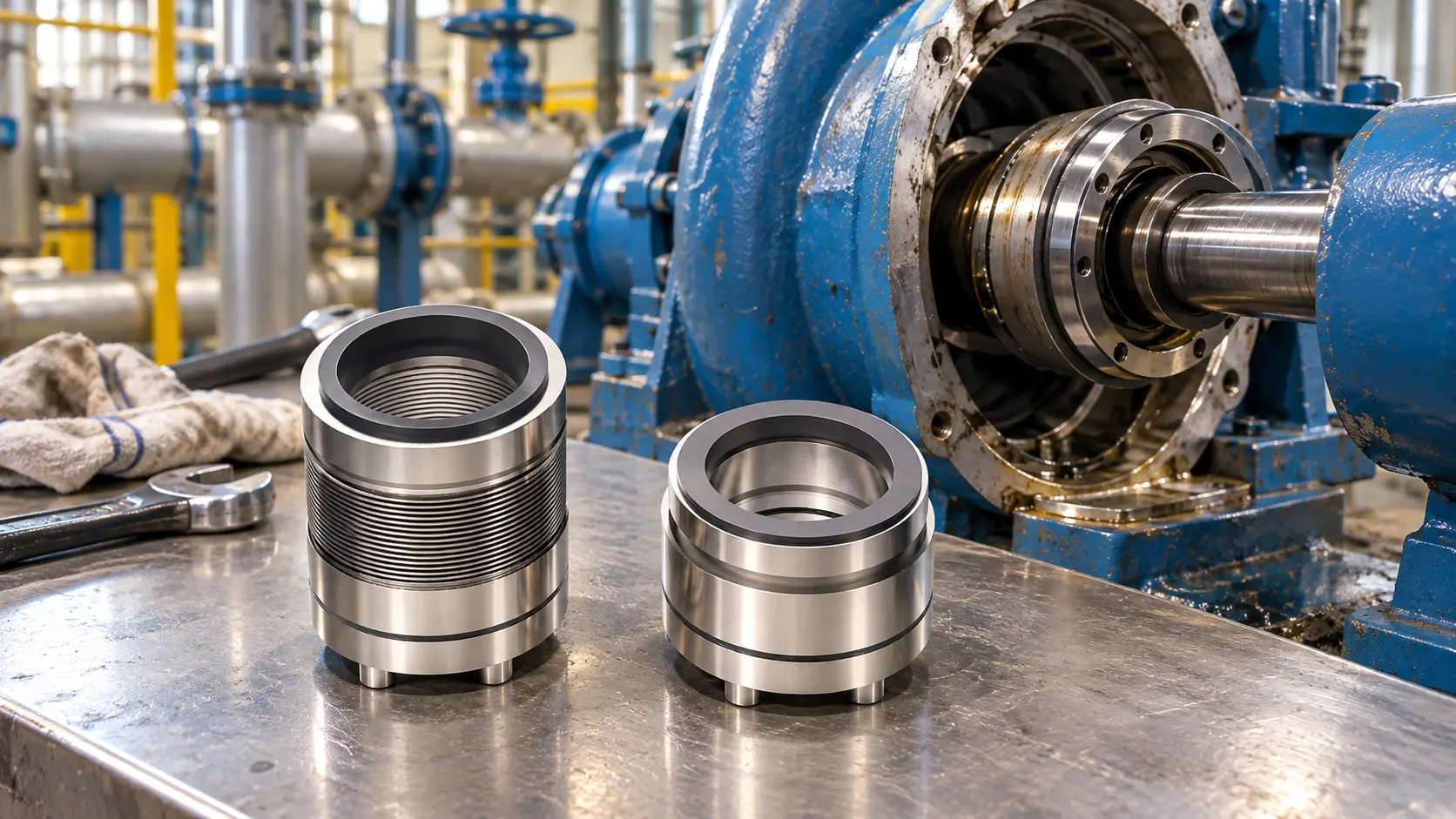
Keep every available part of an unidentified seal, including faces, seats, springs, O-rings, collars, sleeves, glands, clips, and broken fragments. Mark the process side, atmospheric side, and direction of rotation before cleaning or disassembly removes useful evidence.
Photograph the complete assembly and each component from the front, rear, and side. Include a ruler or caliper in selected images, but do not rely on image scale as a substitute for measured dimensions.
An old sample can help identify construction and geometry, but it cannot reveal the actual medium, pressure, temperature, dry-running history, or reason for failure. If parts are missing or severely worn, chamber measurements and pump drawings may be needed before a replacement mechanical seal for the pump can be specified.
Pump mechanical seal measurements depend on whether the existing product is a component seal, cartridge assembly, or unidentified custom design. Shaft diameter alone cannot define the installed length, stationary-seat fit, gland pattern, or available chamber space.
For a component seal, record the shaft or sleeve diameter at the exact installation position, not at an accessible location farther along the shaft. Measure the rotating assembly’s inside and outside diameters, free length, installed working length, and the location of shoulders, steps, threads, keyways, or drive features.
For the stationary seat, record the outside diameter, inside diameter, thickness, elastomer profile, and whether it mounts in a bore, gland, cup, or retainer. Note the spring arrangement, drive collar, set-screw positions, and rotation direction.
Wear can make an old component unreliable as a dimensional reference. Deep face wear, compressed elastomers, distorted springs, or sleeve grooves may alter critical measurements. Where available, compare the old part with the pump drawing and measure the actual installation location before approving a replacement.
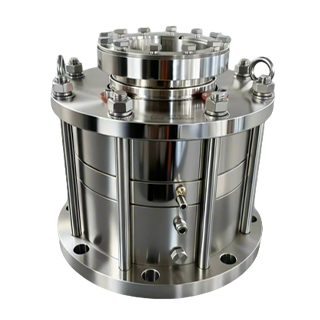
A cartridge replacement requires the shaft or sleeve diameter, seal-chamber bore and depth, gland register, bolt diameter, bolt spacing or bolt circle, and available axial and radial space. Record nearby coupling, bearing-frame, guard, and piping obstructions that could prevent installation or future removal.
Identify existing flush, quench, drain, cooling, buffer, or barrier ports. The supplier may also need the gland-face condition, shaft runout, axial movement, and chamber-to-shaft alignment, depending on the project.
The same shaft diameter does not make two cartridge seals interchangeable. Different assemblies may require different glands, sleeves, bolt patterns, chamber clearances, and installation lengths. The final dimensional drawing should be reviewed before production, particularly when the project involves a custom gland, adapter, sleeve, or modified pump. Mechanical seal application forms commonly include shaft, gland, bolt, and equipment dimensions for this reason.
Correct dimensions answer whether a seal may fit. Mechanical seal selection data determine whether it can operate in the application.
Provide the specific medium rather than a broad description such as “chemical,” “oil,” or “wastewater.” Include concentration, pH where relevant, additives, cleaning liquids, solids content, particle size, viscosity, and any tendency to crystallize, polymerize, solidify, or become more viscous during shutdown.
The normal process liquid may not be the most demanding exposure. A cleaning fluid or temporary operating condition may reach a higher temperature or create a different compatibility risk.
Also state whether the medium is poorly lubricating, corrosive, toxic, flammable, valuable, or sensitive to contamination. These details help the supplier evaluate face materials, elastomers, metal parts, seal arrangement, and auxiliary requirements. Published pump-seal guidance similarly identifies material compatibility, spring condition, cooling, and installation quality as factors affecting leakage and service life.
Submit normal and maximum seal-chamber pressure when known. Suction and discharge pressure can support the review but may not equal the pressure acting at the seal.
Provide normal operating temperature, startup peaks, cleaning temperature, and relevant ambient conditions. Record pump speed, shaft diameter, direction of rotation, continuous or intermittent duty, starts per day, standby operation, vacuum conditions, pressure reversals, and known dry-running events.
A mechanical seal datasheet normally distinguishes the conditions around the seal from general pump data because face loading, heat generation, material compatibility, and support-system requirements depend on the local environment.
Ordering the same model may reproduce the same result when the previous failure was caused by the pump, process, installation, or support system.
Photograph both seal faces, including uneven tracks, chips, cracks, discoloration, deposits, and heat-related damage. Record swollen, hardened, blistered, twisted, or cut elastomers; blocked or corroded springs; sleeve grooves; gland deposits; and the apparent leakage path.
State the previous service life and whether leakage began during startup, steady operation, shutdown, cleaning, or a process upset. Do not discard the failed parts until the review is complete.
This evidence helps distinguish possible material incompatibility, dry running, contamination, incorrect face loading, installation damage, and mechanical movement. Failure analysis and seal observation reports are recognized parts of mechanical-seal reliability work, alongside selection, installation, maintenance, and startup procedures.
Inspect the shaft sleeve for deep grooves, corrosion, looseness, and an unsuitable sealing surface. Check bearings, shaft runout, axial movement, coupling alignment, pipe strain, cavitation, and unstable pump operation when repeated failures have occurred.
Blocked flush lines, inadequate cooling, trapped vapor, or an incorrectly operated support system may damage a new seal even when its materials and dimensions are correct.
A repair-first decision is appropriate when pump defects could change the final installation dimensions or immediately damage another seal. Xinyoumi’s published product guidance lists coaxiality, shaft movement, spring compression, face condition, cooling, and material compatibility among the issues associated with leakage and short seal life.
The quotation should identify the proposed face combination, elastomer, metal parts, and basic seal arrangement. It should also state whether the product is single or double, balanced or unbalanced, component or cartridge, and whether its flexible element is stationary or rotating when that distinction affects the application.
Do not copy the old material code automatically. A short service life, changed medium, higher cleaning temperature, additional solids, or revised leakage requirement may justify reselection.
The supplier should also confirm whether the seal depends on flushing, cooling, quench, buffer fluid, barrier fluid, filtration, or another auxiliary arrangement. Xinyoumi publicly supplies pump seals and auxiliary sealing equipment, so relevant pump mechanical seals should be reviewed together with the submitted process and support-system data rather than selected by dimensions alone.
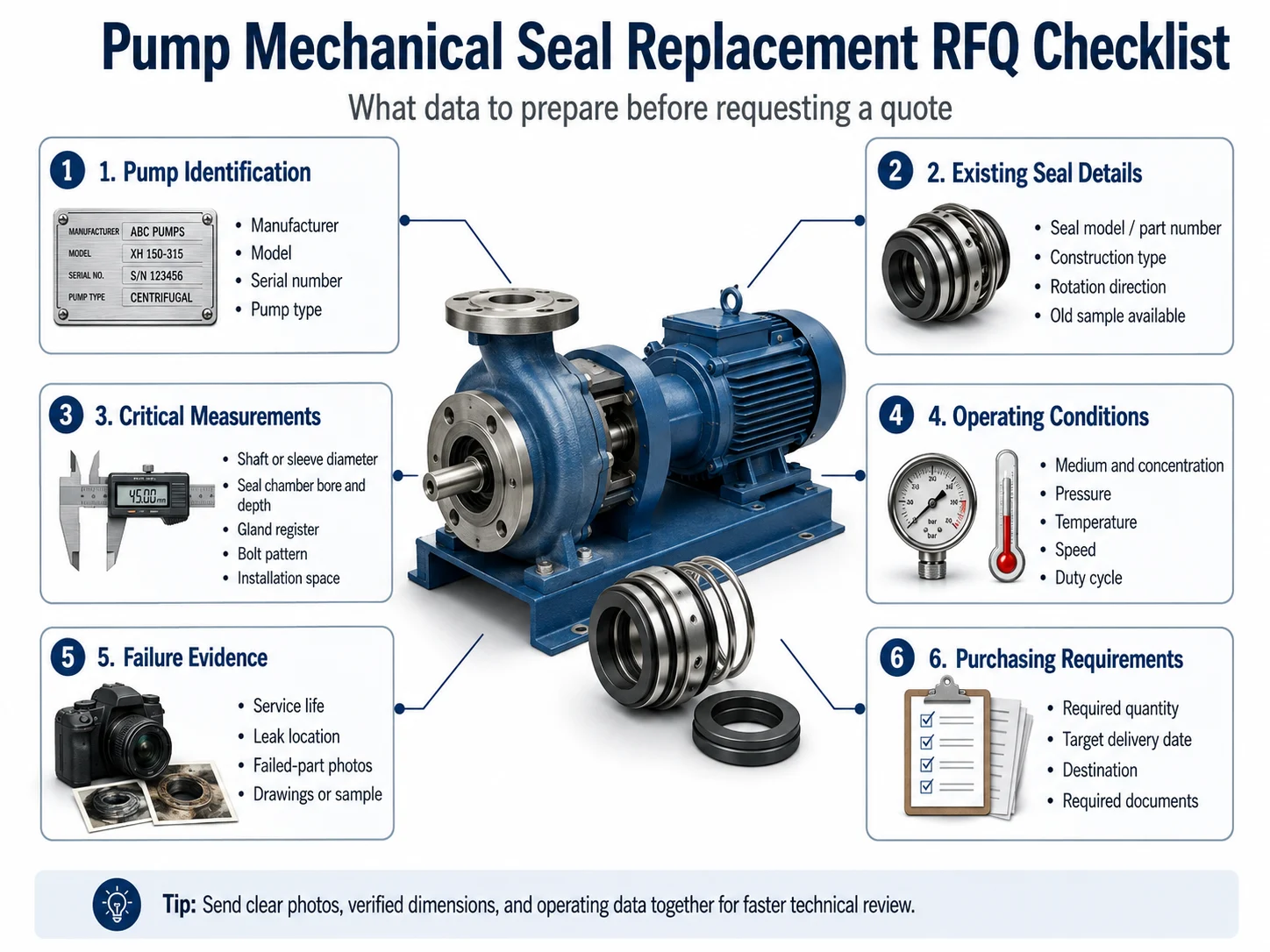
Use the following mechanical seal RFQ checklist as a copyable ordering form:
Company:
Contact name:
Email and telephone:
Pump manufacturer:
Pump model:
Pump serial number:
Pump type:
Existing seal manufacturer:
Existing seal model:
Existing part number:
Known seal construction:
Direction of rotation:
Shaft or sleeve diameter:
Component-seal dimensions:
Seal-chamber bore and depth:
Gland register:
Gland bolt pattern:
Available installation space:
Process medium:
Concentration:
Solids content and particle size:
Viscosity:
Crystallization or solidification tendency:
Normal pressure:
Maximum pressure:
Operating temperature:
Cleaning temperature:
Pump speed:
Duty cycle and starts per day:
Existing flush or support system:
Previous seal service life:
Failure description:
Photographs available:
Drawings available:
Old sample available:
Required quantity:
Target delivery date:
Destination:
Required documentation:
Attach clearly named photographs and drawings. Identify which dimensions are measured, taken from a drawing, or estimated. This prevents preliminary assumptions from being mistaken for approved production data.
A supplier should classify the request before issuing a technically binding quotation.
A verified direct replacement is appropriate when the existing model, dimensions, materials, installation, and operating conditions have all been confirmed.
Application reselection is required when the dimensional envelope remains usable but the medium, pressure, temperature, materials, solids, support system, or failure history indicates that copying the old specification may repeat a problem.
A custom review may be necessary when the seal is obsolete, unidentified, modified, or incompatible with the current chamber. That route may involve additional measurements, an old sample, a new gland or sleeve, or changes to the support arrangement. Photographs can support initial screening, but conflicting or incomplete data should be resolved before production.
The final quotation should identify the seal construction, materials, direction of rotation, included components, operating assumptions, support requirements, and any required pump modification. A dimensional drawing should show the critical installation interfaces and approval responsibility.
Also confirm replaceable wear parts, installation instructions, exclusions, and whether the quotation is based on an exact replacement or a newly selected configuration.
Xinyoumi publicly describes its business as the design, development, production, and sale of fluid mechanical seals, with pump seals, reactor seals, and auxiliary equipment included in its product structure. Further company information is available through about Xinyoumi, while Xinyoumi mechanical seal solutions provides an overview of the broader sealing range and application approach.
A reliable pump mechanical seal replacement RFQ combines identification, verified dimensions, process conditions, failure evidence, and purchasing requirements. Pump model and shaft diameter are useful starting points, but they do not replace an application review.
To request a pump mechanical seal replacement review, submit the completed checklist, drawings, photographs, sample details, operating conditions, required quantity, and delivery target. Xinyoumi’s published contact channels accept project messages by form, email, telephone, or WhatsApp.
Sometimes it supports an initial cross-reference. However, a repaired or modified pump may have a different shaft, sleeve, gland, or chamber. Verify the old seal number, actual dimensions, and operating conditions before production.
Typical data include the shaft or sleeve diameter, component-seal dimensions, seal-chamber bore and depth, gland register, bolt pattern, and available axial space. The exact list depends on whether the seal is component, cartridge, or custom.
Photos can help identify construction, mounting method, and visible damage. They normally cannot confirm precise dimensions, materials, spring loading, internal condition, or operating suitability. Include measurements, pump information, and process data.
A sample may help when the seal is unknown, obsolete, damaged, or modified. Keep all components, mark their installation orientation, and confirm the supplier’s sample requirements before shipping.
Repeat failure may result from copying an unsuitable old specification, sleeve wear, shaft movement, bearing or alignment problems, incompatible materials, dry running, solids, vaporization, or an ineffective flush or support system.