Nullam dignissim, ante scelerisque the is euismod fermentum odio sem semper the is erat, a feugiat leo urna eget eros. Duis Aenean a imperdiet risus.
Nullam dignissim, ante scelerisque the is euismod fermentum odio sem semper the is erat, a feugiat leo urna eget eros. Duis Aenean a imperdiet risus.
 author
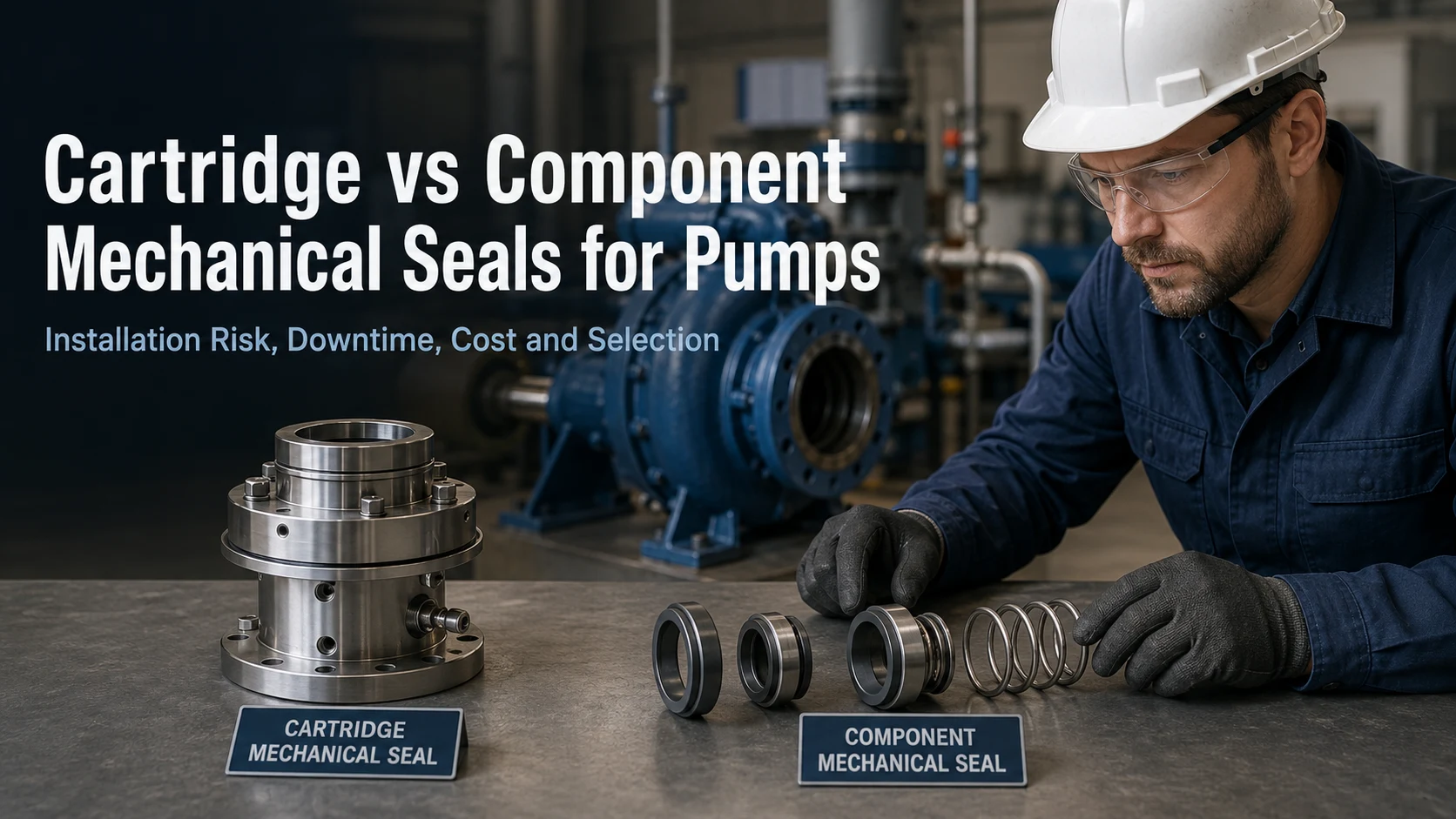
A cartridge vs component mechanical seal decision usually begins after a pump leak, repeated installation failure, emergency shutdown, or maintenance review. Cartridge seals can reduce several field-assembly risks because their major parts are supplied as a preset unit. Component seals require more work at the pump but may remain practical where space, equipment geometry, inventory strategy, or installation direction limits cartridge use.
The lower-risk choice depends on the pump—not the label alone. Buyers must compare installation access, technician skills, chamber dimensions, operating conditions, shutdown activities, and lifecycle cost before selecting a replacement.
Both designs use the same basic sealing principle: a rotating face and stationary face operate together around the pump shaft. Their main difference is how the parts are supplied, positioned, and installed.
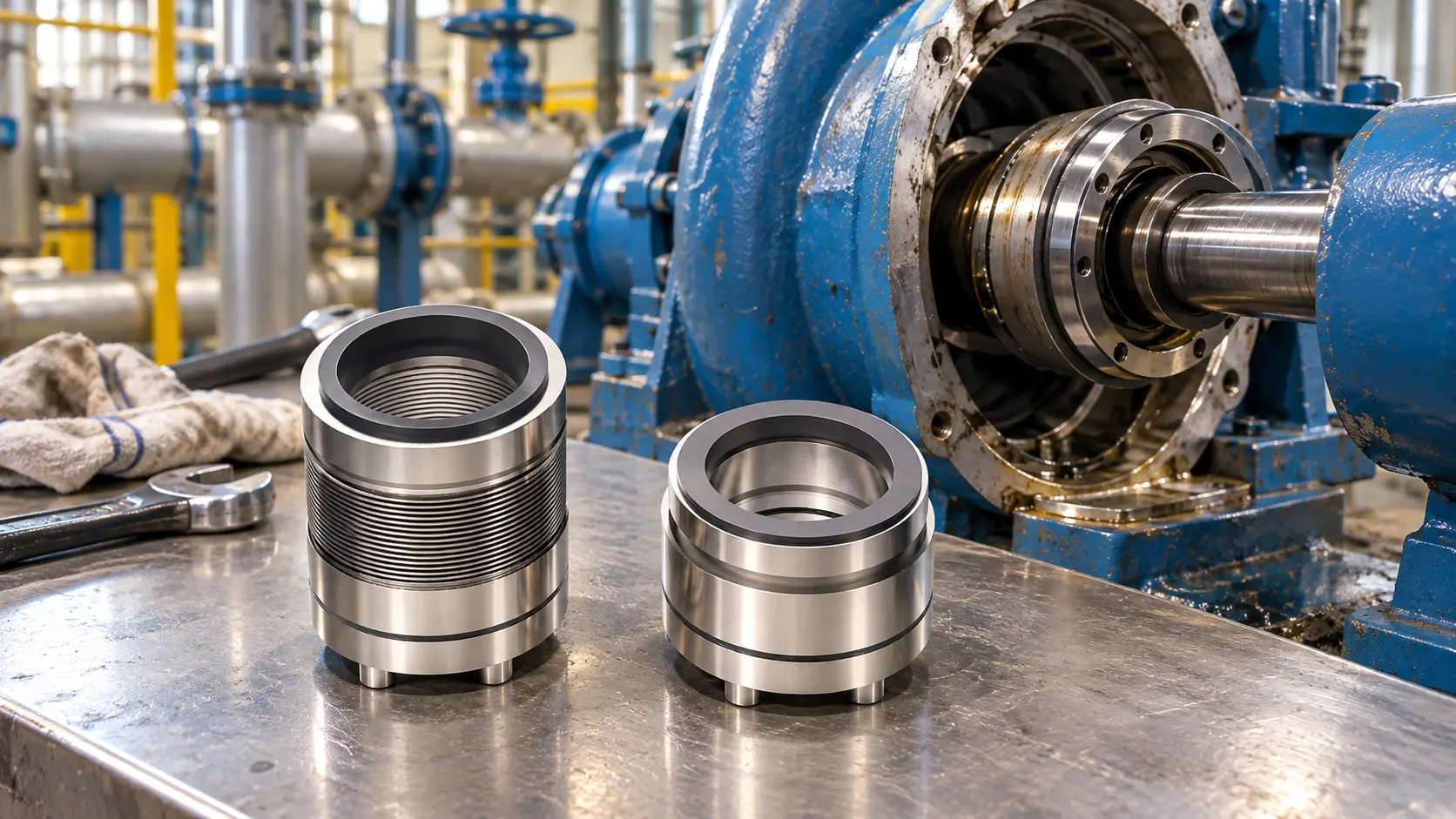
A component mechanical seal is supplied as separate rotating and stationary parts. Depending on the design, the installer may handle seal faces, springs, O-rings, retainers, drive parts, and other components individually.
Installation usually requires the technician to identify the correct orientation, establish the working length, set spring compression, protect the faces from contamination, and move secondary seals over the shaft or sleeve without damage. Limited access inside the seal chamber can make these tasks more difficult.
This construction can still be appropriate when the pump has restricted space, requires wet-side installation, must remain compatible with an established OEM arrangement, or is maintained by technicians with reliable installation procedures. A component seal is not inherently unreliable; its performance depends heavily on correct selection, accurate assembly, pump condition, and commissioning.
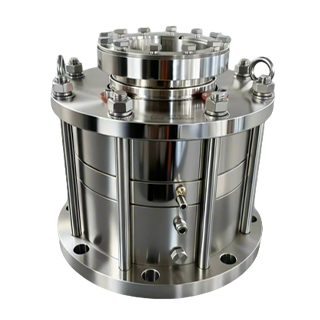
A cartridge mechanical seal normally combines the principal seal components with a sleeve and gland in a preassembled unit. Retaining or setting devices hold the rotating and stationary elements in their intended axial relationship while the assembly is fitted to the pump.
This arrangement reduces the need to set spring compression at the pump and limits direct handling of the seal faces. It can also make installation more repeatable across different technicians, shifts, contractors, or plant locations.
Preassembly does not eliminate equipment checks. The shaft or sleeve diameter, seal chamber, gland connection, bolt pattern, available axial space, flush ports, and direction of rotation must still match the selected assembly. The installer must also follow the correct sequence for tightening the drive, securing the gland, releasing the setting devices, venting the chamber, and starting any support system.
Cartridge construction generally reduces the number of critical adjustments performed at the pump. It does not remove every installation or commissioning risk.
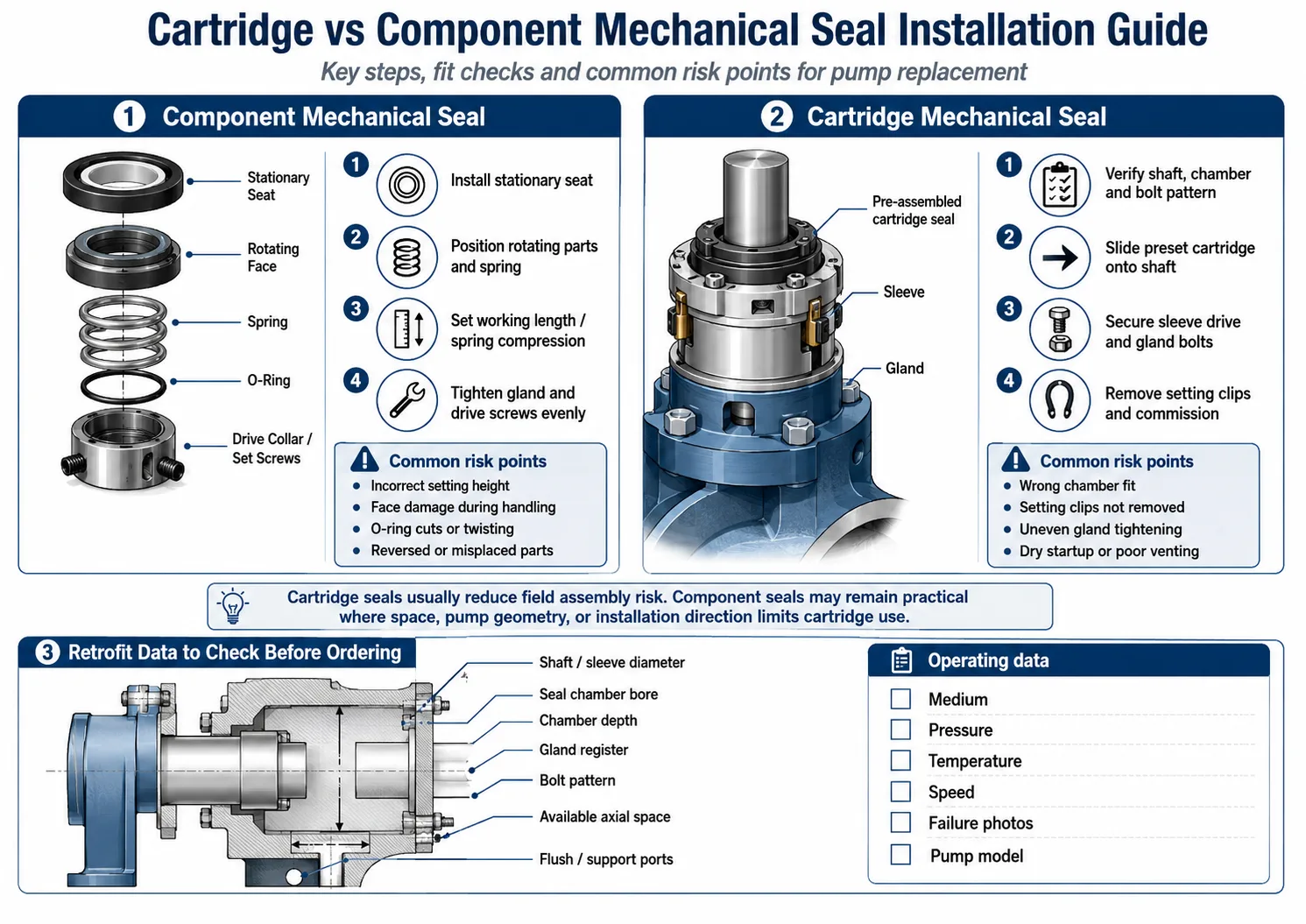
Component seal installation creates more opportunities for mistakes involving:
Some errors create immediate leakage during startup. Others produce uneven face loading, excessive heat, or accelerated wear that becomes visible only after several operating cycles.
Before installing a component seal, the maintenance team should verify the complete parts list, installation drawing, clean working conditions, shaft surface, chamber dimensions, and measurement tools. Where technicians do not regularly install that specific design, supplier instructions or supervised installation may reduce the risk of repeat failure. Industry guidance identifies incorrect seating, elastomer damage, and inaccurate spring adjustment as common component-seal installation problems.
A cartridge mechanical seal may still leak when:
Cartridge construction lowers selected assembly and setting risks. It cannot compensate for wrong equipment data, incompatible materials, severe runout, blocked piping, or improper startup.
A cartridge seal can reduce the time required to position, assemble, and check the seal itself. Whether it produces a meaningful reduction in total shutdown time depends on the pump arrangement and the other work included in the maintenance event.
Potential time savings occur during parts identification, face handling, spring setting, axial positioning, and final assembly checks. Repeatable installation may also reduce the chance that a pump must be opened again because the seal was assembled incorrectly.
This advantage can be important when several crews maintain similar pumps, an emergency outage leaves little time for detailed field measurements, or a critical pump has a history of installation-related leakage. Preassembled cartridge designs are commonly positioned as a way to simplify maintenance and shorten seal replacement activities.
Seal installation may represent only a small part of the shutdown. Isolation, draining, decontamination, removing guards, disconnecting the coupling, moving the motor, opening the pump, repairing the sleeve, and recommissioning can consume far more time.
A useful estimate is:
Total shutdown time = isolation + disassembly + inspection + repair + seal installation + reassembly + commissioning
When equipment access or major pump repairs dominate this sequence, changing to a cartridge seal may improve installation consistency without dramatically shortening the entire outage. Downtime claims should therefore be based on the plant’s actual maintenance records, not on seal installation time alone.
A component-to-cartridge conversion cannot be approved from nominal shaft diameter alone. The complete installation envelope must be reviewed.
Record the following before requesting a cartridge seal retrofit:
A cartridge gland may require more external space than the original component arrangement. Some conversions also require a replacement sleeve, adapter, custom gland, or pump modification. The purchaser, seal supplier, and equipment team should approve the final dimensional drawing before production.
Suitable pump mechanical seals should be compared by construction, dimensions, materials, and operating limits rather than by shaft diameter or product appearance alone. Xinyoumi’s public pump-seal category lists multiple industrial pump seal models, but the pages do not currently classify every model explicitly as cartridge or component construction. The assembly type should therefore be confirmed in the quotation and drawing.
A component mechanical seal may remain the more practical choice when:
Some wet-side and submersible arrangements are not suitable candidates for conventional cartridge conversion because the installation geometry does not support the assembled unit.
The cartridge unit often has a higher initial purchase price because it includes additional assembled hardware. A fair comparison must include all parts required to return the pump to operation.
Upfront cost may include the seal, gland, sleeve, adapters, machining, new piping connections, installation tools, and technical support. Lifecycle cost may include labor, training, planned downtime, emergency downtime, rework, damaged components, and spare-parts inventory.
A cartridge may offer better value when installation consistency and rapid replacement are important. A component seal may remain economical when it fits the pump without modification and qualified technicians are readily available.
| Decision factor | Cartridge seal may be preferred when | Component seal may be preferred when |
|---|---|---|
| Maintenance skills | Several teams or contractors need repeatable installation | Experienced technicians follow a proven procedure |
| Shutdown window | Seal assembly or rework is a major part of downtime | Pump disassembly and repair dominate the outage |
| Pump compatibility | Chamber, gland, and space accept the cartridge | Equipment geometry prevents cartridge installation |
| Standardization | Complete assemblies simplify replacement planning | Existing component inventory is already standardized |
| Initial budget | Lifecycle savings justify additional hardware | Low initial cost is a primary constraint |
| Retrofit scope | Little or no equipment modification is required | New glands, sleeves, or machining make conversion uneconomic |
| Equipment criticality | Installation error could stop important production | The pump is noncritical and leakage risk is controlled |
This matrix is an initial screening tool. Final selection should be verified against the pump drawing, working conditions, maintenance procedure, and product specification.
Cartridge and component seals can both fail when the pump or process conditions are unsuitable.
Shaft runout, worn bearings, coupling misalignment, dry running, cavitation, flashing, incompatible materials, abrasive particles, blocked flush lines, or incorrect barrier pressure can damage either design. Cartridge construction may prevent an incorrect spring setting, but it cannot repair a bent shaft or supply lubrication to dry faces.
Before ordering a replacement, retain the failed faces, O-rings, springs, gland, and sleeve. Record when the leakage began, whether it occurred at startup or during stable operation, and where the leakage appeared. Check the wear pattern, deposits, shaft movement, and actual process data before deciding that the seal construction caused the failure.
Xinyoumi’s pump-seal guidance similarly identifies spring compression, face damage, shaft-sleeve condition, cooling, coaxiality, material compatibility, and installation practice as factors affecting leakage and service life.
A technically complete quotation should do more than name a seal and provide a price. The supplier should explain:
The supplier should request the pump model, current seal information, dimensional drawing, medium, pressure, temperature, speed, solids, duty cycle, failure history, and installation constraints. A quotation based only on an old model number or shaft diameter leaves significant compatibility risks unresolved.
Xinyoumi publicly organizes its products into pump seals, reactor seals, and auxiliary equipment, and describes modular design and application-based selection as part of its sealing approach. More background on the manufacturer’s product scope is available through about Xinyoumi.
For cartridge or component selection, the inquiry should include:
Xinyoumi’s Xinyoumi mechanical seal solutions can serve as the starting point for reviewing the company’s broader pump, reactor, and auxiliary sealing scope before submitting project information.
Cartridge mechanical seals usually reduce field assembly and axial-setting risk, making them useful where installation consistency and maintenance planning are important. Component seals remain valid for pumps with limited space, wet-side installation, established spare-parts systems, or experienced maintenance teams.
The decision should be based on pump compatibility, shutdown activities, technician skills, operating conditions, and total lifecycle cost. To request a pump seal design review, provide the pump model, drawings, dimensions, medium, pressure, temperature, speed, failure photos, quantity, and required delivery schedule. Xinyoumi can review the application through its published inquiry channel without assuming that a specific existing model is suitable before the technical data are checked.
A cartridge seal is supplied as a preset assembly that normally includes the seal elements, sleeve, gland, and setting hardware. A component seal is supplied as separate parts that must be positioned and adjusted on the pump.
It can reduce seal assembly, measurement, and rework time. Total downtime also includes isolation, pump disassembly, cleaning, repairs, reassembly, and commissioning, so the actual benefit depends on the maintenance scope.
Possibly. The shaft, seal chamber, gland register, bolt pattern, axial space, installation direction, and support connections must be checked. A custom gland, sleeve, adapter, or pump modification may be required.
A component seal may be more practical where installation space is limited, the seal must be installed from the wet side, the existing arrangement is proven, or cartridge conversion costs exceed the expected maintenance benefit.
Possible causes include incorrect dimensions, damaged O-rings, uneven gland tightening, shaft runout, dry startup, poor venting, incompatible materials, blocked flushing, or incorrect support-system pressure. Preassembly does not remove these risks.