Nullam dignissim, ante scelerisque the is euismod fermentum odio sem semper the is erat, a feugiat leo urna eget eros. Duis Aenean a imperdiet risus.
Nullam dignissim, ante scelerisque the is euismod fermentum odio sem semper the is erat, a feugiat leo urna eget eros. Duis Aenean a imperdiet risus.
 author
In many pump and reactor installations, mechanical seal support systems are added only after repeated leakage, high seal face temperature, or unexplained double mechanical seal failure. That usually means the real problem has been treated too late. A seal can be well made, correctly installed, and still fail early if pressure, temperature, lubrication, or barrier fluid condition is not under control.
For buyers, this matters because the support system is part of the sealing package, not a loose add-on. When the process medium is toxic, flammable, crystallizing, corrosive, hot, or not allowed to leak into the workshop, the seal environment has to be managed. Plan 53A, Plan 53B, Plan 53C, and Plan 54 are commonly discussed because each one gives a double mechanical seal a different way to handle barrier fluid pressure and circulation.
Kunshan Xinyoumi Mechanical Seal Technology Co., LTD supplies mechanical seal support systems for industrial sealing applications together with reactor mechanical seals, pump mechanical seals, and auxiliary equipment. Its modular design approach, stocked vulnerable parts, and full-chain service model are useful for plants that need both technical matching and practical delivery control.
A mechanical seal support system helps create a safer and more stable working condition around the seal faces. In a pressurized dual seal arrangement, the system supplies barrier fluid to the area between the two seals. That fluid helps lubricate the faces, remove heat, maintain pressure above the seal chamber, and reduce the chance of process fluid entering the atmosphere.
A support system may include a reservoir, pressure source, accumulator, piping, cooling coil, heat exchanger, level instrument, pressure transmitter, temperature gauge, magnetic level gauge, or monitoring device. The exact configuration depends on the seal type and the site condition. For a chemical pump, the main concern may be leakage control. For a reactor agitator, pressure fluctuation and shaft movement may be just as important. For a high-temperature process, heat removal becomes a deciding factor.
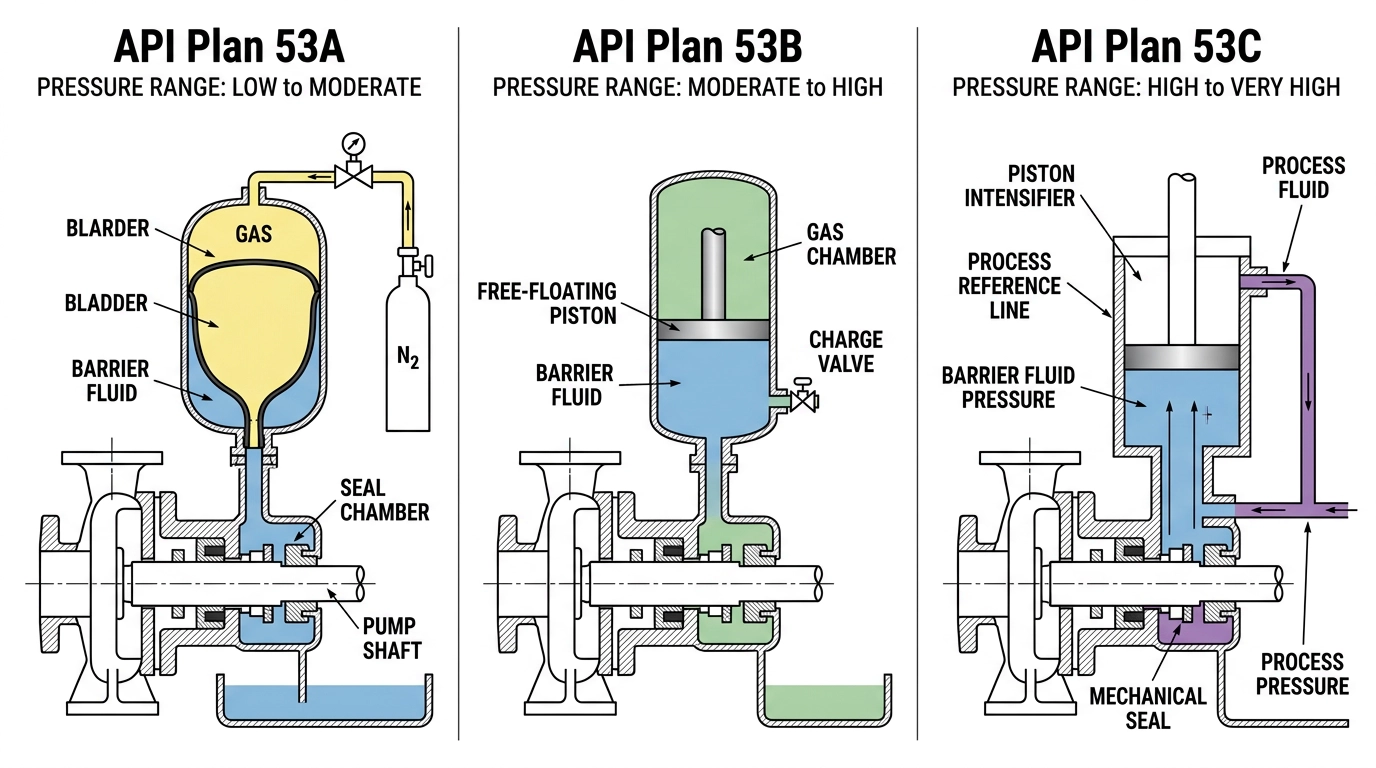
Plan 53A uses a pressurized barrier fluid reservoir to serve a double mechanical seal. It is widely understood by maintenance teams because the principle is straightforward: keep clean barrier fluid at a proper pressure, watch level and temperature, and maintain the system before the fluid breaks down. For many medium-duty services, this arrangement gives a practical balance between performance, cost, and field maintenance.
Kunshan Xinyoumi Mechanical Seal Technology Co., LTD lists Plan 53A seal support system products within its auxiliary equipment range. For buyers handling reactors, mixers, and process pumps, Plan 53A is often the first plan to review when the duty is not extreme but leakage control is still important.
Plan 53B is selected when the system needs pressure storage through an accumulator instead of a simple reservoir-only arrangement. In real plant language, it can be useful when a stable barrier fluid pressure reserve is needed and the layout has to be more compact. The maintenance team still needs to check pressure behavior, fluid condition, and instrument readings, but the pressure source is different from Plan 53A.
This plan is often discussed in comparison searches such as Plan 53A vs Plan 53B, because the buyer usually wants to know whether the higher system complexity is justified by the duty. The answer depends on seal chamber pressure, temperature, fluid volume, monitoring needs, and how the plant handles maintenance.
Plan 53C uses a piston-style accumulator concept to help maintain pressure relationship under changing process conditions. It is often considered when seal chamber pressure is not stable and the barrier fluid system must respond more closely to pressure changes. In applications where process pressure rises and falls during batches, a simple fixed-pressure setup may not be enough.
For reactors, high-pressure vessels, and demanding chemical duties, Plan 53C can be reviewed when pressure balance matters more than simplicity. Kunshan Xinyoumi Mechanical Seal Technology Co., LTD also lists PLAN53C in its auxiliary equipment offering, which gives procurement teams a direct product route when the sealing package includes both the mechanical seal and the support system.
Plan 54 is different because it uses an external pressurized barrier fluid supply. Instead of relying on a small local reservoir or accumulator arrangement, it can provide stronger circulation, cooling, filtration, and fluid management for severe or high-heat services. When several seals need a central support unit, or when heat removal is a major issue, Plan 54 becomes part of the discussion.
Plan 54 is not automatically “better” than Plan 53A, 53B, or 53C. It is usually more involved and should be chosen when the duty calls for it. For purchasing teams, the real question is not which plan sounds more advanced, but which one matches the pressure, temperature, hazard level, maintenance capacity, and budget.
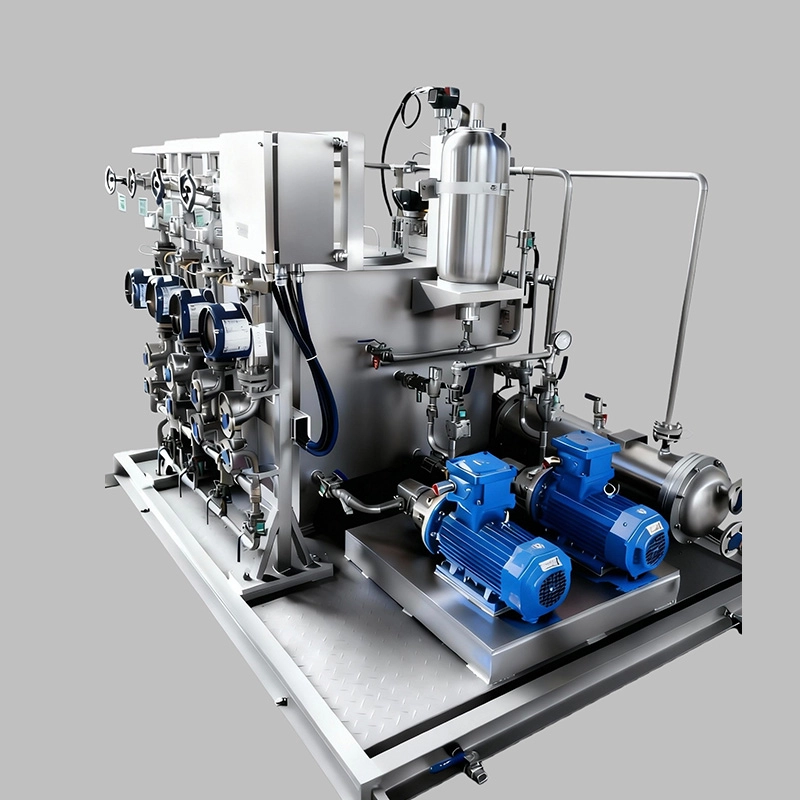
For stable medium-duty service, Plan 53A is often easier to understand, easier to maintain, and suitable for many double mechanical seal applications. For plants that need a pressure reserve with a more compact setup, Plan 53B may be reviewed. For changing process pressure or more demanding pressure tracking, Plan 53C deserves attention. For high heat load, multiple seal points, large circulation demand, or stronger external cooling and filtration, Plan 54 may be the better direction.
The selection should not be based on the plan number alone. The buyer should compare seal chamber pressure, barrier fluid pressure, process temperature, medium hazard, cooling water availability, fluid compatibility, instrumentation requirements, and maintenance habits. In practical projects, the support system should be selected together with the seal rather than after the seal has already failed.
A wrong support system can make a good double mechanical seal look unreliable. If barrier fluid pressure drops below the required level, process medium may move toward the seal interface. If the barrier fluid gets too hot, the fluid film becomes unstable and seal faces can overheat. If level instruments, pressure transmitters, or temperature gauges are ignored, warning signs may be missed until leakage appears.
Contamination is another common issue. When particles, degraded fluid, or incompatible liquid enter the system, the seal faces can wear faster. Cooling problems can also shorten seal life, especially in high-temperature chemical, pharmaceutical, food, and new energy processes. In these cases, replacing only the seal ring may not solve the root cause.
A useful quotation request should give more than a plan number. The supplier needs equipment type, seal type, medium, pressure, temperature, shaft speed, seal chamber pressure, required barrier fluid pressure, cooling water condition, material requirements, instrument preferences, tank volume, quantity, and delivery schedule. If the system is connected to a reactor or pump with a history of leakage, photos and previous failure notes are also valuable.
Kunshan Xinyoumi Mechanical Seal Technology Co., LTD offers auxiliary equipment for mechanical seals, including support systems and related equipment such as booster tanks and balance tanks. Its modular design helps product adaptation, while stocked vulnerable parts can reduce waiting time for replacement components. For bulk buyers and project contractors, this combination supports both technical selection and supply planning.
Mechanical seal support systems should be treated as part of the sealing decision, not as a secondary accessory. Plan 53A, Plan 53B, Plan 53C, and Plan 54 each serve different pressure, temperature, circulation, and maintenance needs. A reliable selection starts with real operating data. Buyers can send seal support system requirements for technical selection before confirming the final plan, seal model, instruments, and delivery schedule.
Q1: What is a mechanical seal support system used for?
A: A mechanical seal support system is used to control the working environment around a mechanical seal. In double mechanical seal applications, it supplies barrier fluid or buffer fluid, helps control pressure and temperature, lubricates the seal faces, and reduces the risk of process fluid leakage. It is especially important for toxic, flammable, hot, corrosive, or crystallizing media.
Q2: What is the difference between Plan 53A and Plan 53B?
A: Plan 53A normally uses a pressurized barrier fluid reservoir, while Plan 53B uses an accumulator-based pressure arrangement. Plan 53A is often easier for maintenance teams to understand and operate. Plan 53B may be considered when pressure storage and a more compact system layout are needed. The choice depends on seal chamber pressure, site maintenance practice, and instrumentation needs.
Q3: When should Plan 53C be used for a mechanical seal?
A: Plan 53C should be considered when the process pressure changes and the barrier fluid system needs better pressure response. It is often reviewed for demanding reactors, pressure vessels, and chemical duties where a stable pressure relationship is important. Buyers should confirm pressure fluctuation, temperature, seal type, and barrier fluid requirements before selecting Plan 53C.
Q4: Is Plan 54 better than Plan 53A, 53B or 53C?
A: Plan 54 is not always better. It is usually selected when external pressurized barrier fluid circulation, stronger cooling, filtration, or centralized supply is needed. For severe heat load, multiple seal points, or demanding continuous operation, Plan 54 may be suitable. For simpler services, Plan 53A, 53B, or 53C may be more practical and cost-controlled.
Q5: What information is needed to quote a mechanical seal support system?
A: A mechanical seal support system quotation should include equipment type, seal type, medium, temperature, pressure, shaft speed, seal chamber pressure, required barrier fluid pressure, cooling condition, material requirements, instruments, tank volume, quantity, and delivery schedule. Complete operating data helps the supplier recommend the right Plan 53A, Plan 53B, Plan 53C, or Plan 54 arrangement.