Nullam dignissim, ante scelerisque the is euismod fermentum odio sem semper the is erat, a feugiat leo urna eget eros. Duis Aenean a imperdiet risus.
Nullam dignissim, ante scelerisque the is euismod fermentum odio sem semper the is erat, a feugiat leo urna eget eros. Duis Aenean a imperdiet risus.
 author
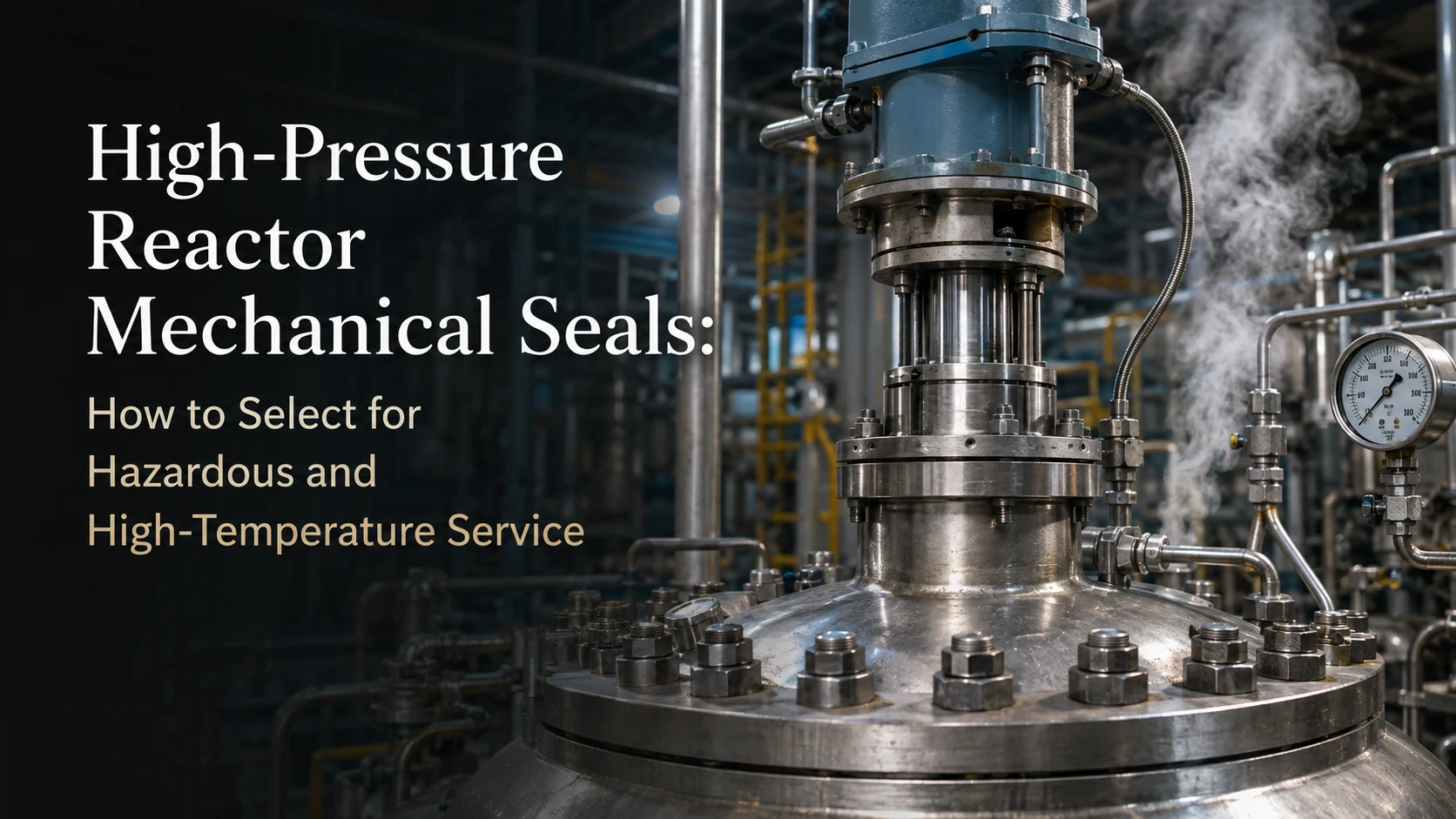
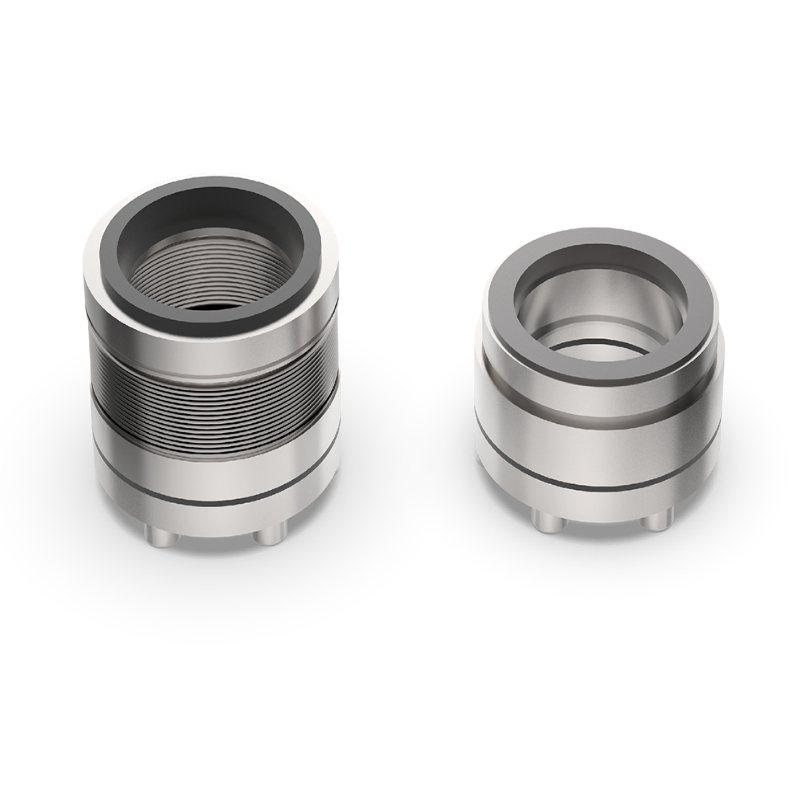
A high-pressure reactor mechanical seal should not be selected from pressure rating alone. A seal may appear suitable on a product sheet yet still fail if the actual seal differential pressure, thermal conditions, hazardous-media containment, pressure cycling, shaft movement, or support-system requirements are overlooked. For engineers and purchasing teams, the correct approach is to define the complete operating envelope first, then select the seal arrangement, materials, cooling strategy, and auxiliary system around those conditions. XYM’s reactor portfolio includes a double-face balanced M208U configuration intended for high-pressure, high-temperature, and high-speed reactor service.
High-pressure and high-temperature reactor service usually involves several interacting risks. Process pressure affects face loading, temperature affects lubrication and materials, hazardous media change containment requirements, and long agitator shafts can introduce movement that is not obvious from nominal shaft diameter. XYM’s reactor selection guidance similarly emphasizes medium, pressure or vacuum, temperature, shaft movement, leakage tolerance, and support-system availability rather than selecting from model number alone.
| Selection Factor | What the Buyer Should Confirm | Why It Matters |
|---|---|---|
| Process medium | Toxicity, flammability, volatility, corrosion | Defines containment and compatibility needs |
| Operating pressure | Normal and maximum values | Establishes real seal loading |
| Vacuum | Minimum pressure condition | Reveals pressure-reversal risks |
| Pressure cycle | Startup, reaction, shutdown | Identifies transient loading |
| Process temperature | Normal and maximum | Establishes thermal duty |
| Seal-area temperature | If known | Better reflects component exposure |
| Shaft speed | Normal and maximum | Affects friction and lubrication |
| Shaft movement | Radial and axial | Affects face tracking |
| Leakage tolerance | Site/process requirement | Influences seal arrangement |
| Cooling availability | Jacket, liquid, or other method | Determines thermal-control options |
| Existing support system | Barrier, buffer, circulation | Must match the seal arrangement |
For severe chemical applications, available Xinyoumi mechanical seal solutions include reactor mechanical seals and auxiliary sealing systems, allowing the seal body and support requirements to be considered together rather than as unrelated components.
A common purchasing error is to provide one vessel pressure and ask for a mechanical seal rated above that value. Reactor design pressure is important, but the seal must operate through the complete pressure cycle at the actual sealing location.
For a high-pressure reactor mechanical seal quotation, provide normal operating pressure, maximum expected pressure, minimum vacuum, startup conditions, shutdown conditions, and any rapid pressure changes during the batch. A seal that behaves correctly at steady positive pressure may experience different face loading during evacuation or pressure reversal.
This is especially important when an application moves repeatedly between vacuum and positive pressure. XYM’s existing reactor guidance notes that normal pressure alone is insufficient and that startup, shutdown, cleaning, and other operating conditions should be included when selecting a reactor seal.
For double or pressurized arrangements, process pressure is only one side of the pressure relationship. Barrier or buffer conditions can influence face loading, leakage direction, and containment. An incorrect pressure assumption may therefore produce leakage even when the mechanical seal’s nominal pressure range appears sufficient.
The technical quotation should state which process pressures were used as the design basis and how the selected support system is intended to operate. Avoid applying one universal barrier-pressure differential to every reactor; the required relationship depends on the seal design, process, and auxiliary-system configuration.
A high-temperature reactor can expose the sealing system to severe thermal conditions, but bulk process temperature should not automatically be treated as the temperature experienced by every seal component.
The temperature at the mechanical seal can be affected by the distance between the process and seal, reactor head geometry, shaft conduction, vapor conditions, cooling provisions, and the surrounding support system. A buyer should therefore provide process temperature and, where available, measured temperature near the seal or seal chamber.
XYM’s published application information includes demanding high-temperature reactor processes, while its reactor-seal guidance separately identifies cooling and auxiliary-system requirements as part of mechanical seal selection. This distinction is important: a high process temperature does not by itself establish a mechanical-seal component rating.
Replacing an elastomer with a higher-temperature grade does not automatically solve a high-temperature sealing problem. Temperature can change face lubrication, fluid viscosity, vaporization tendency, thermal distortion, corrosion behavior, and secondary-seal properties.
Selection should therefore review seal faces, secondary seals, metals, and the operating fluid as a system. XYM’s material-selection guidance specifically notes that temperature affects elastomer behavior, face lubrication, corrosion rate, and thermal distortion, while pressure and vacuum also influence face loading and secondary-seal behavior.
A hazardous reactor does not automatically require one universal seal arrangement. However, a double or dual-pressurized reactor seal should be evaluated when the consequences of leakage are significant.
Typical triggers include toxic, volatile, flammable, strongly odorous, corrosive, contamination-sensitive, or high-value media. Vacuum and pressure cycling may also increase the need for a carefully defined containment arrangement. XYM’s existing reactor guidance identifies toxic, flammable, volatile, and corrosive media as conditions that can justify stricter containment and double-seal consideration.
The decision should still account for contamination limits. If barrier medium can migrate toward the process, compatibility and product purity must be reviewed before the arrangement is approved.
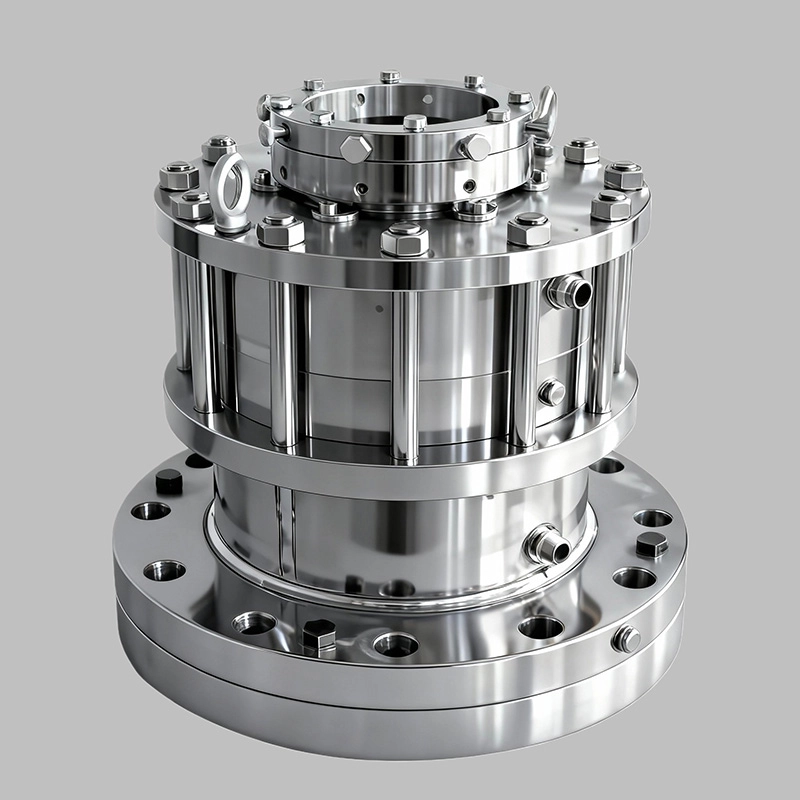
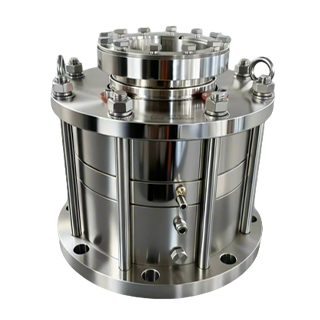
XYM’s M208U is listed as a double-face balanced high-pressure reactor mechanical seal intended for demanding high-pressure, high-temperature, and high-speed conditions. The specific operating limits and suitability for a hazardous process should be verified against the project specification rather than inferred from the product category alone.
Some reactor applications cannot be managed by the mechanical seal body alone. Cooling, barrier-fluid circulation, pressure control, leakage monitoring, or another auxiliary function may become part of the sealing system. XYM’s reactor and industrial seal guides explicitly identify auxiliary systems for high-temperature, high-pressure, toxic, volatile, or crystallizing service.
The support medium should be selected around both seal requirements and process consequences. Buyers should ask whether the medium is compatible with the process, what happens if a small amount enters the reactor, and whether the selected support philosophy remains stable through pressure cycling.
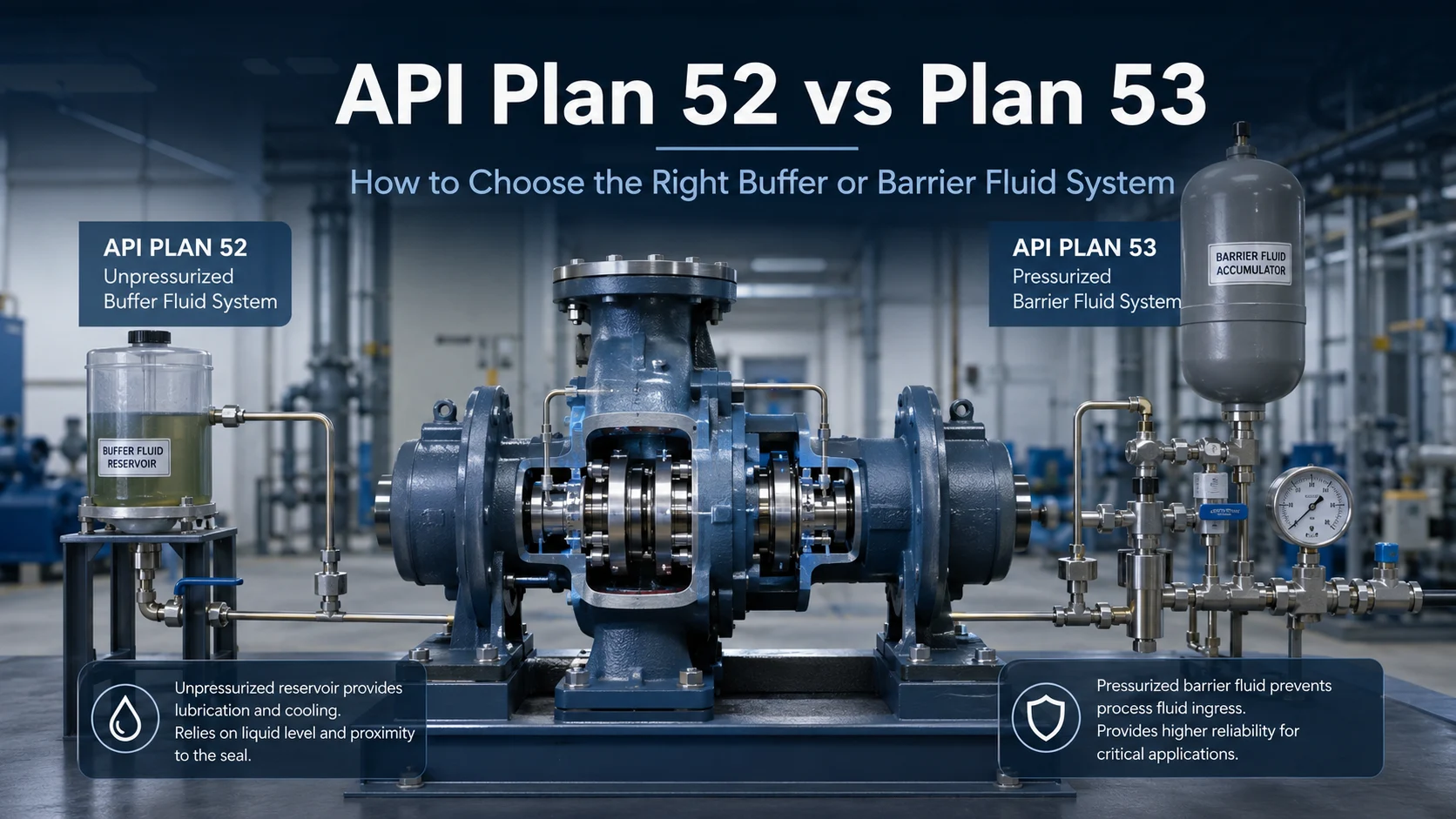
Once a pressurized dual-seal arrangement is chosen, mechanical seal support system selection becomes a separate engineering decision. Plan 53A, 53B, 53C, Plan 54, or another configuration should not be selected solely because it was used on a previous reactor; pressure behavior, utilities, temperature, and monitoring requirements must still be reviewed.
Cooling requirements should be based on the real thermal condition around the seal rather than process temperature alone. A cooling jacket, circulating barrier fluid, or another heat-removal method may be required depending on the configuration.
Monitoring can also help maintenance teams distinguish a thermal problem from a pressure, lubrication, or circulation problem. The quotation should identify required cooling connections, auxiliary-fluid conditions, and any temperature or pressure monitoring expected for the chosen system.
A seal with an adequate nominal pressure rating can still fail when another operating condition falls outside the design basis.
Common causes include:
When repeated leakage occurs, compare current operating conditions with the original specification before ordering another identical seal. XYM’s reactor guidance similarly recommends checking pressure, temperature, shaft movement, process medium, support conditions, and the previous failure rather than making a replacement from shaft diameter alone.
A reactor mechanical seal may perform normally during the main reaction stage yet leak during evacuation, charging, heating, cooling, or repressurization. These transitions can change face loading, fluid state, temperature, and the relationship between process and support pressure.
For batch equipment, the specification should therefore include the operating sequence, not just steady-state values. If the reactor regularly moves between full vacuum and positive pressure, that complete cycle should be reviewed when determining the seal arrangement and support philosophy.
A like-for-like replacement is reasonable only if the original design basis is still valid.
Before reordering, confirm whether process pressure, temperature, medium concentration, vacuum operation, shaft condition, cooling, or the auxiliary system has changed. Inspect the failed seal for deposits, thermal damage, uneven wear, corrosion, or secondary-seal deterioration.
A buyer reviewing different reactor mechanical seal systems should also confirm whether the existing seal represents the original equipment design or a previous retrofit. XYM’s reactor portfolio covers different vessel and equipment configurations, so matching the actual reactor structure remains part of selection.
A useful RFQ should include:
Providing this information allows the supplier to separate a simple dimensional replacement from a severe-service application that needs a revised sealing system.
For high-pressure and hazardous reactor service, supplier evaluation should focus on the technical design basis rather than a single maximum-rating claim.
A technical quotation should state the pressure range, vacuum condition, temperature basis, shaft speed, seal arrangement, lubrication mode, expected shaft movement, process-medium assumptions, and auxiliary-system requirements used for selection.
Xinyoumi publishes reactor seals for different vessel configurations, including M208U for severe high-pressure/high-temperature service, along with auxiliary sealing systems. These published product directions provide a starting point, but project suitability should still be confirmed from actual operating data.
Before approving a quotation, verify product-contact materials, secondary seals, cooling connections, support-system configuration, instrumentation, installation dimensions, and maintenance access. If the project requires hazardous-area certification or another site-specific standard, the quotation should clearly state the applicable certification scope rather than assuming compliance.
This is also the stage to identify which technical values are confirmed and which remain subject to customer data. A clear design basis reduces the risk of purchasing a seal that fits mechanically but does not match the process.
High-pressure reactor mechanical seal selection requires more than choosing a product with a sufficiently high pressure and temperature rating. Engineers should define the complete pressure cycle, actual thermal condition, medium hazards, containment requirement, shaft behavior, cooling, and support-system needs before confirming the seal.
For a new reactor, retrofit, or repeated seal failure, prepare the equipment drawings, existing seal model, shaft dimensions, pressure and vacuum profile, temperature data, process medium, cooling arrangement, support system, failure photographs, and required quantity. Buyers can contact Xinyoumi with these details for application review and technical quotation.
The suitable configuration depends on pressure, temperature, process hazard, leakage tolerance, shaft behavior, and support-system requirements. Balanced, double, or pressurized arrangements may need to be evaluated for severe service.
Not automatically. Toxicity, flammability, volatility, allowable leakage, pressure, temperature, contamination limits, and site requirements should determine whether additional containment is needed.
Not necessarily. Seal location, heat transfer, cooling, vapor conditions, and auxiliary-fluid circulation can change the temperature actually experienced by the seal.
Cooling should be evaluated when the thermal condition at the seal threatens lubrication, material compatibility, or stable face operation. The decision should use the actual seal environment and product specification rather than process temperature alone.
Provide the reactor and existing seal details, shaft dimensions, speed, normal and maximum pressure, vacuum, temperature, medium hazards, cooling, support system, shaft movement, installation dimensions, drawings, failure photographs, and quantity.