Nullam dignissim, ante scelerisque the is euismod fermentum odio sem semper the is erat, a feugiat leo urna eget eros. Duis Aenean a imperdiet risus.
Nullam dignissim, ante scelerisque the is euismod fermentum odio sem semper the is erat, a feugiat leo urna eget eros. Duis Aenean a imperdiet risus.
 author
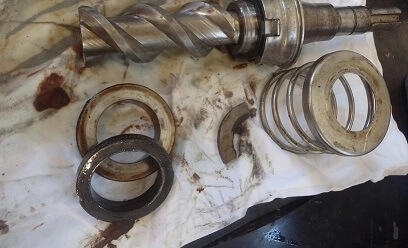
In many plants, pump mechanical seals are treated as small spare parts until leakage starts at the seal chamber. A chemical transfer pump begins dripping after two weeks of operation. A slurry pump runs with a fine vibration, then the seal faces show deep wear marks. A circulating water pump overheats even though the medium looks harmless. These failures rarely come from one single reason.
A pump seal works between a rotating shaft and a stationary housing, but the surrounding conditions decide its real service life. Pressure changes, shaft movement, abrasive particles, crystallized medium, dry running, blocked cooling lines, and wrong O-ring material can all shorten the working cycle. For buyers and maintenance teams, the task is not only to replace the failed part. The more important step is to understand why the previous mechanical seal failed.
Kunshan Xinyoumi Mechanical Seal Technology Co., LTD develops mechanical seal solutions for industrial pumps for chemical, water treatment, slurry handling, pharmaceutical, food, and new energy applications. The company’s modular design, stocked wearing parts, and traceable production process are practical advantages for factories that need fast replacement and stable bulk supply.
A common quotation request contains a seal photo, an old model number, and a short sentence asking for price. That information helps, but it is not enough for reliable pump mechanical seal selection. Two pumps with the same shaft diameter may need different sealing structures if one handles clean water and the other handles crystallizing solvent or abrasive slurry.
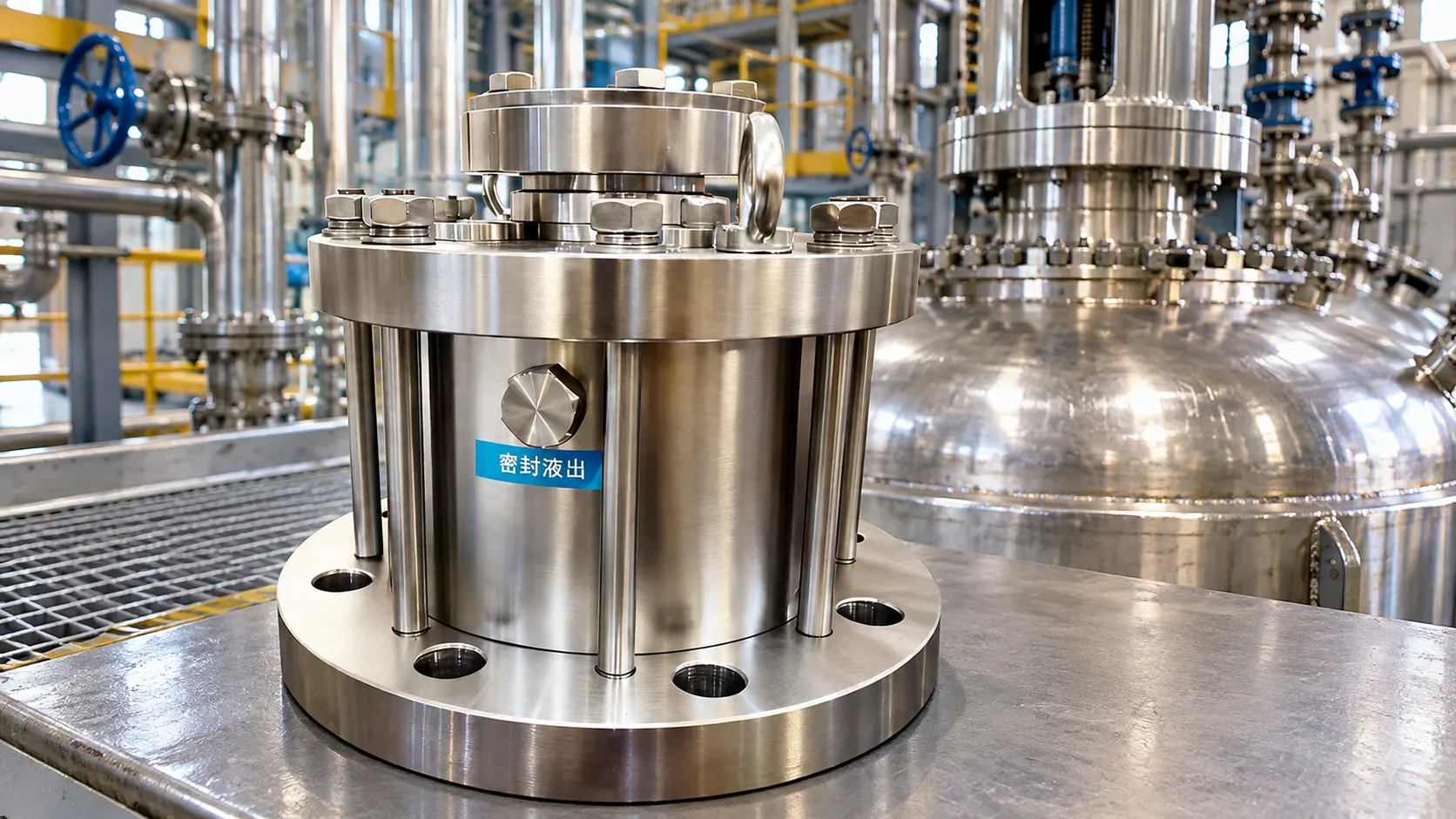
A centrifugal pump seal should be checked against pressure, temperature, shaft speed, pump shaft condition, and medium lubricity. A chemical pump seal needs additional attention to corrosion, swelling of secondary seals, and compatibility between metal parts and the liquid. A custom pump mechanical seal becomes necessary when the pump has non-standard installation space, high temperature, high pressure, high solids content, or repeated seal failure under the same process.
This is where a supplier’s engineering habit matters. Kunshan Xinyoumi Mechanical Seal Technology Co., LTD follows a condition-based selection approach, matching seal type, materials, and spare parts according to actual plant data rather than only replacing an old model.
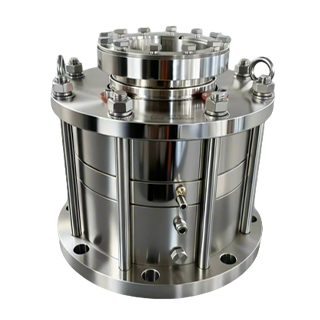
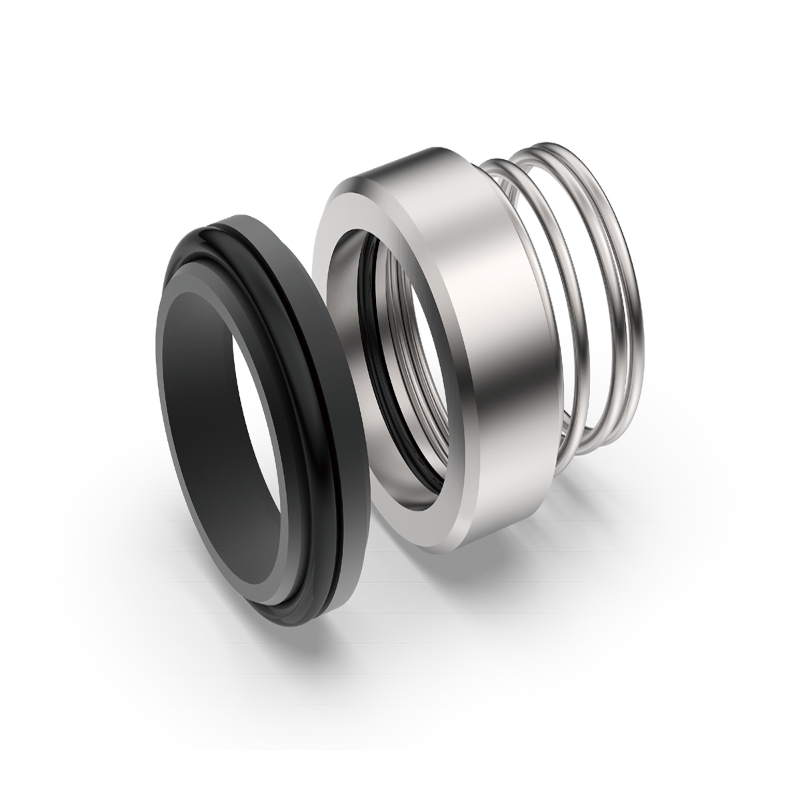
For clean water, circulating water, light oil, and low-abrasion liquids, a single mechanical seal is often enough. In these applications, buyers usually care about interchangeability, price stability, delivery time, and easy maintenance. Standard pump shaft seals such as single-end structures are widely used because the working conditions are moderate and the failure risk is easier to control.
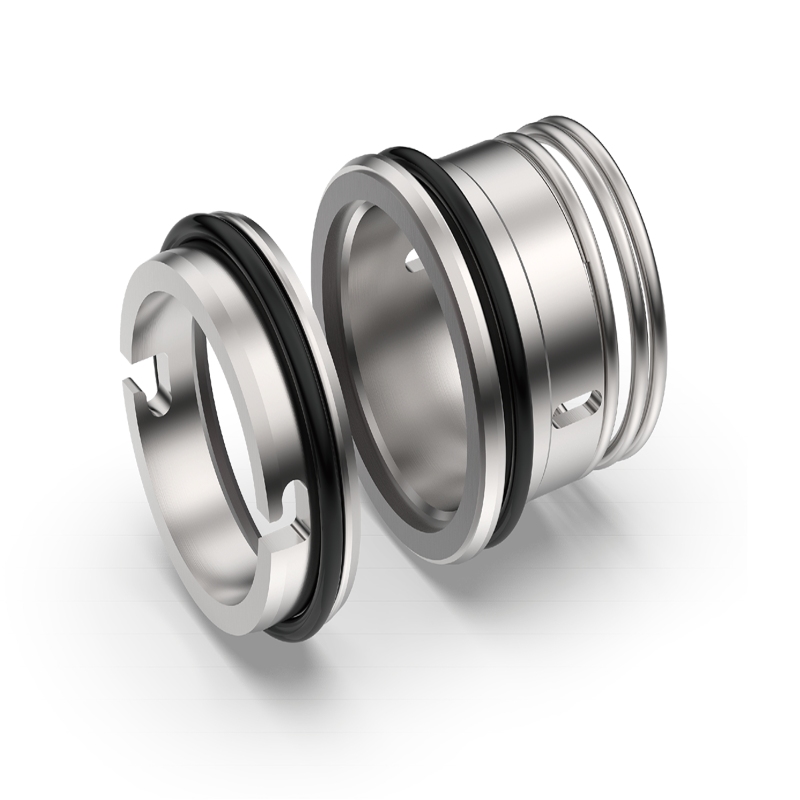
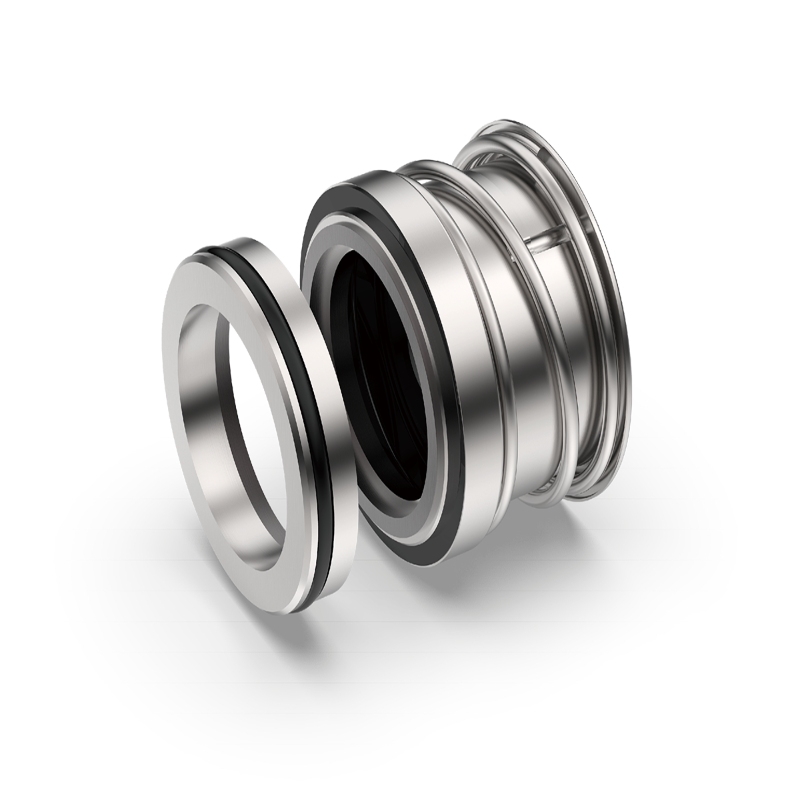
Kunshan Xinyoumi Mechanical Seal Technology Co., LTD lists pump seal models such as 58U and 1200B for general industrial service. These seals are described with common shaft diameter ranges, secondary seal choices such as NBR, FKM, EPDM, PTFE, and FFKM, and friction pair options such as graphite with silicon carbide, graphite with tungsten carbide, and SiC-SiC for more abrasive service.
A chemical pump seal is rarely chosen by structure alone. The same seal design may behave differently in methanol, dilute acid, salt solution, acetone, alkali liquid, or crystalline medium. If the elastomer swells, hardens, or cracks, leakage may appear even when the seal faces look acceptable. If the metal sleeve corrodes, the next seal may fail again.
For corrosive media, mechanical seal materials should be selected around the liquid. Silicon carbide, tungsten carbide, carbon graphite, PTFE, FKM, FFKM, 316L stainless steel, and nickel-based alloy all have different roles. The purchasing decision should balance chemical resistance, wear resistance, temperature range, and cost.
Slurry pumps need a different discussion. Tailings, coal washing slurry, metallurgical slurry, sludge, fiber-containing wastewater, and crystallizing chemical slurry place constant stress on the sealing faces. A standard clean-liquid seal may fail quickly because particles enter the seal interface, block small gaps, or cut the secondary seal.
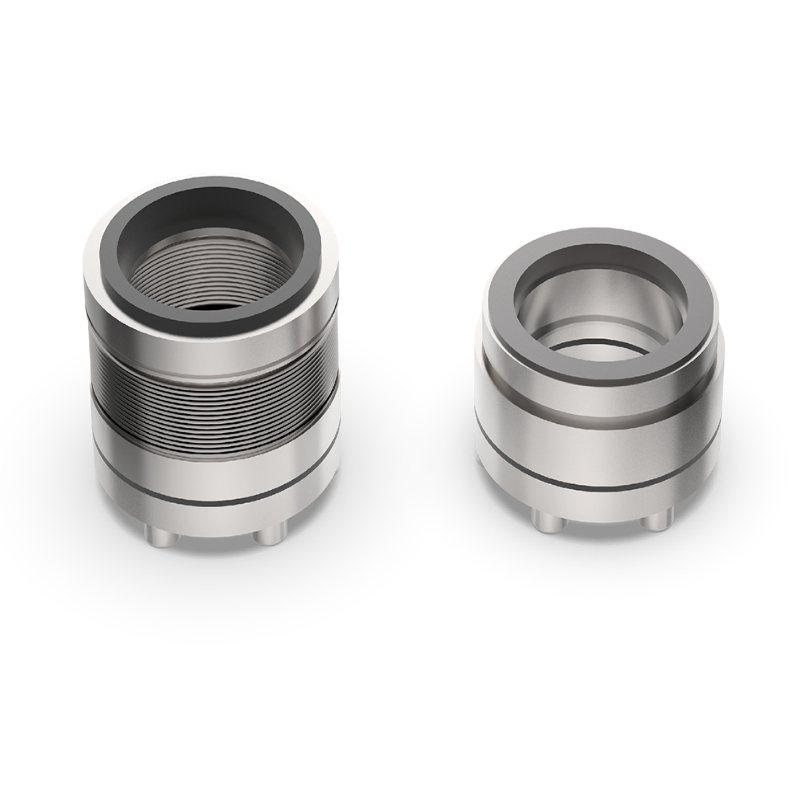
The G50(F)S series from Kunshan Xinyoumi Mechanical Seal Technology Co., LTD is positioned as a heavy-duty slurry pump seal for highly abrasive, high-solids-content media. Its documented application range includes mining, metallurgy, chemical slurry transfer, and water treatment. For this kind of service, particle size, solids content, flushing condition, face hardness, and anti-clogging design should be confirmed before purchase.
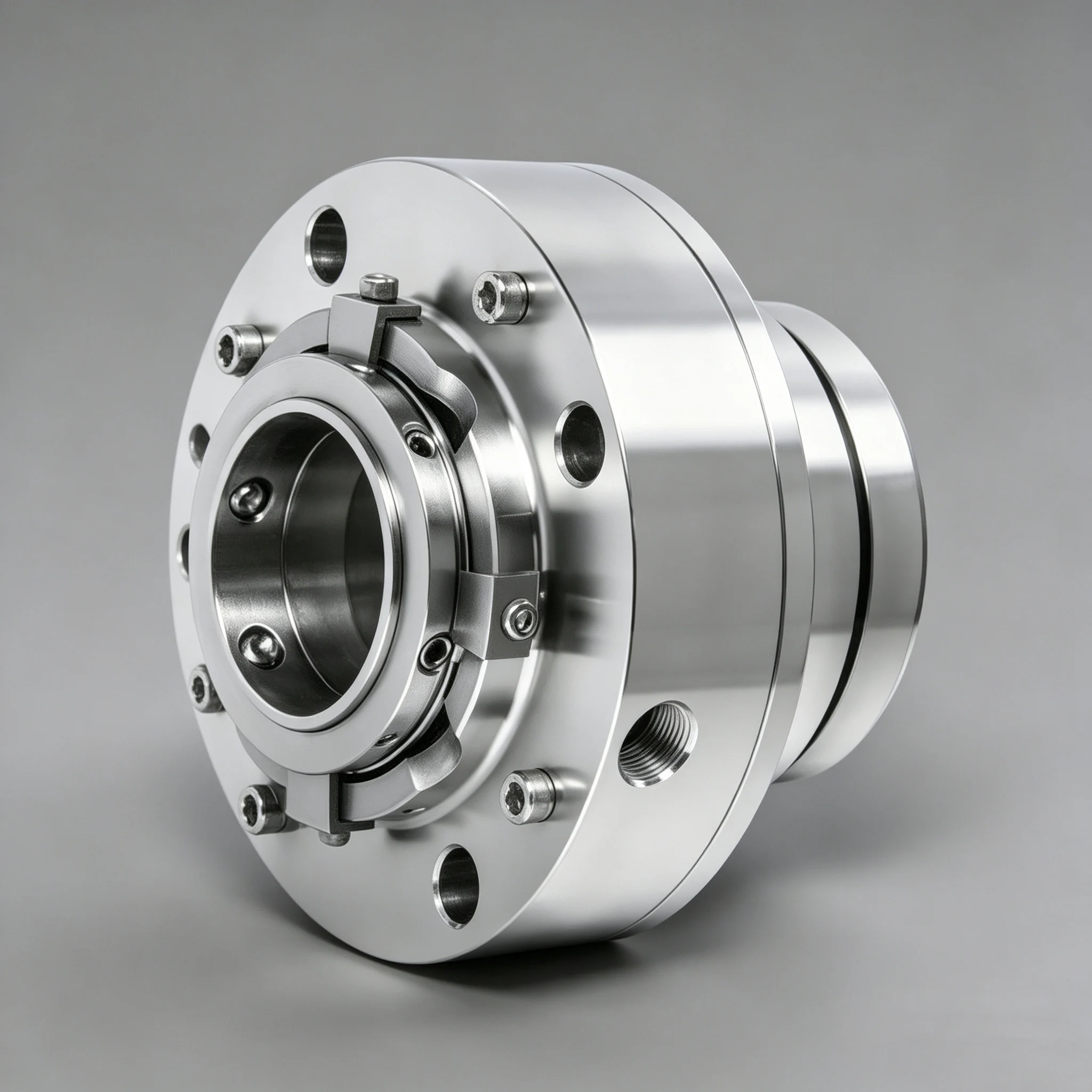
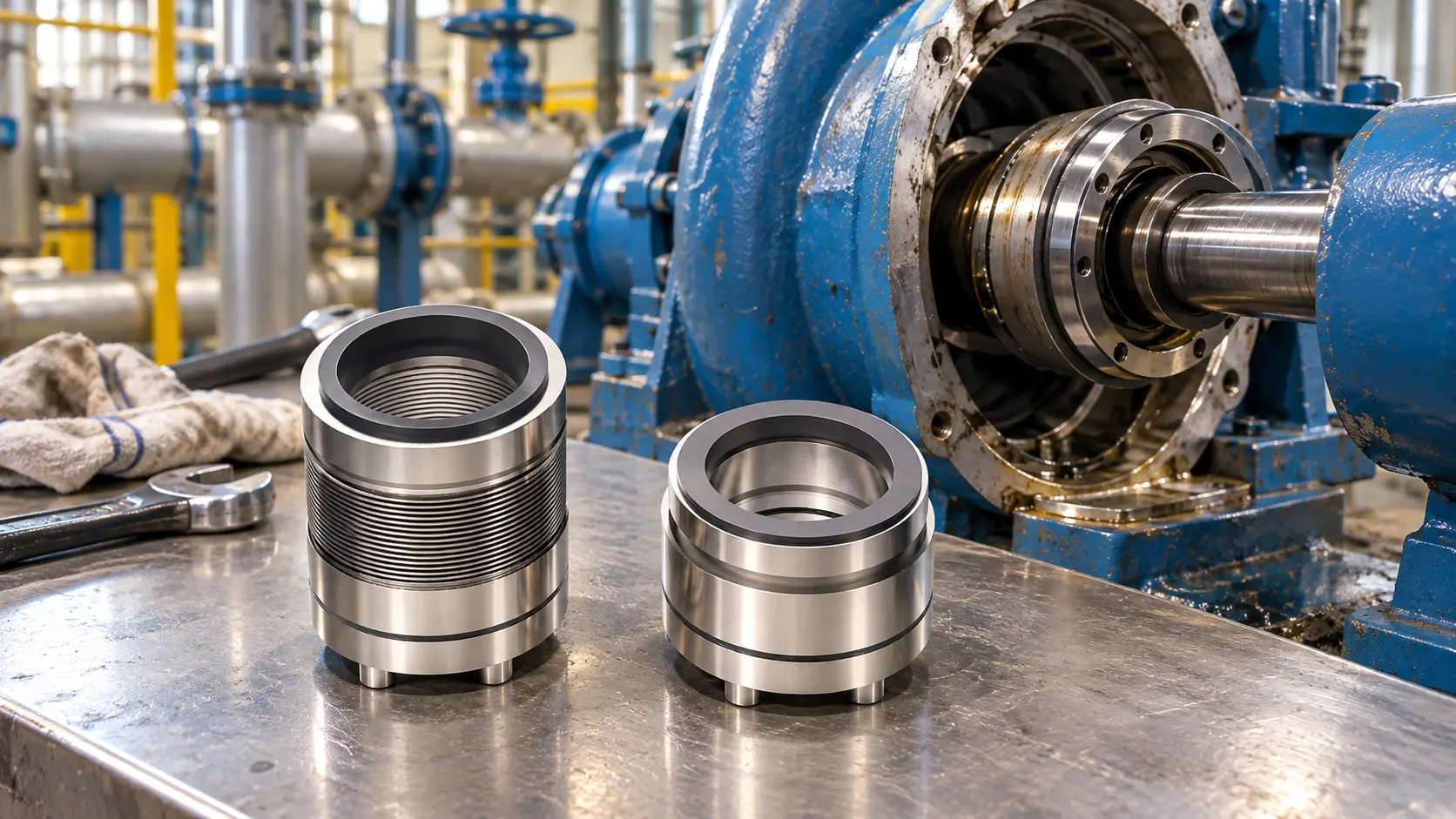
When a pump seal leaks from the dynamic sealing face, the first inspection point is the rotating and stationary ring. Scratches, chipping, overheating marks, or uneven wear usually indicate dry running, poor lubrication, abrasive particles, wrong face pairing, or excessive spring load. Minor face damage may sometimes be repaired by lapping, but serious wear means the seal ring should be replaced.
O-rings and gaskets are small parts, but they often decide whether a pump mechanical seal can survive the medium. NBR may work in oil and water. FKM is often used for acid and alkali resistance. EPDM suits water and steam conditions. PTFE and FFKM are selected for stronger corrosion or wider chemical exposure. A wrong secondary seal can turn a good mechanical seal into a short-life spare part.
Leakage around the shaft sleeve is common when the sleeve gasket is damaged or the shaft fit clearance is too large. Pump shaft misalignment, radial runout, loose gland bolts, and worn drive pins can also create vibration and abnormal noise. A mechanical seal cannot compensate forever for a pump that runs outside basic alignment limits.
Blocked cooling lines, high chamber temperature, dry running, sudden pressure shock, and vaporizing media can burn the seal faces. In these cases, replacing the same seal again may only repeat the problem. Flushing, cooling, filtration, pressure balancing, or a different seal structure may be required to prevent pump seal leakage and overheating.
A new seal that leaks during startup is not always a product-quality problem. Installation errors are common in the field. Seal faces may be touched with dirty hands, the O-ring may twist during assembly, the chamber may contain metal chips, the spring compression may be uneven, or the gland bolts may be tightened from one side first.
Mechanical seal installation should start with a clean seal chamber, an inspected shaft sleeve, correct gasket size, and careful handling of the sealing faces. During commissioning, the pump should not run dry. Cooling, flushing, or filtration should be checked before continuous operation, especially with hot liquid, crystallizing medium, or abrasive particles.
A useful RFQ for pump mechanical seal products should include pump type, shaft diameter, working pressure, working temperature, medium name, concentration, speed, particle content, installation drawing, required quantity, and delivery expectation. If the pump has failed several times, photos of the damaged faces, sleeve, and chamber help identify the cause.
Kunshan Xinyoumi Mechanical Seal Technology Co., LTD supports modular universal design, which allows wearing parts to be interchangeable in many structures. Its production-to-sales model and stocked vulnerable parts help shorten delivery time and reduce emergency waiting. For bulk purchasing, this matters as much as the unit price, because downtime often costs more than the seal itself.
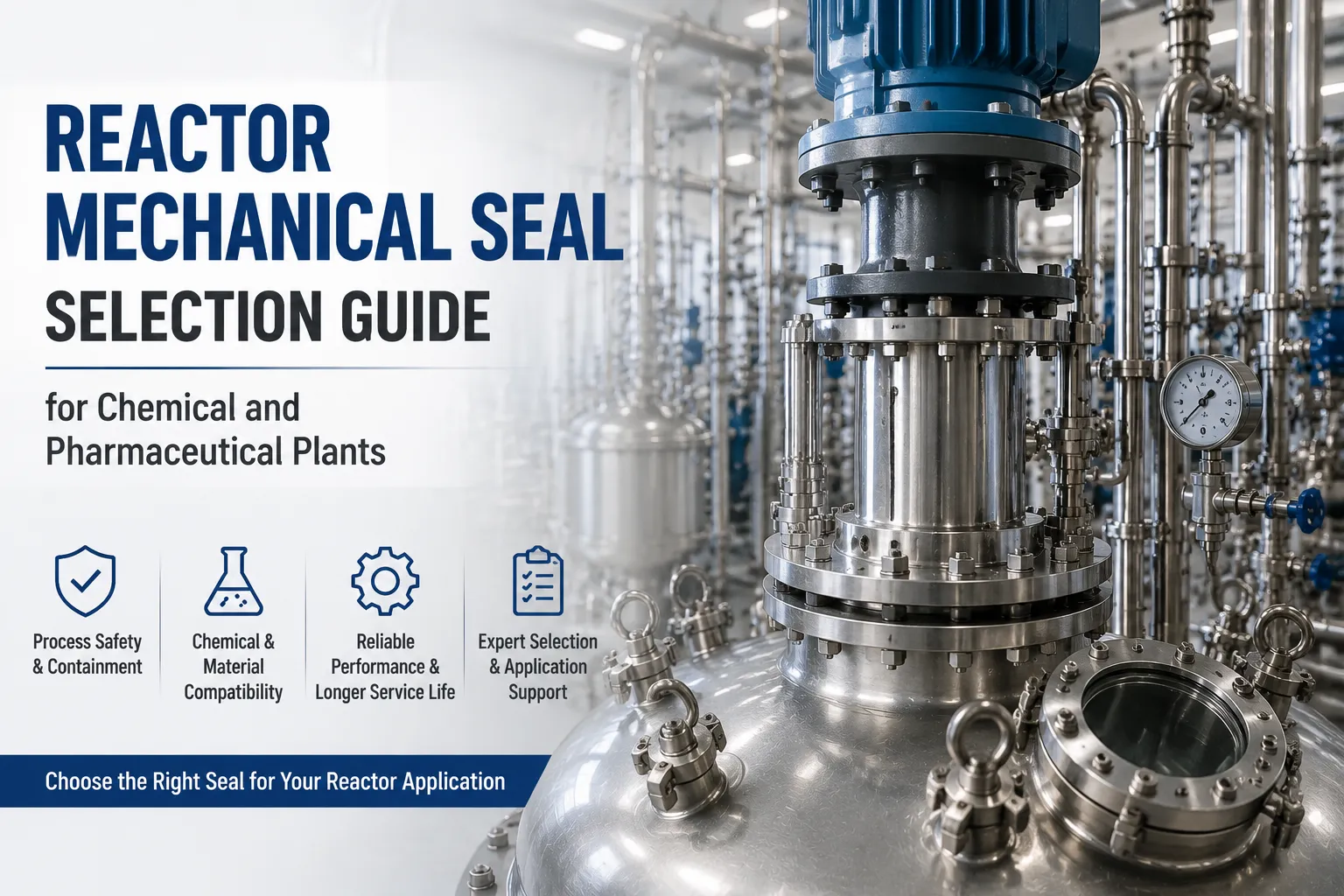
Pump seal selection should begin with the real operating condition. Clean water, chemical liquids, high-temperature media, and abrasive slurry require different structures, materials, and maintenance plans. A reliable pump mechanical seal reduces leakage, abnormal wear, overheating, and unplanned shutdowns when the supplier receives complete data and matches the product to the site. Buyers can send pump operating data for selection support before confirming a standard or customized seal order.
Q1: Why did my pump mechanical seal start leaking after a few weeks?
A: A pump mechanical seal may leak after a short running time because the seal faces were scratched, the O-ring material did not match the medium, the shaft sleeve was worn, or the pump ran dry during startup. Abrasive particles, poor cooling, crystallization, and shaft misalignment can also cause early leakage.
Q2: Can the same pump mechanical seal be used for water, solvent, and slurry?
A: The same pump mechanical seal should not be used for every medium without checking the working condition. Clean water, solvent, and slurry have different requirements for seal face materials, secondary seals, flushing, and anti-wear design. A slurry pump mechanical seal normally needs harder faces and better particle-control measures than a clean-water seal.
Q3: What information should be included in a pump mechanical seal RFQ?
A: A pump mechanical seal RFQ should include shaft diameter, medium, concentration, temperature, pressure, speed, pump type, particle content, installation drawing, quantity, and delivery requirement. If the previous seal failed, photos of damaged faces, O-rings, sleeve wear, or leakage location can help the supplier judge the failure cause.
Q4: Is a cartridge mechanical seal worth the higher price?
A: A cartridge mechanical seal can be worth the higher price when installation errors, short maintenance windows, or frequent pump seal replacement create downtime. Its pre-assembled structure can reduce mistakes in spring compression and face handling. For simple low-risk service, a standard single mechanical seal may still be more economical.
Q5: When should a standard pump seal be replaced with a custom pump mechanical seal?
A: A custom pump mechanical seal should be considered for high-solids slurry, strong corrosion, high temperature, high pressure, crystallizing liquid, large shaft diameter, special chamber size, or repeated failure of standard seals. In these cases, material selection, face pairing, flushing, and structural design should be matched to the actual pump condition.