Nullam dignissim, ante scelerisque the is euismod fermentum odio sem semper the is erat, a feugiat leo urna eget eros. Duis Aenean a imperdiet risus.
Nullam dignissim, ante scelerisque the is euismod fermentum odio sem semper the is erat, a feugiat leo urna eget eros. Duis Aenean a imperdiet risus.
 author
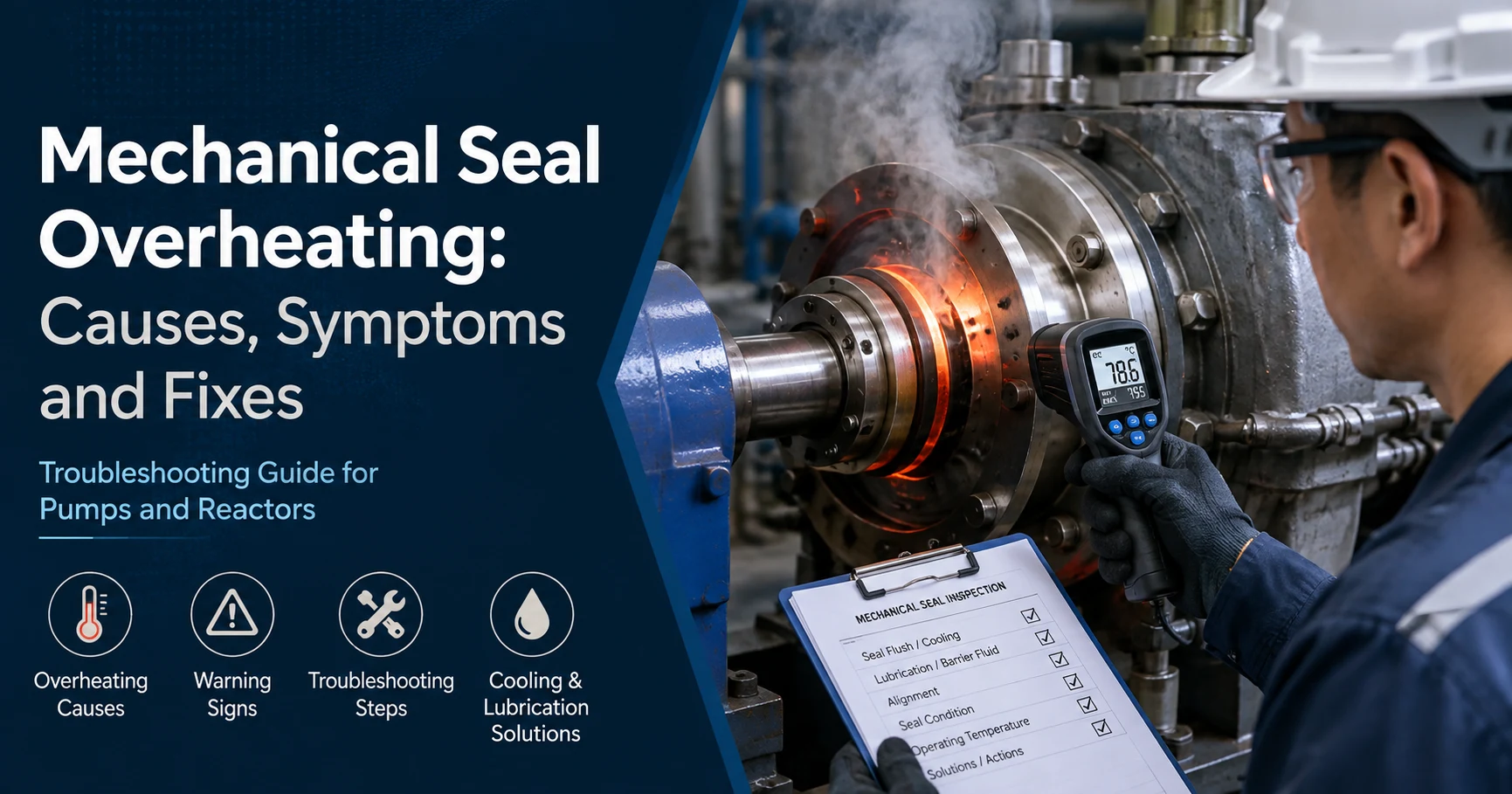
A mechanical seal that runs hot is giving you an operating warning. Heat at the seal faces can accelerate wear, damage secondary seals, distort components, and turn a small lubrication or alignment issue into leakage and an unplanned shutdown. Identify where heat is generated, confirm that the seal receives the fluid or cooling it needs, and correct the equipment condition before replacing parts.
This guide covers common causes, observable symptoms, and a practical troubleshooting sequence for pumps and reactors. The allowable limit depends on seal design, materials, pressure, speed, medium, and support system, so verify it against the equipment specification.
A mechanical seal controls leakage where a rotating shaft passes through a stationary housing. Its primary faces run in controlled contact with a thin fluid film that removes friction heat. If the film disappears, circulation is restricted, or the faces load unevenly, friction rises faster than the seal can reject heat.
Heat can also enter from the process. A hot fluid, steam tracing, exothermic reaction, or poorly insulated chamber may exceed the range of an elastomer, face material, or metal part. In other cases the process is acceptable but the chamber has no effective flush, quench, or cooling path. Treat temperature as an energy-balance problem: heat is generated, transferred, or trapped in the seal system.
The most urgent cause is loss of the liquid film between the faces. Starting a pump with an empty casing, running below minimum flow, closing a suction valve, or allowing a flush line to run dry can expose the faces to dry friction. Vapor pockets, high viscosity, crystallization, and solids can have a similar effect by interrupting face lubrication. A dry-running event may leave a polished, discolored, cracked, or heavily scored face.
A cooling line can be blocked by scale, solids, closed valves, or an incorrect pipe connection. A flush can also be too hot, too low in pressure, or contaminated. Check actual inlet and outlet temperature, flow, pressure, valve position, and filter condition rather than assuming that a connected pipe is providing useful cooling. Where the process temperature is inherently high, a dedicated support system or cooling water tank may be required by the seal design.
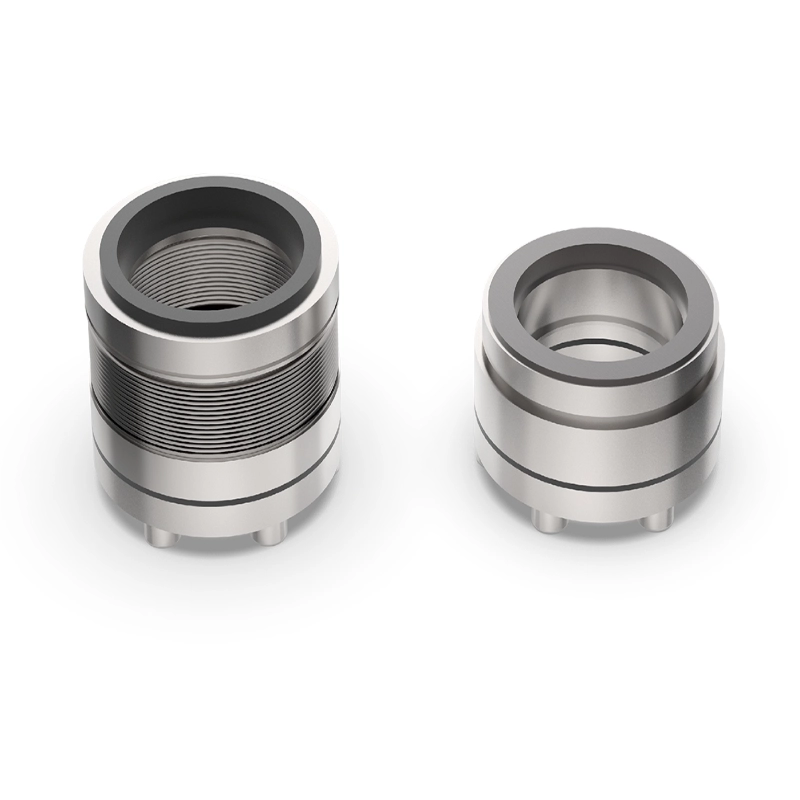
Heat generation increases with sliding speed and contact load. Excessive pressure, a pressure spike, incorrect balance ratio, over-compressed springs, or a distorted gland can load the faces beyond their intended condition. Review startup and shutdown events, not only the steady-state reading. A seal that survives at normal speed may overheat during a rapid acceleration, deadheaded pump, or pressure excursion.
Angular misalignment and shaft runout create uneven face contact. Vibration can repeatedly open and close the faces, while worn bearings let the shaft move radially or axially. Inspect coupling alignment, shaft sleeve fit, chamber concentricity, bearing condition, and measured runout against the equipment tolerance. On agitators and reactors, axial extension and shaft movement require special attention because the seal must accommodate movement without losing stable face contact.
An elastomer that is incompatible with the medium can swell, harden, or lose elasticity. Face materials can also react to abrasive particles, crystallizing media, corrosion, or temperature. Material selection should consider chemical compatibility, solids, temperature cycling, pressure, and whether the seal runs wet or dry. Do not choose a replacement by shaft diameter alone.
Record evidence while the equipment is safe to inspect. Rising gland or chamber temperature, smoke or burnt odor, rapid leakage, steam at the seal, squealing, unstable dual-seal reservoir pressure, and sudden flush-flow changes are warning signs. Discoloration or brittle O-rings confirm thermal stress but do not identify the trigger by themselves.
Trend temperature against speed, discharge pressure, flow, flush pressure, and product temperature. Compare the timing: overheating immediately at startup points toward dry running or trapped air; overheating after the process warms points toward heat transfer or material limits; overheating during vibration or load changes points toward alignment, bearing, or face-loading problems.
The right fix may be a different seal arrangement rather than a different face alone. Common face options include graphite, silicon carbide, and tungsten carbide, while secondary seals may use NBR, FKM, EPDM, PTFE, or perfluoroelastomer depending on the medium and temperature. These are selection categories, not universal ratings; verify the exact combination for the application.
For higher-temperature or hazardous service, a double seal with a properly selected buffer or barrier system can stabilize the faces and contain leakage. New Xinyoumi product families cover pump seals, reactor seals, and auxiliary equipment, with modular designs and material options intended for different operating conditions. Review the pump seal product range or reactor seal range only after collecting the actual process data.
If the problem is inadequate circulation or containment, inspect auxiliary equipment options and confirm the plan, fluid, pressure, temperature, instrumentation, and alarm points with the seal engineer. For reactor service, cooling requirements can be design-specific; some Xinyoumi documentation states that cooling measures are required above a stated temperature for particular models, so do not generalize that threshold to every seal.
Build a commissioning checklist around priming, flush verification, rotation direction, alignment, and controlled ramp-up. Keep cooling and flush lines accessible for inspection, label valves, and record normal temperature and pressure baselines. Add alarms for loss of barrier pressure or abnormal temperature where the process risk justifies them. During maintenance, preserve the failed seal for analysis and photograph the faces before cleaning.
Supplier evaluation should include more than a dimensional match. Send the equipment model, shaft diameter, seal chamber drawing, medium and solids, normal and maximum temperature, pressure, speed, axial movement, start-stop pattern, available flush or barrier fluid, and photos of the failed parts. A supplier that provides selection, integration, and installation guidance can help separate a seal-design problem from an equipment problem. Xinyoumi describes a one-stop service system for this type of project support.
Mechanical seal overheating is usually the result of lost lubrication, restricted cooling, excessive face load, shaft movement, or incompatible materials. Diagnose the operating system first, then replace or redesign the seal with the process conditions in view. Controlled measurements and a documented failure inspection provide a more reliable fix than repeatedly installing the same seal.
Yes. A seal may generate damaging heat before visible leakage appears. Monitor temperature, noise, flush conditions, and vibration instead of waiting for a leak.
No. The fluid must be compatible and delivered at the required pressure, temperature, and flow. Excessive or poorly controlled flush can create process contamination or instability.
Inspect both faces, secondary seals, springs, sleeve surfaces, and gland alignment. Replace damaged parts and correct the cause of lost liquid film before restarting.
Provide the model, dimensions, medium, temperature, pressure, speed, shaft movement, support-system details, drawing, quantity, and clear photos of the failed seal. You can contact the technical team for a configuration review.