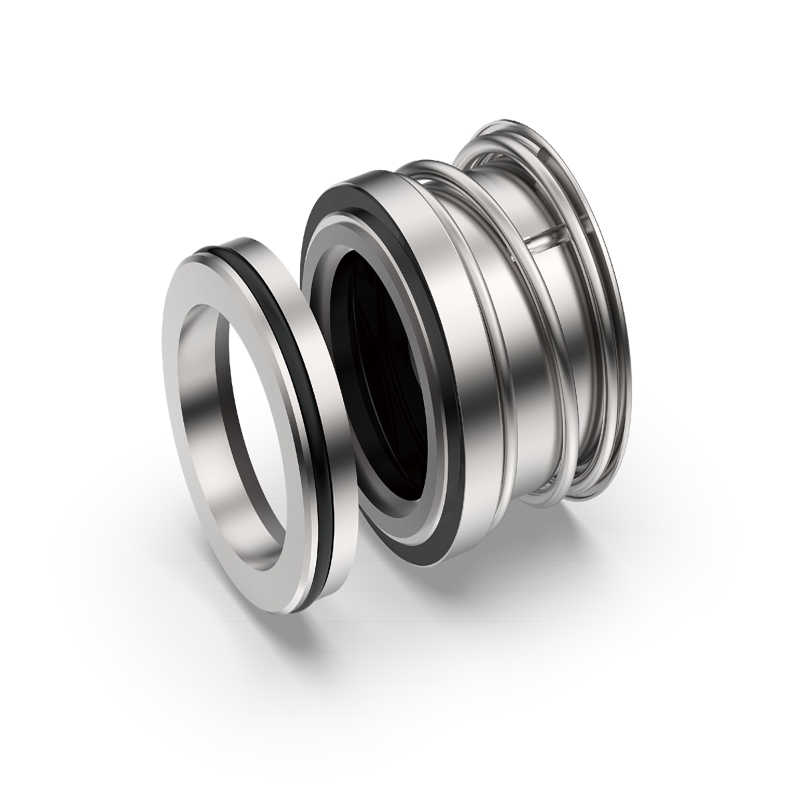
Nullam dignissim, ante scelerisque the is euismod fermentum odio sem semper the is erat, a feugiat leo urna eget eros. Duis Aenean a imperdiet risus.
Nullam dignissim, ante scelerisque the is euismod fermentum odio sem semper the is erat, a feugiat leo urna eget eros. Duis Aenean a imperdiet risus.
 author
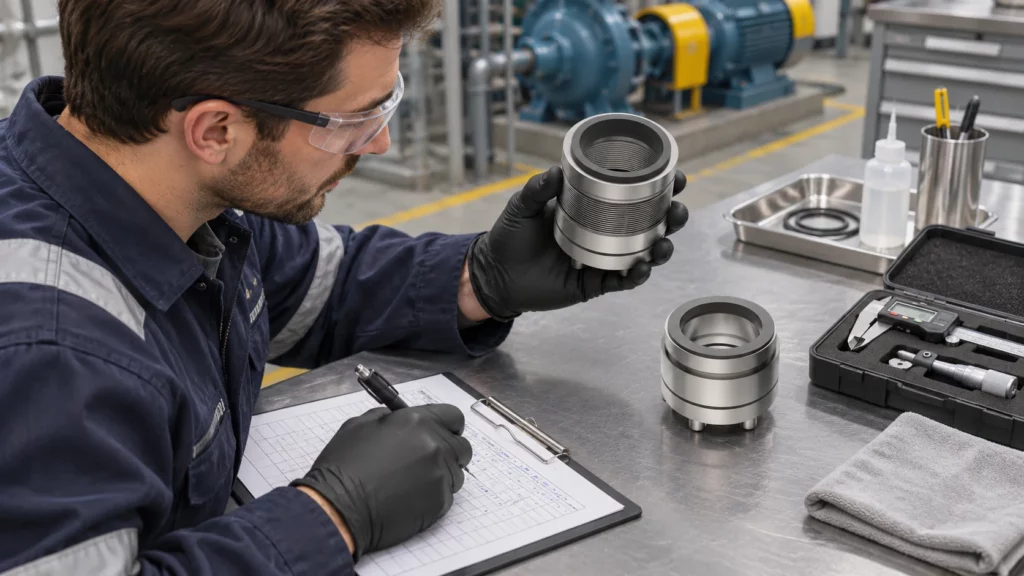
After a mechanical seal is removed and inspected, repair is reasonable only when the damage is limited and the sealing surfaces and supporting parts can be restored within the applicable specification. Replace the affected component or the complete assembly when cracks, severe face damage, distortion, corrosion, or out-of-tolerance dimensions make a reliable restoration uncertain. The right choice depends on what failed, what remains serviceable, and whether the cause of failure can be corrected.
Define the scope first: face lapping, wear-part replacement, refurbishment, or a complete new seal. Compare options using the inspection record, operating conditions, acceptance requirements, and downtime.
A leaking seal is a symptom, not a repair instruction. Before cleaning or polishing the removed parts, document the seal model or drawing reference, equipment, service duration, leakage location, fluid, temperature, pressure, speed, start-up history, and any abnormal vibration or loss of flushing or lubrication. Photographs of the parts as found can preserve evidence that cleaning would remove.
Separate the immediate damage from the likely cause. A scratched face may follow contamination, poor handling, or contact under abnormal operating conditions; a damaged secondary seal may reflect age, chemical incompatibility, or an incorrect size. If the operating problem remains, a repaired or new seal can fail again. For pumps, start with the equipment and seal information shown for the relevant Xinyoumi pump mechanical seal range, then confirm the exact model and arrangement before deciding what to order.
The record should identify damaged parts, whether geometry can meet its limits, and what must change before restart. If any answer is unknown, obtain the missing measurement, drawing, or operating detail before disposition.
Inspect the complete assembly. Clean parts with a material-appropriate method, keep mating components identified, and compare findings with the drawing or supplier limits. Patterns across faces, secondary seals, springs, sleeves, and hardware can show whether damage is local or affects fit and function.
Inspect both faces for scratches, wear, chips, cracks, heat marks, pitting, or uneven contact. Minor scratches may be repaired by grinding, while severe scratches call for replacing the sealing ring. After lapping, verify that face geometry, finish, and remaining thickness still meet the applicable specification; polishing cannot make a crack or deep chip acceptable.
Check secondary seals for aging, deformation, cuts, swelling, or hardening, and confirm material suitability for the fluid and temperature. Inspect springs and drive elements for corrosion, breakage, distortion, or binding; verify compression against the design. At the sleeve-to-shaft interface, check for damage, scoring, and excessive clearance. Replaceable worn parts may be changed while retaining a sound assembly when the design permits.
Measure critical dimensions against the drawing or supplier limits, including face geometry, sleeve fit, shaft condition, and clearances. Do not substitute generic tolerances. Inspect the gland, mating surfaces, and support system too; damage beyond permitted limits may mean a new seal alone will not solve the problem.
Repair is defensible when the defect is limited, understood, and restorable within specification. Examples include a minor face scratch that can be lapped within limits or worn secondary seals on an assembly whose major components remain serviceable. The existing design must still suit the duty, and parts, workmanship, and verification must be available.
For face repair, ask what material will be removed and how the provider will confirm the finished geometry and surface condition. The acceptable amount depends on the seal design and its limits; there is no universal lapping allowance. If those limits are unavailable, use the manufacturer or a qualified seal specialist to establish whether the face remains serviceable.
Ask the provider to list what will be retained, resurfaced, or replaced. Request inspection findings, measurements against limits, replacement parts, and post-repair checks; a vague “repair seal” quote cannot be compared fairly with a replacement.
Repeated failure weakens the case for another repair until the cause is understood. Investigate operating conditions, installation, material selection, and support systems, then document corrective action.
Replace when faces are cracked, chipped, deeply scored, or severely worn; heat or corrosion compromises a component; parts are broken or distorted; or dimensions cannot meet specification. Replacement is also appropriate when critical parts are unavailable, inspection is unreliable, or refurbishment cost and uncertainty approach a suitable replacement.
Replacement does not always mean discarding the whole seal. Depending on the design and damage, the correct scope may be a new sealing ring, a new cartridge, or a complete assembly. Confirm interchangeability, materials, dimensions, and operating limits before treating a new part as a drop-in substitute. Where a repairable existing product is involved, Xinyoumi describes inspection, repair, refurbishment, and replacement suggestions as options based on wear, operating conditions, and structural status through its mechanical seal support services. That service description does not replace a model-specific technical review.

If the seal was damaged by dry running, solids, poor alignment, unsuitable materials, or loss of a support condition, include a corrective action in the replacement plan. Otherwise, a new assembly may encounter the same failure mechanism. Record what must be corrected before start-up and who will verify it.
Compare scope, parts, inspection, verification, shipping, installation labor, downtime, and repeat-failure consequences. Repair can lower material spend when few parts need attention, but a repeat removal can erase that saving. For replacement, confirm availability and delivery timing.
Set the required confidence level by considering the expected duty and consequences of failure. A documented repair may suit an accessible, lower-risk service; critical safety, contamination, or production risks may call for stronger verification or replacement. Follow plant acceptance rules rather than a universal cost percentage.
Record the finding, work scope, dimensional and material evidence, root-cause action, verification method, and cost and downtime assumptions. The Xinyoumi product catalogue can help identify a product family, but selection must match the actual equipment and service.
Before authorizing work, get a written reuse/repair/replace disposition for each major component. Confirm the model, measurements, materials, parts, workmanship, and acceptance checks. Testing should follow the product specification or an agreed procedure, since limits vary by design.
Before restart, verify cleanliness, orientation, fit, and required operating conditions. Record baseline readings and assign any system-level corrective action.
After inspection, repair the seal only when the defect is limited, the remaining components are sound, and the required geometry can be restored and verified. Replace the affected ring or full assembly when damage, dimensions, or uncertainty prevents a defensible restoration. In either case, document the scope and correct the cause of failure before start-up. For a fit check, send the seal model, equipment details, service conditions, inspection photos, and drawing or sample information when available to the Xinyoumi technical team.
Sometimes. Minor scratches may be lapped or ground when the face can be restored within its applicable geometry and finish limits. Deep scratches, cracks, chips, or damage that cannot be verified usually require replacement of the affected ring or assembly.
Not automatically. The correct scope depends on the seal design, damage to mating parts, component availability, and the condition of the rest of the assembly. Confirm compatibility and inspection limits before replacing only one component.
Reopen the failure analysis before repeating the same repair. Compare the new damage pattern with the prior inspection, then investigate operating conditions, installation, material suitability, and support-system function.
Provide the seal model or drawing, equipment type, fluid, temperature, pressure, speed, installation arrangement, service duration, leakage location, and clear photos of the disassembled parts. Dimensions and operating history help narrow the scope.