Nullam dignissim, ante scelerisque the is euismod fermentum odio sem semper the is erat, a feugiat leo urna eget eros. Duis Aenean a imperdiet risus.
Nullam dignissim, ante scelerisque the is euismod fermentum odio sem semper the is erat, a feugiat leo urna eget eros. Duis Aenean a imperdiet risus.
 author
Mechanical seal material selection should begin with the process conditions, not with the appearance of an old seal or a previous material code. A seal that performs well in clean water may fail quickly in a solvent, abrasive slurry, corrosive chemical, or poorly lubricating fluid.
For engineers and purchasing teams, the goal is to select three material groups as one compatible system: seal faces that control friction and wear, elastomers or secondary seals that retain sealing force, and metal components that resist corrosion and mechanical loads. For a broader review of seal designs and equipment uses, see industrial mechanical seal types and applications.
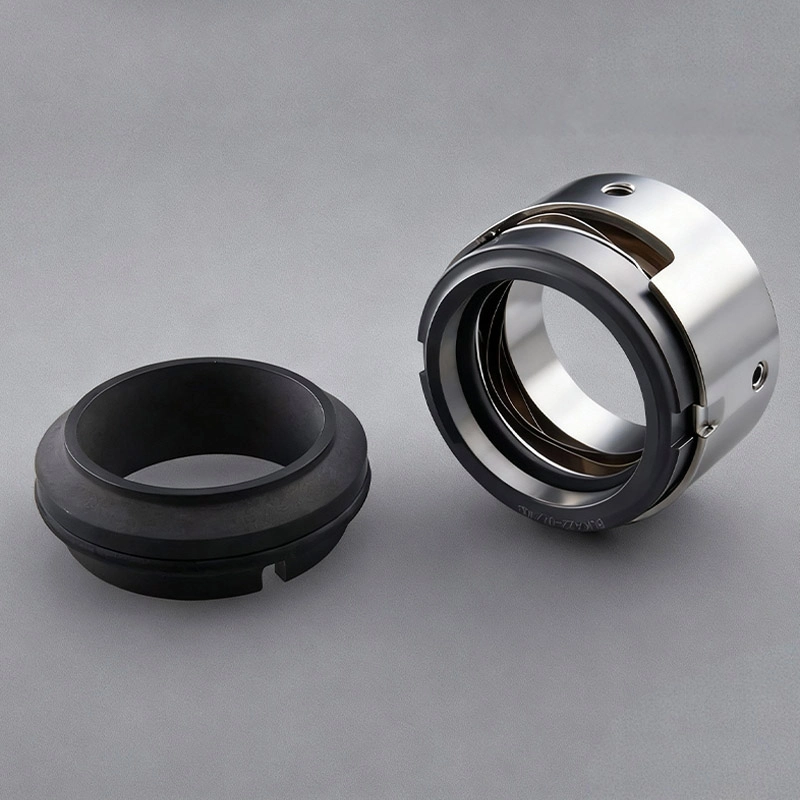
Material selection starts with accurate operating data. The process-fluid name alone is not enough because concentration, temperature, impurities, cleaning chemicals, and phase changes can alter material behavior.
Confirm the exact medium, concentration range, pH, additives, and possible contamination. A material that is suitable for a diluted chemical may react differently at a higher concentration or temperature. Mixed fluids should be evaluated as a complete process stream rather than as separate ingredients.
Cleaning and sterilization media also matter. An elastomer may tolerate the production fluid but degrade during a hot cleaning cycle.
Provide normal and maximum operating temperatures, including startup, shutdown, cleaning, and sterilization conditions. Temperature affects elastomer hardness, face lubrication, corrosion rate, and thermal distortion.
Pressure, vacuum, and pressure fluctuations influence face loading and secondary-seal behavior. Vaporization at the sealing faces can reduce lubrication and cause heat, noise, or rapid wear.
Particles, crystals, and process deposits can score faces or restrict the movement of secondary seals. Low-viscosity or poorly lubricating media may also require a different face pairing from a clean lubricating liquid.
A practical selection sequence is:
Fluid → Concentration → Temperature → Pressure → Solids → Lubricity → Faces → Elastomers → Metals
Mechanical seal face materials should be selected as a pair. Hardness is important, but it is not the only factor. Friction, heat transfer, chemical compatibility, lubrication, impact sensitivity, and material grade all affect performance.
Carbon graphite is frequently paired with a harder stationary face because it offers useful low-friction and self-lubricating characteristics. However, carbon is available in different grades and impregnation systems. Chemical exposure, temperature, and dry-running risk must be checked before confirming a grade.
Silicon carbide is commonly evaluated for corrosive, abrasive, and demanding industrial services. It provides strong wear and thermal characteristics, but different forms of silicon carbide are not automatically interchangeable.
When considering a silicon carbide mechanical seal, verify the specific material grade, lubrication condition, possibility of dry contact, particle content, and risk of impact during installation.
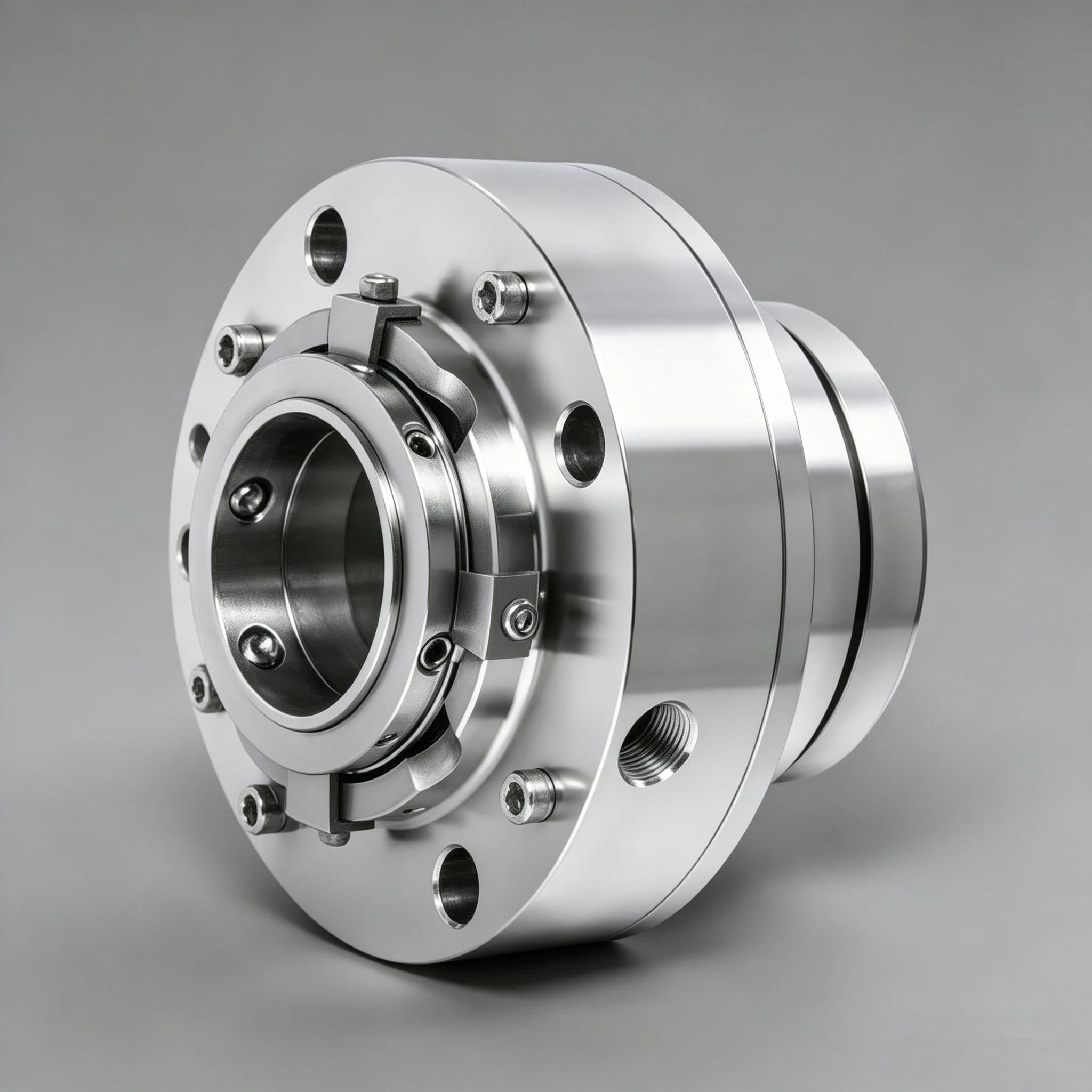
Tungsten carbide is often considered where mechanical strength and resistance to wear are priorities. Its suitability also depends on the binder material and the chemistry of the process fluid.
A silicon carbide vs tungsten carbide mechanical seal decision should therefore consider corrosion, shock loading, friction, equipment condition, and operating environment—not hardness alone.
Ceramic faces may be suitable for selected clean and general services. Buyers should still verify thermal cycling, chemical compatibility, mechanical loading, and the expected operating range.
| Face pairing | Conditions to evaluate | Main purchasing concern |
|---|---|---|
| Carbon / ceramic | Clean, relatively stable service | Fluid compatibility and temperature |
| Carbon / silicon carbide | General chemical and industrial duty | Carbon grade, lubrication, and corrosion |
| Silicon carbide / silicon carbide | Abrasive or corrosive media | Heat generation, lubrication, and face grade |
| Tungsten carbide combinations | Wear-intensive or mechanically demanding service | Binder corrosion and process chemistry |
No face pairing is suitable for every application. Final selection should be checked against the complete seal design and operating data.
Mechanical seal O-ring materials may fail even when the seal faces remain in good condition. Swelling, hardening, cracking, extrusion, and loss of elasticity are common signs that the compound does not match the fluid, temperature, pressure, or groove design.
NBR may be considered for selected oil, water, and general industrial services. FKM is commonly evaluated for oils, heat, and selected chemical duties, while EPDM may suit certain water, steam, and chemical applications.
The choice between FKM vs EPDM for mechanical seals cannot be made from temperature alone. Process fluids, cleaning media, concentration, exposure time, and actual compound grade must also be reviewed.
PTFE-based components, coated O-rings, and FFKM may be evaluated for aggressive chemicals, wider temperature requirements, or applications where standard elastomers do not provide sufficient compatibility.
A higher-cost material is not automatically a better replacement. Hardness, elasticity, sealing movement, installation method, and groove geometry still need to match the application.
Swelling usually indicates that the seal has absorbed or reacted with the process fluid. Excessive temperature can accelerate the problem. Hardening or cracking may point to thermal aging, chemical attack, or unsuitable cleaning conditions.
Before replacing an O-ring, identify the fluid that reached it and check whether the process formulation or cleaning procedure has changed.
Mechanical seal metal materials include sleeves, glands, springs, retainers, fasteners, bellows, and other structural parts. Each component may experience a different combination of chemical exposure and mechanical stress.
Stainless steels such as 304, 316, and 316L are used in many industrial seals, but their suitability depends on the process chemistry. Chlorides, acids, temperature, and stress conditions can change the corrosion risk.
Duplex grades may be evaluated for selected chloride-containing applications, subject to the actual concentration, temperature, and component design.
More demanding chemical environments may require nickel alloys, titanium, or PTFE-lined product-contact components. These materials should be specified only after reviewing the complete process conditions and the parts that are actually exposed to the medium.
Small components should not be overlooked. A corroded spring or fastener can reduce closing force or damage the assembly even when the main faces remain usable.
Wrong materials may create leakage immediately or shorten service life gradually. The failure pattern often provides useful evidence.
Scoring may be related to abrasive particles, deposits, poor lubrication, or an unsuitable face pairing. Chipping can result from handling damage, vibration, impact, or excessive mechanical loading.
Thermal cracking or discoloration may indicate inadequate lubrication, vaporization, dry running, or excessive heat at the interface.
A swollen O-ring can restrict movement or lose dimensional stability. A hardened seal may no longer follow thermal or mechanical movement, while extrusion can indicate excessive pressure, unsuitable hardness, or incorrect clearances.
Corrosion can weaken springs, damage sleeves, and create rough surfaces that harm secondary seals. Replacing only the faces and O-rings may not solve the problem if the metal components remain incompatible.
To prevent repeat failure, maintenance teams should inspect the damaged parts, confirm whether the process changed, review shaft condition, and compare the actual operating data with the original specification.
A replacement mechanical seal should not be selected by shaft diameter or model number alone. For a mechanical seal material recommendation, provide:
This information helps distinguish a material problem from installation damage, equipment movement, or an unsuitable seal configuration.
A capable supplier should explain why each face, elastomer, and metal material was selected. A quotation that only repeats the previous material code does not show whether the current process conditions have been reviewed.
Compatibility should include fluid concentration, operating temperature, cleaning media, solids, and lubrication—not a generic statement such as “chemical resistant.” Product-contact materials, critical dimensions, replaceable parts, and spare requirements should be confirmed before production.
Kunshan Xinyoumi Mechanical Seal Technology Co., Ltd. designs and supplies fluid mechanical seals for industrial equipment, including pumps, reactors, mixers, and agitators. Relevant configurations can be reviewed through its industrial mechanical seal products, while the broader range of Xinyoumi mechanical seal solutions provides context for different equipment and application conditions.
For buyers reviewing company background and service scope, further information is available under about Kunshan Xinyoumi Mechanical Seal Technology. Material selection for any specific Xinyoumi product should still be verified against the product specification and submitted operating data.
Mechanical seal materials should be selected as a complete system. Face materials must suit friction, heat, abrasion, and lubrication. Elastomers must match the fluid, concentration, pressure, temperature, and movement. Metal parts must resist both corrosion and mechanical stress.
For a material and configuration review, purchasers can submit the equipment model, medium, concentration, dimensions, operating conditions, existing drawing, failed-part photographs, application details, and required quantity to Kunshan Xinyoumi Mechanical Seal Technology Co., Ltd. The purpose is to identify a suitable direction before a standard or replacement seal is confirmed.
Q1: What materials are mechanical seals made of?
A1: A mechanical seal usually contains three main material groups: rotating and stationary face materials, elastomers or other secondary sealing elements, and metal structural components. Each group should be selected according to its function and exposure conditions.
Q2: How do I choose between carbon, silicon carbide, and tungsten carbide?
A2: Compare fluid lubricity, solids, abrasion, corrosion, temperature, mechanical load, and the exact material grade. Carbon is often paired with a harder face, while silicon carbide and tungsten carbide may be considered for more demanding wear conditions. The complete face pairing should be evaluated.
Q3: Should I use FKM or EPDM in a mechanical seal?
A3: The correct choice depends on the process fluid, concentration, temperature, cleaning chemicals, pressure, and compound grade. Neither material should be selected from a general temperature chart alone.
Q4: Why is my mechanical seal O-ring swelling after installation?
A4: The O-ring may be absorbing or reacting with the process fluid or cleaning chemical. Excessive temperature can accelerate swelling. Confirm the compound, actual exposure conditions, and whether the process formulation has changed.
Q5: What information should I send for mechanical seal material selection?
A5: Send the medium and concentration, temperatures, pressure or vacuum, speed, solids information, equipment and seal model, installation dimensions, existing drawing, failure photographs, required quantity, and a description of the application.